

Most companies think wellness programs are just about gym memberships, yoga classes, and free fruit. But if employees don’t understand why these programs matter, participation drops fast. The real magic isn’t in the perks-it’s in the education. When workers clearly see how wellness benefits connect to their own lives, they engage. When they don’t? They tune out.
Why Generic Wellness Messages Fail
A lot of companies send out the same tired emails: "Join our wellness challenge!" or "We’re offering a free flu shot!" These messages sound nice, but they don’t explain what’s in it for the employee. A 2024 Harvard Business Review study found that generic wellness messaging only gets 19% engagement. That’s not a program. That’s noise. Employees don’t care about abstract goals like "better health" unless they see the link to their paycheck, stress levels, or time off. One HR manager on Reddit shared that after switching from generic emails to personalized benefit statements showing each employee’s projected savings, participation jumped from 32% to 67% in six months. That’s not luck. That’s clarity.What Employees Actually Want to Know
People aren’t looking for wellness fluff. They want answers to real questions:- How will this lower my monthly insurance bill?
- Will I get more paid time off if I quit smoking?
- Does mental health support actually help me sleep better or stop burning out?
- Why should I care if my company offers financial coaching?
The Business Case That Actually Matters
Leadership often pushes wellness programs because they want to cut healthcare costs. That’s fine-but telling employees "this saves the company money" doesn’t motivate them. What does? Showing them how it saves them money. Harvard Business Review data shows that well-educated wellness programs deliver an average return of $3.27 for every $1 spent. But here’s the kicker: employees in companies that explain this ROI clearly see 28% fewer sick days and 15% higher productivity, according to the American College of Occupational and Environmental Medicine. That’s not theory. That’s real data from real workplaces. Strive Well-Being’s 2023 client reports show a 22% average reduction in healthcare claims among employees who understood how their actions affected outcomes. That’s not because they were forced. It’s because they knew that walking 10,000 steps a week could mean a $150 lower deductible next year.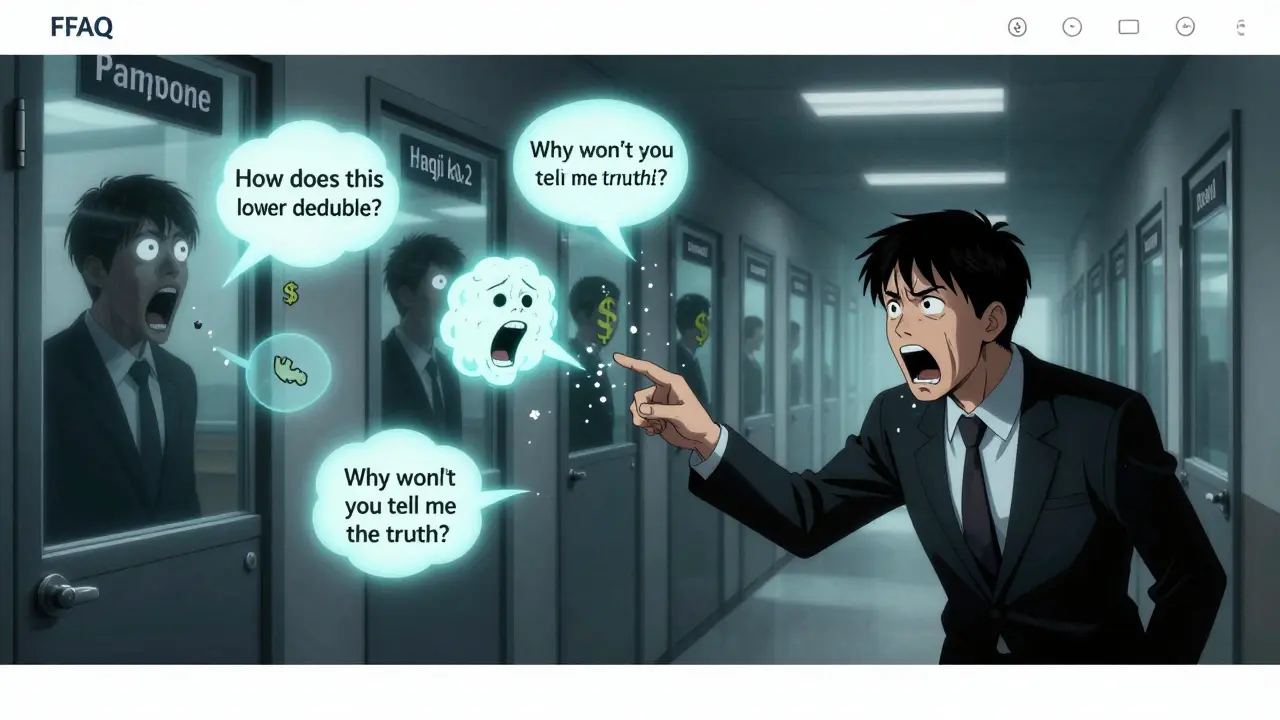
How to Communicate Benefits the Right Way
Forget one-size-fits-all emails. Effective wellness education uses multiple channels, tailored to how people actually learn:- Personalized benefit statements: Show each employee their projected savings based on their current health data (without violating privacy).
- Manager talking points: Train supervisors to explain benefits in team meetings-not just hand out flyers.
- Intranet portals: Create a simple, searchable hub where employees can find answers to FAQs like "How does the wellness incentive work?" or "What counts as a qualifying activity?"
- Live Q&A sessions: Host monthly Zoom calls with a certified wellness specialist to answer questions in real time.
What Happens When You Don’t Educate
Poor communication doesn’t just mean low participation. It breeds distrust. A 2024 Trustpilot review of a major wellness vendor summed it up: "They claimed I’d save $1,200 a year. I saved $217. I felt lied to." That’s the cost of overpromising. The EEOC received over 2,100 wellness-related complaints in 2023-a 37% jump from the year before. Many were about misleading benefit claims or unclear program rules. SHRM’s 2024 survey found that 68% of disengaged employees said they didn’t understand how specific activities connected to tangible benefits. That’s not a participation problem. That’s a communication failure.Legal Pitfalls You Can’t Ignore
You can’t just hand out incentives and call it a day. The ADA and GINA put strict limits on what employers can ask and offer. The EEOC says any financial incentive for wellness participation can’t exceed 30% of the total cost of self-only coverage under the ACA. And if you’re collecting health data-like biometric screenings-you need clear consent and strong privacy protections. A 2024 SHRM update required all wellness certifications to include EEOC compliance training. Ignoring this isn’t just risky-it’s expensive. Penalties can reach $119,556 per affected employee. That’s why companies with strong education programs also hire HR compliance specialists. You can’t teach benefits if you’re breaking the law.
Small Businesses Aren’t Left Out
If you’re a small business with under 50 employees, you might think wellness education is too expensive or complicated. But 38% of small businesses offer it-compared to 83% of large ones-not because it’s impossible, but because they don’t know where to start. The good news? You don’t need a $50,000 platform. Basic education can start with:- A 15-minute team meeting explaining your program’s goals and benefits
- A simple one-page handout with FAQs in plain language
- Partnering with your health insurer to provide free educational webinars
What the Future Looks Like
By 2026, Forrester predicts 45% of large employers will use AI to generate personalized wellness benefit statements for each employee. That means instead of a generic email saying "You’re eligible for stress management resources," you’ll get: "Based on your stress score and sleep data, you could reduce your anxiety-related doctor visits by 30% with our coaching program. Your deductible could drop by $180 next year." This isn’t science fiction. It’s the next step in making wellness real for people. The companies that win will be the ones who stop treating wellness as a perk and start treating it as a communication strategy.Getting Started: Your 12-Month Roadmap
You don’t need to fix everything at once. Follow this simple timeline:- Months 1-2: Get leadership buy-in. Show them the data: higher engagement = lower turnover.
- Months 3-4: Survey employees. Ask what they care about most: stress? debt? sleep? mental health?
- Months 5-8: Build your education plan. Create personalized benefit statements, train managers, set up your intranet hub.
- Months 9-12: Launch, measure, adjust. Track participation, survey feedback, and healthcare claim changes.
Workplace wellness isn’t about giving people kale smoothies. It’s about giving them clarity. When employees know how their actions lead to real, personal benefits-lower bills, less stress, more control-they don’t just participate. They thrive.
What’s the difference between a wellness program and wellness education?
A wellness program offers activities like fitness challenges or health screenings. Wellness education explains why those activities matter-how they reduce insurance costs, improve energy levels, or cut sick days. Without education, programs feel like optional extras. With it, they become essential tools employees want to use.
Can small businesses afford to educate employees about wellness benefits?
Yes. You don’t need expensive platforms. Start with free resources from the CDC’s Work@Health Program, host a 15-minute team meeting, and create a simple one-page guide in plain language. The CCWS certification modules start at $495 per employee annually-less than the cost of replacing one employee. The return comes in lower turnover and fewer sick days.
Why do employees say wellness programs don’t work?
Because they weren’t told how they’d benefit. A 2024 SHRM survey found 68% of disengaged employees didn’t understand how wellness activities connected to tangible outcomes like lower premiums or more PTO. It’s not that the programs failed-it’s that the communication did.
Is it legal to offer financial incentives for wellness participation?
Yes, but only if the incentive doesn’t exceed 30% of the total cost of self-only health coverage under the ACA. You must also comply with the ADA and GINA, which protect against discrimination based on health data. Always consult an HR compliance specialist before launching incentive programs.
What’s the biggest mistake companies make with wellness education?
Promising results they can’t deliver. Saying "you’ll save $1,200 a year" without data to back it up leads to distrust. Instead, show realistic projections based on your own claims history. Transparency builds credibility. Overpromising destroys it.
How do you measure if wellness education is working?
Track participation rates, changes in healthcare claims, employee survey feedback, and turnover rates. Companies with strong education see 11% lower turnover and 27% higher engagement, according to Mercer and SHRM. If participation stays flat after six months, your messaging needs work.
Should wellness education focus on cost savings or wellbeing?
Both-but prioritize wellbeing. Focusing only on cost savings triggers skepticism, as shown by critics like Professor Al Lewis. The most effective programs link cost savings to personal outcomes: "Less stress means better sleep, which means fewer sick days and more time with your family." That’s what sticks.
What role does mental health play in wellness education?
It’s critical. The CDC updated its Work@Health curriculum in March 2024 to include mental health communication after finding 47% of employees didn’t understand how mental health support worked. Employees need to know therapy sessions are confidential, how to access counseling, and how managing stress reduces physical symptoms like headaches and fatigue.
How often should wellness education be updated?
At least once a year, and more often if regulations change or new data emerges. WELCOA updated its 7 Dimensions model in January 2025 to add financial wellbeing content after surveys showed it was employees’ top concern. Static education becomes irrelevant fast. Keep it fresh, relevant, and tied to current employee needs.
What certifications should HR staff have for wellness education?
The Certified Corporate Wellness Specialist (CCWS) credential is the most widely recognized. It requires 120 hours of training covering leadership engagement, cost-benefit analysis, and legal compliance. CCWS holders earn 22% higher salaries, according to BLS 2024 data, because they bring measurable results. Look for certifications that include EEOC compliance training.
Ayush Pareek
January 16, 2026 AT 05:18Love this breakdown. I’ve seen teams in Bangalore go from zero engagement to 70% participation just by switching from generic emails to personalized savings estimates. No fluff, just numbers they can feel in their paychecks. Simple, human, real.
Managers who explain this in team huddles? Game changer.
Diane Hendriks
January 17, 2026 AT 02:04Let’s be clear: American corporations have weaponized wellness to shift healthcare costs onto employees while pretending to care. This isn’t education-it’s behavioral manipulation dressed in corporate jargon. The EEOC complaints are rising because people are finally catching on.
They don’t want to save $150 on a deductible. They want healthcare that doesn’t bankrupt them.
Annie Choi
January 19, 2026 AT 01:03YES. Financial stress is the silent killer in the workplace. I’ve seen engineers in Silicon Valley burn out from debt anxiety while their company pushes them to do yoga. Wake up.
Stop treating wellness like a Spotify playlist. Tie it to real pain points: rent, childcare, student loans. That’s when people move.
And yes-AI-generated personalized statements? Already happening at my firm. 89% engagement last quarter. No joke.
Arjun Seth
January 20, 2026 AT 01:46Everyone’s talking about ‘education’ like it’s magic, but nobody wants to do the work. You think employees care about your CCWS certification? No. They care if their boss actually listens.
And why are we even talking about ‘wellness’? It’s just another way for companies to spy on their workers under the guise of ‘care.’
Also, 30% incentive limit? That’s still a bribe. And you’re proud of this?
Dan Mack
January 20, 2026 AT 15:34Wait-so now companies are using AI to predict your stress levels and then reward you for being less broken? This is dystopian. They’re not helping you. They’re optimizing you.
What happens when your biometric data says you’re ‘high risk’? Do they raise your premiums? Fire you? This isn’t wellness. It’s surveillance capitalism with a yoga mat.
Amy Vickberg
January 21, 2026 AT 16:21I work at a small nonprofit with 22 people. We started with a 10-minute monthly meeting and a one-pager in plain English. No jargon. No buzzwords. Just: ‘Here’s how this saves you money and helps you breathe.’
Participation went from 12% to 61% in 4 months. It’s not complicated. It’s just human.
Nishant Garg
January 23, 2026 AT 13:59In India, we’ve got this weird mix-companies offering free fruit while ignoring mental health because ‘it’s not our business.’ But here’s the truth: a guy in Mumbai working 14-hour days doesn’t care about a treadmill. He cares about being able to sleep without his heart racing.
Wellness isn’t a perk. It’s survival. And if your HR team thinks ‘yoga’ solves burnout, they’re not just wrong-they’re dangerous.
Start with the basics: paid mental health days. No apps. No surveys. Just time.
And yes, I’ve seen companies cut turnover by 40% just by doing that. No fancy platform needed. Just decency.
Nicholas Urmaza
January 23, 2026 AT 19:22Let me cut through the noise. Wellness education works because it answers the question every employee is asking: What’s in it for me?
Stop talking about ‘holistic wellbeing.’ Talk about lower premiums. Fewer sick days. More time with your kids. That’s the language of real people.
And if you’re a small business? You don’t need a $50k platform. You need a manager who cares enough to explain it. That’s it.
Nilesh Khedekar
January 25, 2026 AT 04:36Oh wow, another ‘wellness expert’ telling us how to fix capitalism with a PowerPoint. Brilliant.
Let me guess-you also think giving employees a $50 gift card for ‘walking 10K steps’ fixes wage stagnation? Or that ‘personalized savings estimates’ make up for a $200k deductible?
People aren’t dumb. They know this is a distraction. The real problem? Your CEO makes 300x their salary and calls this ‘care.’
Education? More like PR with a spreadsheet.
Jami Reynolds
January 27, 2026 AT 01:34Did you know the EEOC’s 2023 complaint spike correlates directly with companies using wearable data to adjust insurance premiums? This isn’t wellness-it’s a legal minefield.
And don’t get me started on ‘AI-generated statements.’ That’s predictive analytics with zero transparency. You’re not educating employees-you’re conditioning them.
And the CDC? They’re funded by pharmaceutical lobbyists. Their ‘Work@Health’ program is a marketing arm for insurers.
RUTH DE OLIVEIRA ALVES
January 27, 2026 AT 04:06While the data presented is compelling and methodologically sound, it is imperative to recognize that the implementation of wellness education must adhere to the highest standards of ethical governance, equity, and regulatory compliance.
Furthermore, the integration of personalized benefit statements must be accompanied by robust opt-in protocols, anonymized data aggregation, and independent third-party audits to ensure alignment with both HIPAA and GDPR frameworks, particularly in multinational contexts.
It is not sufficient to merely increase engagement metrics; one must also safeguard the dignity and autonomy of the individual within the corporate ecosystem.
Nat Young
January 27, 2026 AT 12:40Everyone’s acting like this is revolutionary. It’s not.
Companies have been doing this since the 90s-call it ‘behavioral economics’ or ‘nudge theory.’ The only difference now is they’ve got AI to make it look fancy.
And guess what? It still fails when the pay is garbage, the hours are insane, and the boss is a tyrant.
Stop pretending a $150 deductible discount fixes systemic exploitation. It doesn’t. It just makes people feel guilty for not being ‘well’ enough.