
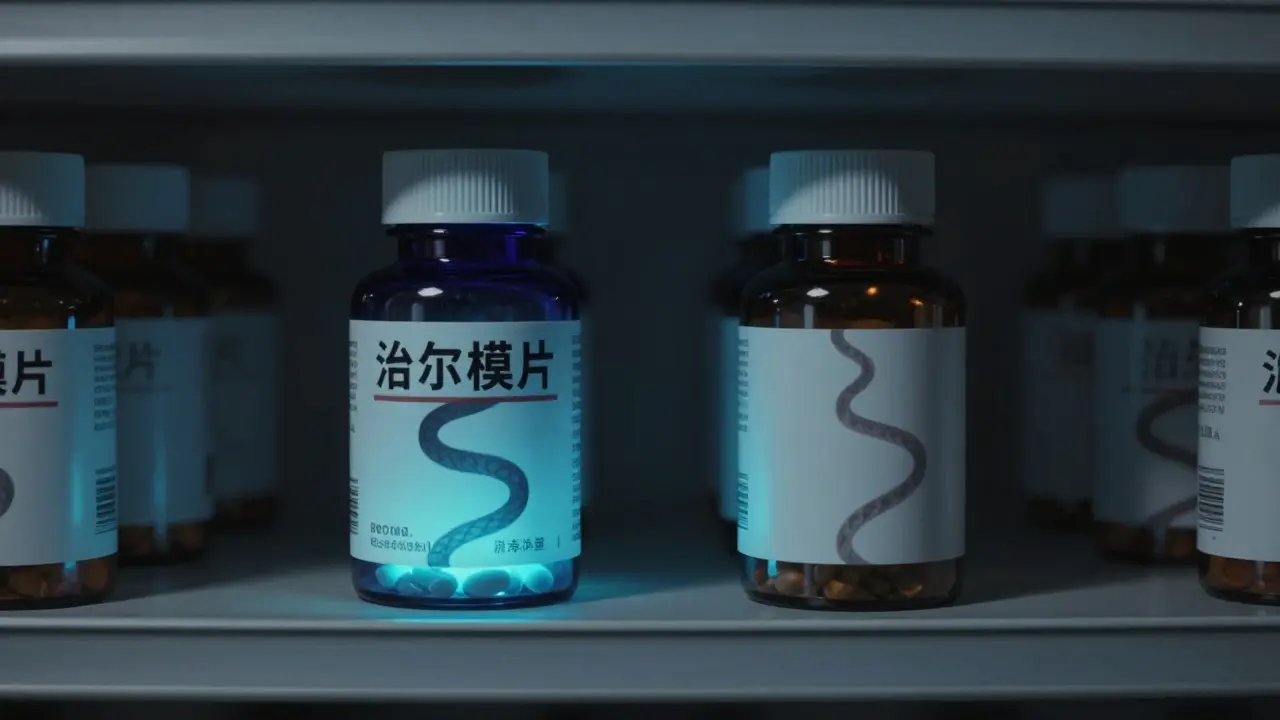
Ever bought a generic pill and wondered if it’s really the same as the brand-name version? You’re not alone. But here’s something most people don’t know: some of those cheap generics aren’t made by some distant generic company at all. They’re made by the same company that made the original brand-name drug - just with a different label. These are called authorized generics.
What Exactly Is an Authorized Generic?
An authorized generic isn’t a copy. It’s the exact same drug, made in the exact same factory, with the exact same ingredients, using the exact same process as the brand-name version. The only difference? The box says something else. No fancy branding. No marketing. Just a plain label and a lower price.
The FDA defines it clearly: an authorized generic is a drug approved under the original brand’s New Drug Application (NDA). That means it doesn’t go through the usual generic approval process. No extra bioequivalence studies. No waiting for an Abbreviated New Drug Application (ANDA). It’s the same product, just repackaged.
Think of it like buying a Coca-Cola bottle with a private label on it. The soda inside? Still Coca-Cola. Same recipe. Same factory. Same quality. That’s what an authorized generic is - but for prescription drugs.
Who Makes Them? The Real Players Behind the Labels
There are three main ways authorized generics get made - and it’s not always who you think.
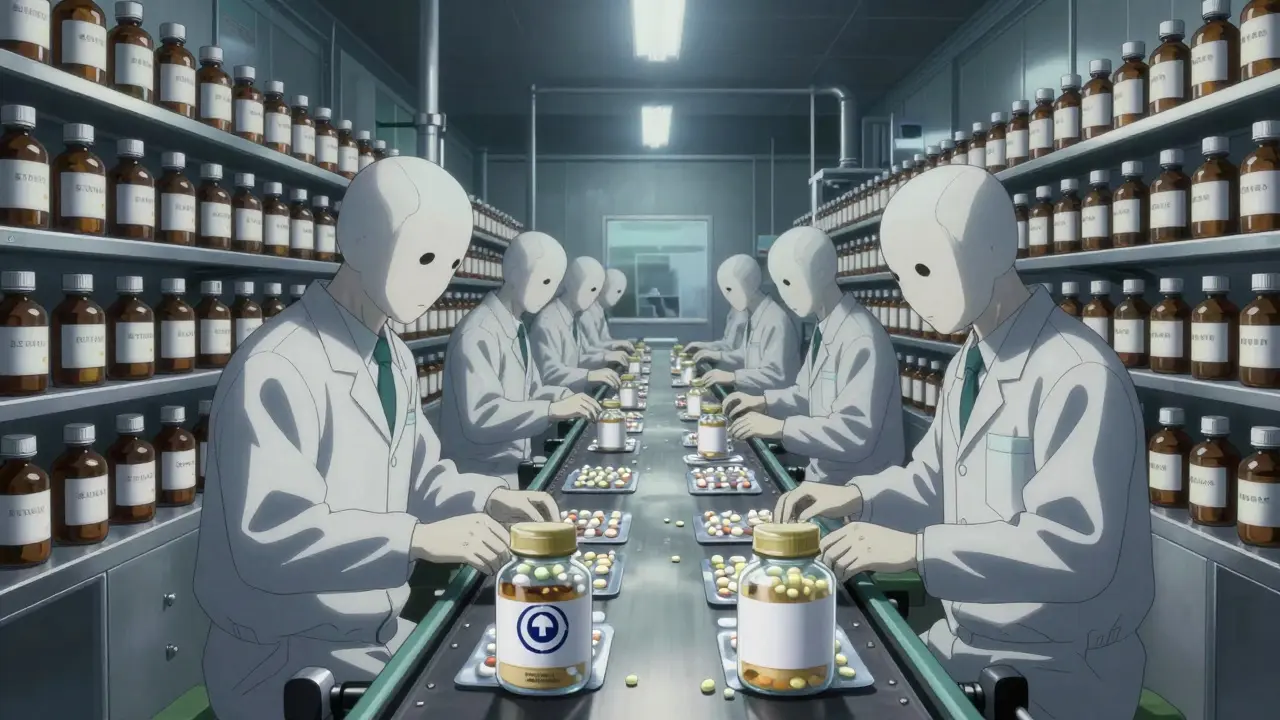
First: The brand company makes it themselves. About 52% of authorized generics are produced right in the same facilities where the brand-name drug is made. Pfizer, for example, uses its own subsidiary, Greenstone LLC, to produce over 70 authorized generics. These aren’t outsourced. They’re made on the same lines, with the same workers, using the same equipment. The only change is the label.
Second: A wholly-owned subsidiary handles it. This is the most common setup for big pharma. Greenstone is owned by Pfizer. Az generici is owned by AstraZeneca. These aren’t third-party contractors - they’re fully controlled arms of the original brand. They exist solely to produce authorized generics. This gives the brand total control over quality, supply, and timing.
Third: A third-party manufacturer steps in. About 17% of authorized generics are made by external contract manufacturers. But here’s the catch: the brand company still owns the NDA. That means they’re legally responsible for everything - from the active ingredient to the final packaging. The third-party plant must follow the exact same protocols, use the same raw materials, and pass the same FDA inspections as the original facility.
Take the case of Novartis and Comtan. When they launched an authorized generic, they used a contract manufacturer - but the active ingredient, the mixing process, the testing methods? All identical to the brand version. The FDA requires this. No shortcuts.
Why Do Brands Make Their Own Generics?
It sounds strange. Why would a company that spent millions developing a drug turn around and sell a cheaper version of it?
The answer? Market control.
When a patent is about to expire, generic competitors start lining up. But if the brand company launches its own authorized generic first, they can capture a big chunk of the generic market before anyone else gets in. It’s a smart play. They keep their customers. They keep their profits. And they keep their quality standards intact.
For example, when Pfizer’s Lyrica was set to lose patent protection, they partnered with Mylan (now Viatris) to produce an authorized generic. The result? Lyrica’s authorized version hit the market before any independent generic could. Sales stayed strong. Patients stayed loyal. And the brand kept its share of the pie.
It’s not just about money. It’s about trust. Patients and doctors know the brand. They trust it. An authorized generic lets that trust carry over - even at a lower price.
How Is This Different From Regular Generics?
Regular generics? They’re made by different companies. Often in different countries. Sometimes with different suppliers. Sometimes with slightly different inactive ingredients. They go through the ANDA process. They have to prove they’re bioequivalent. And yes - they’re usually safe and effective.
But authorized generics? They’re the original. No proof needed. No testing required. They’re the exact same thing.
Here’s a telling stat: 68% of authorized generics are made in the same facility as the brand-name drug. For regular generics? Only 12% use the same manufacturing process.
That’s not a small difference. That’s the difference between a twin and a cousin.
Quality Control: Are They Really the Same?
The FDA doesn’t cut corners with authorized generics. They’re held to the same standards as the brand. Every batch is tested. Every facility is inspected. Every process is documented.
In 2022, FDA inspections showed that facilities making authorized generics had a 98.7% compliance rate with current Good Manufacturing Practices (cGMP). Regular generic manufacturers? 96.2%.
That gap isn’t random. It’s because authorized generics are made in the same environment as the brand. Same equipment. Same training. Same quality checks.
Take Teva’s Copaxone. When they launched the authorized generic, they had to keep the exact same glass vials, the same lyophilization (freeze-drying) process, and even the same labeling font size. Why? Because changing any of that could affect how the drug behaves in the body. Even small changes matter.
What’s Changing in 2025?
The FDA is making things more transparent. Starting January 1, 2024, companies must disclose whether their authorized generic is made in the same facility as the brand. That’s a big deal. For years, patients had no way of knowing if their “generic” was actually the original drug.
This change came after the Government Accountability Office raised concerns about supply chain opacity. Now, if you buy an authorized generic, you’ll know - at least on paper - if it’s made by the same plant that made the brand.
And it’s not just transparency. The market is growing. Authorized generics brought in $4.7 billion in U.S. sales in 2022. That’s up from $3.1 billion in 2018. Analysts predict a 15-20% increase in authorized generic production by 2025, thanks to the wave of expiring patents - including Humira, which is expected to hit the market in 2025 with an authorized version from AbbVie’s subsidiary, Soliris Generics.
Are Authorized Generics Good or Bad for Patients?
Some experts say they’re a win. They give patients cheaper access to the exact same drug they’ve been taking. No guesswork. No risk.
Others say they’re a tactic to delay true competition. By putting their own generic on the shelf first, brand companies can squeeze out smaller generic makers. That might keep prices higher than they’d be in a fully open market.
Dr. Aaron Kesselheim from Harvard called it “artificial competition.” He argues that if authorized generics weren’t allowed, more independent generics would enter faster - driving prices down further.
The FDA’s stance? They don’t take sides. They just say: if it’s labeled as an authorized generic, it meets the same quality, safety, and effectiveness standards as the brand. That’s all they require.
For patients? The bottom line is simple: if you’re switching from a brand to an authorized generic, you’re not getting a different drug. You’re getting the same one - for less money.
What Should You Do?
If your prescription is expensive, ask your pharmacist: “Is there an authorized generic for this?”
It’s not always obvious. The label won’t say “authorized generic.” But pharmacists know. They can check the FDA’s database or ask the distributor.
And if you’re switching from brand to generic? Don’t panic. Authorized generics are the safest switch you can make. No new side effects. No unknown ingredients. Just the same medicine, cheaper.
Next time you pick up a prescription, look at the label. If it’s made by a company you recognize - like Pfizer, AstraZeneca, or Teva - it might not be a generic at all. It might be your brand, in disguise.
Are authorized generics the same as brand-name drugs?
Yes. Authorized generics are identical to the brand-name drug in active ingredient, strength, dosage form, route of administration, and manufacturing process. The only differences are the label, packaging, and price. They are made under the original brand’s FDA-approved NDA, so no additional testing is required.
Who manufactures authorized generics?
Authorized generics are made by the original brand company, their wholly-owned subsidiary (like Greenstone for Pfizer), or a contract manufacturer under strict oversight. In 52% of cases, they’re made in the same facility as the brand-name drug. In 31% of cases, they’re made by a subsidiary. Only 17% are made by third parties.
Are authorized generics cheaper than regular generics?
Sometimes - but not always. Authorized generics are usually priced lower than the brand, but they may cost the same as or slightly more than independent generics, especially early in the market. Their main advantage isn’t always price - it’s consistency and trust. You’re getting the exact same product as the brand.
How do I know if my generic is an authorized generic?
Check the label for the manufacturer’s name. If it’s the same company that makes the brand (like Pfizer, AstraZeneca, or Teva), it’s likely an authorized generic. You can also ask your pharmacist or check the FDA’s website for the NDA holder listed on the drug’s label. Starting in 2024, manufacturers are required to disclose whether the authorized generic is made in the same facility as the brand.
Do authorized generics have the same side effects as the brand?
Yes. Because they contain the exact same active ingredient, in the same amount, made with the same process, side effects are identical. The inactive ingredients (fillers, dyes, etc.) may differ slightly, but these rarely affect how the drug works or how your body reacts to it. The FDA requires that any differences in inactive ingredients be clinically insignificant.
Why aren’t all generics authorized generics?
Because only the original brand company can produce an authorized generic. Independent generic manufacturers can’t use the brand’s NDA. They have to go through their own approval process (ANDA). Authorized generics are a strategic tool for brand companies - not a universal option. That’s why only about 7.3% of generic drugs in the U.S. are authorized generics.
Is it safe to switch from a brand to an authorized generic?
Absolutely. Since authorized generics are chemically and physically identical to the brand, switching is safe and often seamless. Many patients and doctors prefer them because there’s no uncertainty about performance. The FDA considers them therapeutically equivalent - even if no other generic version exists.
Ambrose Curtis
January 28, 2026 AT 01:30Man, I had no idea my cheap generic lisinopril was basically the exact same pill as the brand. My pharmacist slipped me the info last week - turned out it was made by the same factory as the brand. Saved me $80 a month. Why the hell don’t more people know this?
Amber Daugs
January 29, 2026 AT 05:10Of course the big pharma giants are selling their own generics. What a shocker. They’ve been manipulating the system since day one. You think this is about patient access? Please. It’s about controlling the market and keeping prices artificially high under the guise of ‘trust.’ Classic corporate theater.
Linda O'neil
January 30, 2026 AT 03:13This is actually really good info for anyone on long-term meds. I switched my cholesterol med to an authorized generic last year and didn’t notice a single difference. No new side effects, no weird reactions. Just cheaper. If you’re worried about switching, start here - it’s the safest bet out there.
Robert Cardoso
January 31, 2026 AT 08:35Let’s be real - the FDA’s 98.7% compliance rate for authorized generics is meaningless. They inspect the same facilities they’ve been cozying up to for decades. Meanwhile, independent generics get nitpicked over minor deviations. This isn’t quality control - it’s regulatory capture. The system is rigged to favor the big players.
doug b
January 31, 2026 AT 09:43Ask your pharmacist next time you fill a script. Seriously. Most don’t push it because they get less profit on generics - but if you ask, they’ll tell you if it’s an authorized one. It’s not hard. Just say ‘Is this the same as the brand?’ and watch their face light up.
Mindee Coulter
February 1, 2026 AT 15:02I’ve been on Humira for 8 years. When the authorized generic drops next year, I’m switching immediately. No point paying $2000 a month when the exact same drug costs $300. Why make it complicated?
Rhiannon Bosse
February 2, 2026 AT 05:24So let me get this straight - the same company that spent billions marketing a drug, then turns around and sells the exact same thing for half price… but only after they’ve squeezed every last dime out of us? And you’re telling me this is ethical? I’ve got a bridge in Brooklyn you might want to see.
Brittany Fiddes
February 3, 2026 AT 03:23Interesting how the Americans keep pretending this is about ‘patient access.’ In the UK, we just force price caps and let generics compete freely. No corporate shell games. No ‘authorized’ nonsense. Just cheaper drugs because the government refuses to let pharma play games. Maybe we should export that model.
Bryan Fracchia
February 3, 2026 AT 18:54It’s weird how we treat medicine like a product you buy at Walmart. But it’s not. It’s your health. And if you can get the exact same thing your doctor prescribed, but cheaper - why not? The real tragedy isn’t the corporate strategy. It’s that we’ve been conditioned to think cheaper means worse. It doesn’t. Sometimes, it’s just the same thing with a different label.
Jeffrey Carroll
February 4, 2026 AT 09:08As someone who works in clinical pharmacology, I’ve reviewed dozens of authorized generic submissions. The data is clear: bioequivalence is not just assumed - it’s guaranteed by identical manufacturing. This isn’t marketing spin. It’s regulatory science. The FDA’s stance is evidence-based, not corporate-influenced.
Timothy Davis
February 5, 2026 AT 04:26Amber Daugs is right - this is manipulation. But it’s also inevitable. When patents expire, the brand company has two choices: lose everything or own the generic market. They choose the latter because capitalism rewards control, not competition. The real solution? Break up the pharma giants. Not just regulate them. Destroy them.
James Dwyer
February 7, 2026 AT 03:31Just switched my dad to an authorized generic for his blood pressure med. He was scared at first. Now he says he feels better because he’s actually taking it every day - it’s just cheaper. That’s the win right there.