

Tramadol Seizure Risk Calculator
Understanding Your Risk
Tramadol lowers the seizure threshold even at standard doses. This calculator helps you assess your risk based on key factors. Always consult your doctor before making any medication changes.
When you're in pain, finding relief matters. But if you have a history of seizures, one common painkiller could put you at serious risk - tramadol. It’s prescribed often, marketed as safer than older opioids, and sometimes even seen as a harmless option for chronic pain. But for people with seizure disorders or even just a single past seizure, tramadol isn’t just risky - it’s dangerous.
Why Tramadol Can Trigger Seizures
Tramadol works in two ways that most other opioids don’t. It binds to opioid receptors to dull pain, but it also blocks the reuptake of serotonin and norepinephrine in the brain. That dual action is why it helps with nerve pain and depression-related discomfort. But that same mechanism is what makes it a seizure trigger. Serotonin and norepinephrine are brain chemicals that help regulate mood, alertness, and nerve activity. When tramadol floods the system with too much of them - even at normal doses - it can throw off the brain’s electrical balance. This lowers the seizure threshold, meaning your brain becomes more likely to fire off abnormal, uncontrolled bursts of electricity. That’s a seizure. Studies show this isn’t rare. Between 2001 and 2006, tramadol was the most common medication linked to seizures reported to New Zealand’s adverse drug monitoring system. And it wasn’t just overdoses. People taking the standard 50mg to 400mg daily range still had seizures. One patient on 75mg per day - well within the safe limit - had a seizure. Another, with no prior history, seized after their first dose.Who’s at Highest Risk?
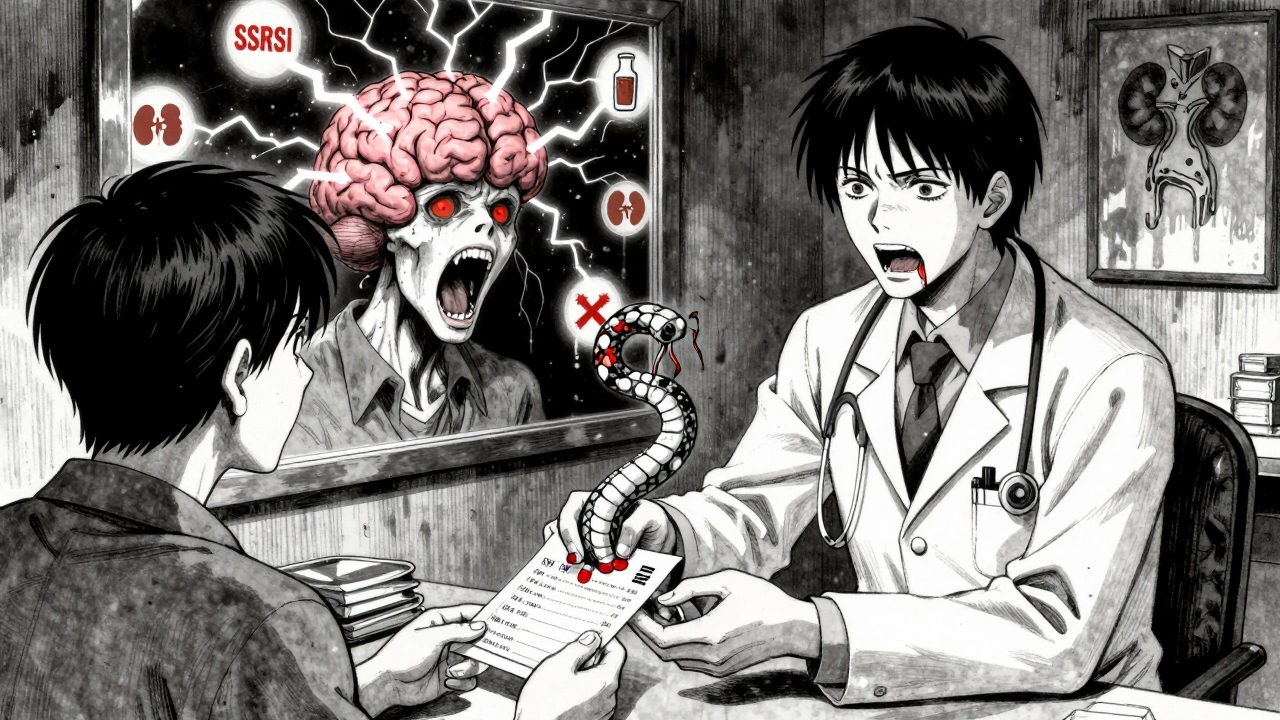
It’s not just people with epilepsy. Anyone with a past seizure, brain injury, stroke, or even a family history of seizures should avoid tramadol. But some groups face even higher danger:- People taking antidepressants like SSRIs or tricyclics (TCAs) - combining these with tramadol increases serotonin levels dangerously.
- Those using antipsychotics or other drugs that lower the seizure threshold.
- Patients with kidney problems - tramadol builds up in the body if kidneys can’t clear it, raising toxicity.
- People drinking alcohol while on tramadol - even one drink can push the risk over the edge.
- Younger adults, especially men under 30 - over 90% of documented tramadol-induced seizures occurred in males with a mean age of 28.4.
When Do Seizures Happen?
Timing matters. Most seizures linked to tramadol happen within the first 24 hours after taking it. In fact, 89% of cases in one major study occurred within that window. That means even if you’ve taken tramadol before without issue, the next dose could be the one that triggers a seizure. EEG scans after these seizures often show brain wave abnormalities right away - but they usually clear up within a week. That doesn’t mean the danger is gone. It just means the brain is recovering. The real risk is the immediate period after dosing.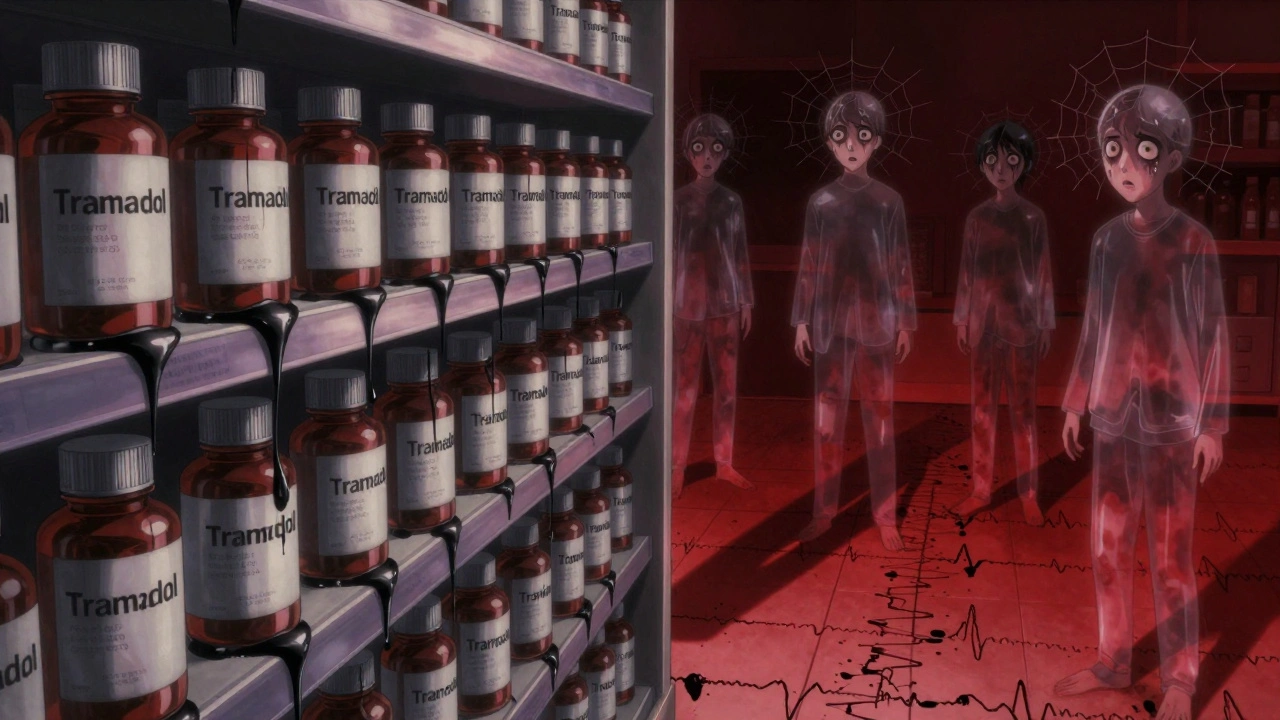
It’s Not Just About Overdose
Many assume seizures only happen with too much tramadol. That’s wrong. The Medsafe report from New Zealand documented seizures in patients taking exactly what their doctor prescribed. One person took 400mg daily - the maximum allowed - and had a sharp increase in seizure frequency. Another, with kidney failure, got 300mg IV and seized immediately. Even more alarming: tramadol’s seizure risk isn’t linear. At low doses, it can actually have a mild anti-seizure effect in lab animals. But at therapeutic or higher doses, it flips - becoming strongly pro-convulsant. That means your body’s response changes unpredictably as the dose goes up. There’s no safe middle ground if you’re predisposed.What Do Doctors Say?
Major medical institutions are clear. The UCSF Pain Management Education program states outright: “Tramadol lowers the seizure threshold and should not be used in patients with seizure disorders.” That’s not a suggestion. It’s a hard contraindication. The FDA reclassified tramadol as a Schedule IV controlled substance in 2014 - not because of addiction alone, but because of its growing pattern of serious side effects, including seizures. Emergency room visits tied to tramadol rose 250% between 2005 and 2011, even as prescriptions climbed 88%. The data doesn’t lie: more use = more seizures.What Are the Alternatives?
If you have a seizure disorder and need pain relief, tramadol is off the table. But there are safer options:- Acetaminophen (paracetamol) - safe for most people, even with epilepsy.
- NSAIDs like ibuprofen or naproxen - good for inflammation-related pain, unless you have kidney or stomach issues.
- Physical therapy, nerve blocks, or topical creams - non-drug options that avoid brain chemistry entirely.
- Other opioids like oxycodone or hydrocodone - while they carry addiction risks, they don’t lower the seizure threshold the way tramadol does.
Real Stories, Real Risk
One patient with a single childhood seizure had been pain-free for 20 years. After a back injury, their doctor prescribed tramadol 50mg twice daily. Within 18 hours, they had a tonic-clonic seizure. Their EEG showed no structural damage. Their blood levels were normal. But the drug had flipped a switch they didn’t know existed. Another woman, on daily tricyclic antidepressants for depression, started tramadol for arthritis. When her dose was increased from 100mg to 200mg daily, she had four seizures in two weeks. Stopping tramadol stopped the seizures. Restarting it - even at the original dose - brought them back. These aren’t outliers. They’re textbook cases.What to Do If You’re Already Taking Tramadol
If you’re on tramadol and have a seizure disorder, or have ever had a seizure, don’t stop cold turkey. Talk to your doctor. Abruptly stopping opioids can cause withdrawal - which itself can trigger seizures. Work with your provider to switch slowly to a safer alternative. Keep a seizure diary: note timing, triggers, duration. Bring your full medication list - including supplements and over-the-counter drugs - to every appointment. If you’ve had a seizure after taking tramadol, report it to your country’s adverse drug reporting system. In Australia, that’s the Therapeutic Goods Administration (TGA). Your report helps others.Bottom Line
Tramadol isn’t a safe painkiller for everyone. For people with seizure disorders, it’s a ticking time bomb - even at normal doses. Its unique chemistry makes it far more dangerous than other opioids when it comes to seizures. No amount of “it worked for me before” changes the science. If you’ve been prescribed tramadol and have any history of seizures - even one, years ago - ask for an alternative. Your brain deserves better than a gamble with its electrical stability.Can tramadol cause seizures even if I’ve taken it before without issues?
Yes. Seizures can happen at any time, even after multiple safe doses. The risk isn’t always about how long you’ve taken it - it’s about your brain’s sensitivity and interactions with other drugs. One person might take tramadol for years without incident, then have a seizure after a dose increase, stress, illness, or alcohol use. There’s no guaranteed safe period.
Is tramadol safe for someone with epilepsy?
No. Major medical guidelines, including those from UCSF and the FDA, explicitly contraindicate tramadol in patients with epilepsy or any seizure disorder. It lowers the seizure threshold and can trigger breakthrough seizures, even at standard doses. Safer pain relief options exist.
What medications should I avoid with tramadol?
Avoid tramadol if you’re taking SSRIs (like sertraline or fluoxetine), SNRIs, tricyclic antidepressants (like amitriptyline), antipsychotics (like risperidone), or other drugs that affect serotonin or lower the seizure threshold. Alcohol, illicit drugs, and even some herbal supplements like St. John’s Wort can also increase risk.
How quickly do tramadol-induced seizures happen?
Most occur within 24 hours of taking tramadol - often within the first few hours. In one study, 89% of seizures happened in that first day. This means the highest risk is right after starting the drug or increasing the dose. If you feel unusual muscle twitching, confusion, or dizziness after taking it, seek help immediately.
Are there any blood tests to check if tramadol is safe for me?
No. There’s no reliable blood test to predict tramadol-induced seizures. Genetic factors may play a role - some people metabolize tramadol faster or slower - but routine testing isn’t available. The only safe approach is to avoid tramadol entirely if you have a seizure history or are on interacting medications.
What should I do if I have a seizure while taking tramadol?
Seek emergency medical care immediately. Call an ambulance or go to the ER. Do not drive or operate machinery. Once stabilized, inform your doctor so they can stop tramadol and switch you to a safer alternative. Report the event to your national drug safety agency to help others avoid the same risk.
Jennifer Blandford
December 9, 2025 AT 23:57Okay but like… I had a cousin on tramadol for years after a car accident. Zero seizures. Then one day he had a beer with dinner and boom - seizure. No warning. No overdose. Just… poof. My whole family freaked out. Now he’s on gabapentin and ibuprofen and lives like a monk. No alcohol, no stress, no risky meds. It’s wild how one little pill can flip a switch you didn’t even know existed.
TL;DR: If you’ve ever had a seizure, even once, treat tramadol like a live grenade. Not worth it.
Also - RIP to anyone who got prescribed this without being warned. That’s medical negligence.
PS: My aunt’s neurologist called it ‘the silent trap.’ I’ll never forget that phrase.
Ryan Brady
December 11, 2025 AT 19:19LOL why are we even talking about this? Just don’t be a weakling and take real painkillers. Tramadol is for wusses who can’t handle oxycodone. If you’re having seizures from a pain med, maybe you shouldn’t be alive. #AmericaStrong
Simran Chettiar
December 12, 2025 AT 12:48It is a matter of profound philosophical inquiry, that the human body, in its intricate neurochemical architecture, becomes a battlefield not merely of pain but of pharmacological paradoxes - where a substance intended to soothe, becomes the architect of chaos. Tramadol, in its dual-action design, represents not merely a drug, but a metaphysical contradiction: a bridge between relief and ruin, a siren song sung by the chemical gods themselves. One must ask - is our modern medical paradigm not guilty of hubris, when we believe we can manipulate neurotransmitters without consequence? The brain, after all, is not a machine to be tuned, but a symphony - and tramadol, in its arrogance, plays a single note too loud.
And yet, we are told to trust the prescription. To trust the doctor. To trust the system. But what if the system is blind? What if the data, though statistically significant, fails to capture the soul of the individual? The woman who took 100mg daily for years, then seized after a single 200mg dose - was it the dose? Or was it the moment her soul whispered, ‘Enough’?
I do not know. But I weep for the ones who were never warned.
Asset Finance Komrade
December 13, 2025 AT 21:48Interesting. But let’s be real - this whole article feels like fearmongering dressed up as medical advice. Tramadol’s seizure risk? Yeah, it exists. But so does the risk of dying from a sneeze if you’re allergic to air. The data’s skewed because people with seizure histories are *supposed* to avoid it - so of course the cases are concentrated in that group. What about the millions who take it without issue? Why isn’t anyone talking about that?
Also, the ‘90% of seizures in men under 30’ stat? That’s just because young men are more likely to self-medicate, drink, mix meds, and ignore warnings. It’s not the drug’s fault - it’s the user’s recklessness.
And yes, I’ve taken tramadol for 5 years. No seizures. I’m not a lab rat. I’m a human with a spine.
Also 🤷♂️
Suzanne Johnston
December 14, 2025 AT 20:32I’ve worked in neurology for 18 years. I’ve seen patients come in after their first tramadol dose with full tonic-clonic seizures. No prior history. No overdose. Just… gone. One minute they’re laughing about their weekend, the next they’re convulsing on the floor.
This isn’t speculation. This is clinical reality. And the worst part? Doctors still prescribe it like it’s Advil. I’ve had patients tell me their GP said, ‘It’s not like oxycodone.’
It’s not like oxycodone - it’s worse. Because you don’t know you’re at risk until it’s too late.
If you have epilepsy, a head injury, or even a family history of seizures - don’t even *ask* for tramadol. Ask for acetaminophen. Ask for physical therapy. Ask for anything else. Your brain is not a gamble.
Graham Abbas
December 16, 2025 AT 09:04My sister had a single seizure at 17 from a fever. 15 years later, she got a back injury and was prescribed tramadol. She didn’t think twice - she’d taken it before, after her knee surgery, no problem.
Three days later, she had a seizure at work. Lost her job. Lost her confidence. Took her six months to get back on her feet.
Now she’s on gabapentin and acupuncture. And she’s *so* angry that no one warned her. Not the ER doc, not the physical therapist, not even the pharmacist.
Why do we assume ‘safe before’ means ‘safe always’? That’s not how biology works.
I’m sharing this because I don’t want anyone else to go through what she did. This isn’t just a medical fact - it’s a human tragedy waiting to happen.
Larry Lieberman
December 16, 2025 AT 19:34Wait - so if I’m on sertraline and take tramadol, I could seize even if I’ve never had a seizure before? 😳
My mom’s on Zoloft for anxiety. She’s been in pain since her hip replacement. I’m gonna print this out and hand it to her doctor tomorrow. Thanks for the heads up - this is life-saving info.
Also - 🚨🚨🚨
iswarya bala
December 18, 2025 AT 08:06i had a friend who took tramadol for 3 years after a car wreck and never had a seizure… but then she started drinking again and boom… 3 seizures in 2 weeks. she said she felt weird before it happened - like her body was buzzing. but she ignored it. stupid. now she’s off everything and uses heat packs and yoga. she says she’s never felt better. 🙏
om guru
December 19, 2025 AT 15:46