
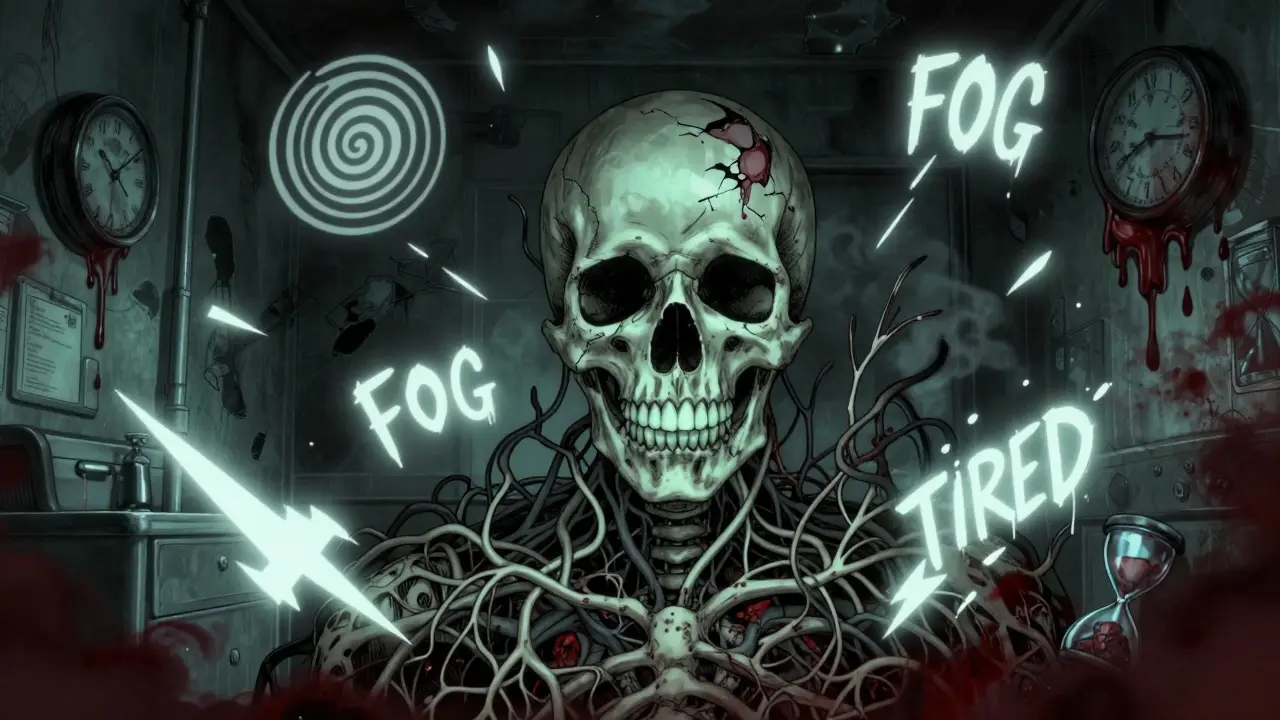
After a concussion, most people expect to feel better in a few days. But what if the headaches, dizziness, brain fog, or irritability don’t go away? That’s when it might be post-concussion syndrome - not a second injury, but a lingering malfunction in how the brain runs its systems. It’s not rare. About 1 in 5 people who get a mild traumatic brain injury end up stuck with symptoms longer than they should. And the worst part? Doctors used to tell them to just rest and wait. That doesn’t work anymore.
What Exactly Is Post-Concussion Syndrome?
Post-concussion syndrome (PCS) isn’t a new injury. It’s when symptoms from a mild brain injury stick around past the point where the brain has healed at the cellular level. The metabolic damage from the impact usually clears up in 22 to 30 days. But if you’re still having trouble concentrating, feeling overly tired, sensitive to light, or getting migraines after three months, you’re likely dealing with PCS. The key thing to understand: your brain isn’t broken. It’s misfiring. Think of it like a computer that’s rebooted after a crash, but the software is still glitching. The hardware is fine - the connections are intact - but the signals are tangled. That’s why scans like MRIs and CTs often come back normal. The problem isn’t structural. It’s functional. Your brain is using inefficient pathways to do simple tasks because the usual routes are still under repair. According to the CDC and the International Classification of Diseases (ICD-10), a formal PCS diagnosis requires symptoms lasting longer than three months. But many clinicians start watching closely after four weeks, especially if symptoms are worsening instead of improving.How Long Does Recovery Actually Take?
There’s no one-size-fits-all timeline. Some people feel back to normal in two weeks. Others take six months. A few struggle for years. But here’s what the data shows:- 70-80% of people recover fully within four weeks with active rehab.
- 15-20% develop prolonged symptoms that meet PCS criteria.
- For those with PCS, most see major improvement within 3-6 months.
- Less than 5% report symptoms lasting beyond three years - but they’re real, and they need different care.
What Symptoms Should You Watch For?
PCS doesn’t just mean headaches. It’s a mix of physical, mental, and emotional signs. Common ones include:- Headaches or pressure in the head
- Dizziness, balance problems, or vertigo
- Sensitivity to light or noise
- Brain fog - trouble focusing, remembering, or finding words
- Fatigue that doesn’t go away with rest
- Sleep problems - sleeping too much or too little
- Anxiety, irritability, or mood swings
- Depression or feeling emotionally numb
Why Rest Isn’t the Answer Anymore
For years, the standard advice was: lie down. No screens. No school. No sports. Just wait. That’s outdated. Research now shows that too much rest can make things worse. Staying in a dark room for weeks doesn’t help your brain rewire - it just makes it weaker. Studies from Complete Concussions and the RACGP found that patients who stayed inactive for too long had slower recoveries and more long-term issues. The new standard? Active rehabilitation. Not intense workouts. Not pushing through pain. But gentle, guided movement that slowly re-trains the brain’s systems. This means:- Light walking or stationary biking - just enough to raise your heart rate slightly without triggering symptoms
- Vestibular therapy for dizziness and balance
- Vision therapy for eye-tracking issues and light sensitivity
- Cervical (neck) therapy - many PCS symptoms come from neck injuries that happened with the concussion
- Gradual return to mental tasks - reading, screens, work - with breaks built in
What Does Real Recovery Look Like?
Recovery isn’t just "feeling better." It’s about measurable milestones:- Your Post-Concussion Symptom Scale (PCSS) score drops below 5 for men or 6 for women.
- You can walk or bike at 85-90% of your max heart rate without symptoms returning.
- Your balance, eye movements, and neck mobility return to normal on clinical tests.
- You can handle a full work or school day without needing to nap or hide from light.
Who’s at Higher Risk?
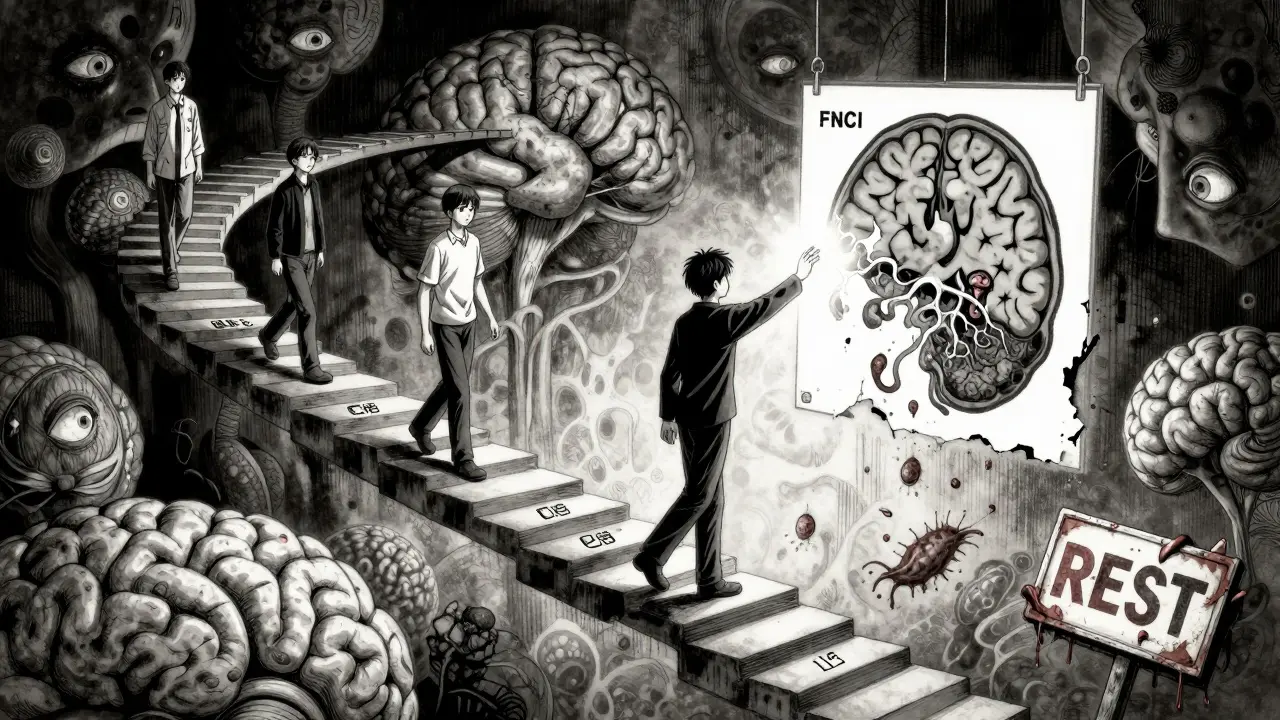
Some people are more likely to develop PCS. Watch out if you:- Had a loss of consciousness or memory loss right after the injury
- Had more than 20 points higher on the Graded Symptom Checklist in the first 24 hours
- Are under 18 or over 50
- Have a history of prior concussions
- Have anxiety, depression, or migraines before the injury
What About Long-Term Outcomes?
The good news? Most people do recover. Even those with long-lasting symptoms often see steady improvement over months or years with the right care. A 2023 study from the Cleveland Clinic followed patients for up to five years. While a small number still had symptoms, the vast majority saw significant progress. The key was early, targeted rehab. There’s no magic cure. But there’s hope. Your brain has an incredible ability to adapt - if you give it the right signals.What to Do Next
If you’re still symptomatic after four weeks:- Stop waiting. Don’t assume it’ll get better on its own.
- Find a provider who specializes in concussion rehab - not just pain management.
- Ask about active therapies: vestibular, vision, cervical, and graded exertion.
- Track your symptoms daily. Note what makes them better or worse.
- Avoid alcohol, caffeine, and screens if they trigger symptoms - but don’t isolate yourself.
Can post-concussion syndrome be permanent?
In rare cases, symptoms can last years, especially if treatment is delayed or incorrect. But "permanent" doesn’t mean untreatable. Even people with symptoms lasting over three years often see improvement with specialized rehab. The brain keeps adapting. It’s never too late to start.
Do I need an MRI or CT scan to diagnose PCS?
No. Standard imaging like MRI or CT scans usually appear normal in PCS because there’s no structural damage. Diagnosis is based on symptoms lasting longer than three months after a concussion, along with clinical evaluation of brain function - not scans.
Can I go back to sports with PCS?
Not until your symptoms are gone and your brain has been cleared through a graded return-to-activity protocol. Rushing back increases the risk of another injury - and can make PCS worse. Work with a rehab specialist who can guide you through each stage safely.
Is it normal to feel anxious or depressed after a concussion?
Yes. Brain injuries affect the systems that regulate mood and stress. These aren’t just "mental" reactions - they’re neurological. Treating them with therapy, gentle exercise, and sometimes medication can help speed overall recovery.
How soon should I start rehab after a concussion?
Within the first week. Early, gentle activity - like short walks or light cycling - helps the brain rewire faster. Waiting too long can lead to longer recovery times and more persistent symptoms. Rest for 24-48 hours after injury, then start moving - slowly and safely.
What’s the difference between a concussion and PCS?
A concussion is the initial injury - a temporary disruption in brain function. PCS is what happens when the symptoms outlast the healing process. Most concussions resolve in days or weeks. PCS is diagnosed when symptoms last beyond three months, even after the brain has healed at the cellular level.
Brian Anaz
January 6, 2026 AT 06:32This whole post is just woke brainwashing. You think resting is bad? Try telling a veteran who got blown up in Iraq that his brain fog isn't real. You're just pushing some Silicon Valley guru's rehab scam. I've seen guys get worse after these 'active rehab' programs. Rest works. Always has. Stop overcomplicating it.
Venkataramanan Viswanathan
January 7, 2026 AT 21:44While the scientific basis of post-concussion syndrome is increasingly validated, I must emphasize that the cultural context of recovery varies greatly. In many parts of India, rest is not merely physical but spiritual - involving family, diet, and mindfulness. The Western model of graded exertion may not translate directly without adaptation to local norms and resources.
Tiffany Adjei - Opong
January 8, 2026 AT 21:05Oh please. You say 'rest doesn't work' like it's some revolutionary idea. I've been telling my neurologist this for years. Meanwhile, you're still recommending 'light walking' like it's yoga for toddlers. If your brain is glitching, you don't need a treadmill - you need a damn neurologist who actually understands neuroplasticity, not some fitness coach with a certificate from YouTube U.
Cam Jane
January 9, 2026 AT 00:59YES. This. I had PCS for 14 months. Was told to 'rest and wait.' I did. Got worse. Then I found a specialist who did vestibular + cervical + graded cardio - and within 6 weeks, I could read a book without crying. It’s not magic. It’s science. Your brain is a muscle that forgets how to move if you don’t use it - even if it’s just walking around the block. Don’t wait. Start small. Every day counts. You got this.
Isaac Jules
January 10, 2026 AT 14:09LMAO. 'Functional brain imaging'? You mean fNCI? That's a joke. It's not even FDA-approved for diagnosis. You're selling a $10K 4-day program to desperate people. Meanwhile, real doctors are still using the same guidelines from 2017. This post is a glorified ad for Cognitive FX. I'm reporting this as a scam.
Stuart Shield
January 11, 2026 AT 14:42I remember sitting in my dark bedroom for six months after my bike crash, convinced I was broken. The silence was louder than any headache. Then one day, I walked to the mailbox - just to the mailbox - and didn’t collapse. That was the first crack in the wall. Recovery isn’t a straight line. It’s a thousand tiny victories. You’re not failing. You’re just not done yet.
Lily Lilyy
January 12, 2026 AT 10:45It is truly inspiring to witness the advancement of medical understanding regarding post-concussion syndrome. One must remain steadfast in one’s pursuit of holistic well-being, adhering to evidence-based protocols with unwavering discipline. I commend the author for promoting a paradigm rooted in scientific rigor and compassionate care. May all who suffer find clarity and healing.
Ashley S
January 14, 2026 AT 09:43Why is no one talking about the fact that 90% of these 'concussions' are from sports and the NFL hides this? And why do they push 'active rehab' right after the injury? Because they want you back on the field. This is all corporate. Your brain is damaged. Let it heal. Stop being a guinea pig for some profit-driven clinic. I’m not going to let them turn my trauma into a marketing campaign.
Leonard Shit
January 15, 2026 AT 18:38lol i got a concussion in 2019 and just kinda... lived with it? i stopped drinking, avoided screens after 8pm, and walked my dog every day. no clinic. no fnci. no fancy gear. just... time. and patience. and also, maybe, my brain just decided to chill out. also typoed 'neurologist' as 'neurologist' again. oops.
Melanie Clark
January 16, 2026 AT 16:14They’re hiding the truth. The brain doesn’t glitch. It’s the EMF from 5G towers and the glyphosate in your water that’s scrambling your synapses. The CDC knows. The WHO knows. But they won’t tell you because the pharmaceutical companies own them. Your 'active rehab' is just another way to distract you from the real enemy - the chemtrails and the vaccines. I’ve been tracking this since 2016. You’re being played.
Harshit Kansal
January 17, 2026 AT 02:47Bro I had PCS after a rugby tackle. I tried the rest thing. Got worse. Then I started yoga and eating turmeric. Now I’m back playing. No fancy clinics. Just chill vibes and good food. Also I cried watching a dog video last week and felt better. Mental health is part of it too. No need to overthink.
Matt Beck
January 17, 2026 AT 22:33It’s not about the brain… it’s about the soul’s recalibration after trauma. The concussion was merely the catalyst - the real injury was the severing of your connection to the present moment. The 'glitch' isn’t neural - it’s existential. You must relearn how to be. Not fix. Not rehabilitate. BE. The body follows the spirit. And the spirit… needs stillness. Not movement. Not protocols. Just… presence. 🌿✨
Kelly Beck
January 18, 2026 AT 21:11Hey - I’m so proud of you for even reading this far. I know how hard it is to focus when your brain feels like it’s full of static. But you’re not alone. I’ve been there. I spent 10 months in limbo. Then I found a clinic that didn’t just hand me pills - they sat with me. They listened. They gave me a plan that fit my life - not some textbook. You don’t have to be 'fixed' to be healing. You’re already doing better than you think. One step. One day. One breath. You’re going to be okay. I believe in you. 💪❤️