
What Is Deep Brain Stimulation for Parkinson’s?
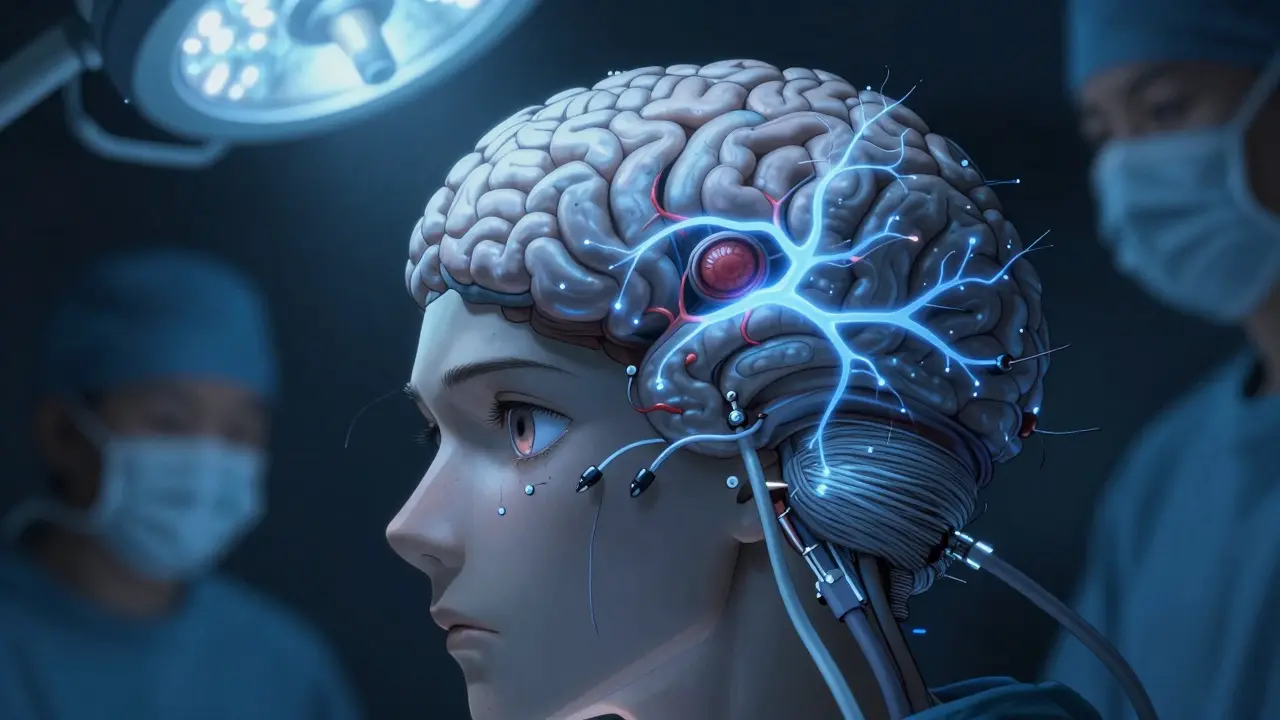
Deep Brain Stimulation, or DBS, is a surgical treatment that uses implanted electrodes to send controlled electrical pulses to specific areas of the brain. It doesn’t cure Parkinson’s disease, but it can dramatically reduce the worst symptoms-like shaking, stiffness, and uncontrollable movements-that don’t respond well to medication anymore. Think of it like a pacemaker for the brain. Instead of regulating heartbeat, it regulates abnormal brain signals that cause motor problems in Parkinson’s.
DBS has been used for over 25 years. The first major clinical use for Parkinson’s started in the late 1990s, and the FDA approved it for the condition in 2002. Since then, hundreds of thousands of people worldwide have received the device. Modern systems like Medtronic’s Percept™ PC, Boston Scientific’s Vercise™ Genus™, and Abbott’s Infinity™ DBS aren’t just basic stimulators anymore. They can sense brain activity in real time, adjust stimulation automatically, and even connect to apps on your phone for remote programming. This means the device learns your brain’s patterns and responds to your symptoms as they happen.
Who Is a Good Candidate for DBS?
Not everyone with Parkinson’s is a candidate. DBS works best for people who still respond well to levodopa-the main Parkinson’s medication-but who now have unpredictable “on” and “off” periods, or who suffer from severe dyskinesias (involuntary movements caused by long-term medication use).
The standard criteria, based on guidelines from 1999 and updated by the Movement Disorders Society in 2020, include:
- At least 5 years of Parkinson’s symptoms
- A clear, strong response to levodopa-typically a 30% or better improvement in motor scores during a doctor’s test
- No major cognitive issues (MMSE score above 24 or MoCA above 21)
- No untreated depression or anxiety that could worsen after surgery
- Diagnosis of idiopathic Parkinson’s, not atypical parkinsonism like progressive supranuclear palsy or multiple system atrophy
If your tremors get better when you take levodopa, DBS likely will help too. If your balance problems or freezing episodes don’t improve with medication, DBS probably won’t fix them either. That’s why doctors don’t recommend it for people whose main issues are walking, falling, or speech-those symptoms don’t respond well to stimulation.
How Does the Surgery Work?
DBS surgery is done in two parts: placing the electrodes and implanting the battery. Both are usually done in one long session, lasting 3 to 6 hours. You’re awake during most of it-because the brain doesn’t feel pain, doctors need you to talk, move your limbs, and respond so they can find the exact spot to place the electrodes.
First, a metal frame is attached to your head. Then, a high-resolution 3T MRI scan maps your brain. Surgeons use this to guide thin wires (1.27mm wide) into one of two target areas: the subthalamic nucleus (STN) or the globus pallidus interna (GPi). These are deep brain regions that become overactive in Parkinson’s.
During the procedure, tiny electrodes record brain signals. When you move your hand or foot, the doctors watch the electrical patterns. They’re looking for the sweet spot-the place where stimulation gives the best symptom relief with the fewest side effects. Once the electrodes are in, they’re connected to wires that run under your skin to a battery pack implanted near your collarbone or abdomen.
Most people go home within 24 hours. Recovery takes a few weeks. You won’t feel the stimulation right away. Programming the device takes months.
STN vs GPi: Which Target Is Right for You?
The two main targets for DBS in Parkinson’s are the subthalamic nucleus (STN) and the globus pallidus interna (GPi). Both improve movement symptoms by about the same amount-around 50% on average. But they have different strengths.
STN stimulation allows most patients to cut their levodopa dose by 30% to 50%. That means fewer medication side effects like nausea, dizziness, and dyskinesias. But STN has a higher risk of causing mood changes, word-finding trouble, or trouble concentrating. People who work in high-focus jobs or worry about memory should consider this carefully.
GPi stimulation doesn’t reduce medication as much, but it’s better at controlling dyskinesias directly. It also has fewer cognitive side effects. If your main problem is uncontrolled movements from medication, GPi might be the better choice. It’s also preferred for people with depression or anxiety, because it’s less likely to make those worse.
There’s no one-size-fits-all answer. The decision depends on your symptoms, your life goals, and your brain’s response during testing. A good team will walk you through both options and show you data from your own brain recordings to help decide.
What Are the Real-World Results?
Studies show that 70% to 80% of well-selected patients get major improvements. In the landmark EARLYSTIM trial, patients who got DBS early (after only 4 years of Parkinson’s) saw their quality of life scores jump by 23 points on a 39-point scale. Those on medication alone improved by only 12.5 points.
Many patients report:
- Reducing “off” time from 6 hours a day to under an hour
- Cutting dyskinesias by 80% to 90%
- Being able to dress, eat, and walk without help
- Returning to hobbies or part-time work
But DBS isn’t magic. It doesn’t stop Parkinson’s from progressing. It doesn’t fix speech, swallowing, or balance problems much. And it doesn’t help with dementia or depression-those need separate treatment.
Some people feel disappointed because they expected DBS to “fix everything.” One Reddit user wrote: “I thought it would make me normal again. It didn’t. But it gave me back my mornings.” That’s the reality. It’s not a cure. It’s a powerful tool to regain control over the parts of Parkinson’s that medication can’t manage.
What Are the Risks and Downsides?
DBS is generally safe, but it’s still brain surgery. About 1% to 3% of patients have a brain bleed during the procedure. About 5% to 15% will have hardware problems later-like a broken wire, loose connection, or infection around the battery. These often require another surgery to fix.
Programming the device takes time. It’s not like turning on a light switch. It can take 6 to 12 months to get the settings just right. You’ll need monthly visits at first, then quarterly. You’ll need to keep a symptom diary. You’ll need to learn how your meds and stimulation interact. Some people get frustrated and give up.
Batteries last 3 to 15 years, depending on the model. Non-rechargeable ones need replacement every 3 to 5 years. Rechargeable ones last longer but require daily charging. That’s a lifestyle change.
And then there’s the cost. In the U.S., the total cost-including surgery, device, hospital stay, and follow-up-is $50,000 to $100,000. Medicare and most private insurers cover it if you meet the criteria, but getting approval can take 3 to 6 months.
Why Is DBS So Underused?
Despite its effectiveness, only 1% to 5% of people who qualify for DBS actually get it. Why? Because most doctors don’t talk about it until it’s too late.
Many neurologists wait until patients are severely disabled before considering DBS. But research shows the earlier you do it-once you’ve had Parkinson’s for 4 to 7 years and meds are starting to wear off-the better the long-term outcome. The EARLYSTIM-2 trial is now testing DBS in patients with just 3 years of symptoms.
Another problem: lack of access. Only academic medical centers with high-volume DBS programs (over 50 procedures a year) consistently get the best results. Community hospitals often lack the team-neurologists, neurosurgeons, neuropsychologists, and DBS coordinators-needed to do it right.
And then there’s fear. Patients hear “brain surgery” and think of strokes or coma. But the risks are low, and the benefits are high for the right person. The Parkinson’s Foundation calls DBS “markedly underutilized.” If you’re struggling with medication side effects, ask your neurologist: “Am I a candidate for DBS?” Don’t wait until you’re trapped in your body.
What’s Next for DBS Technology?
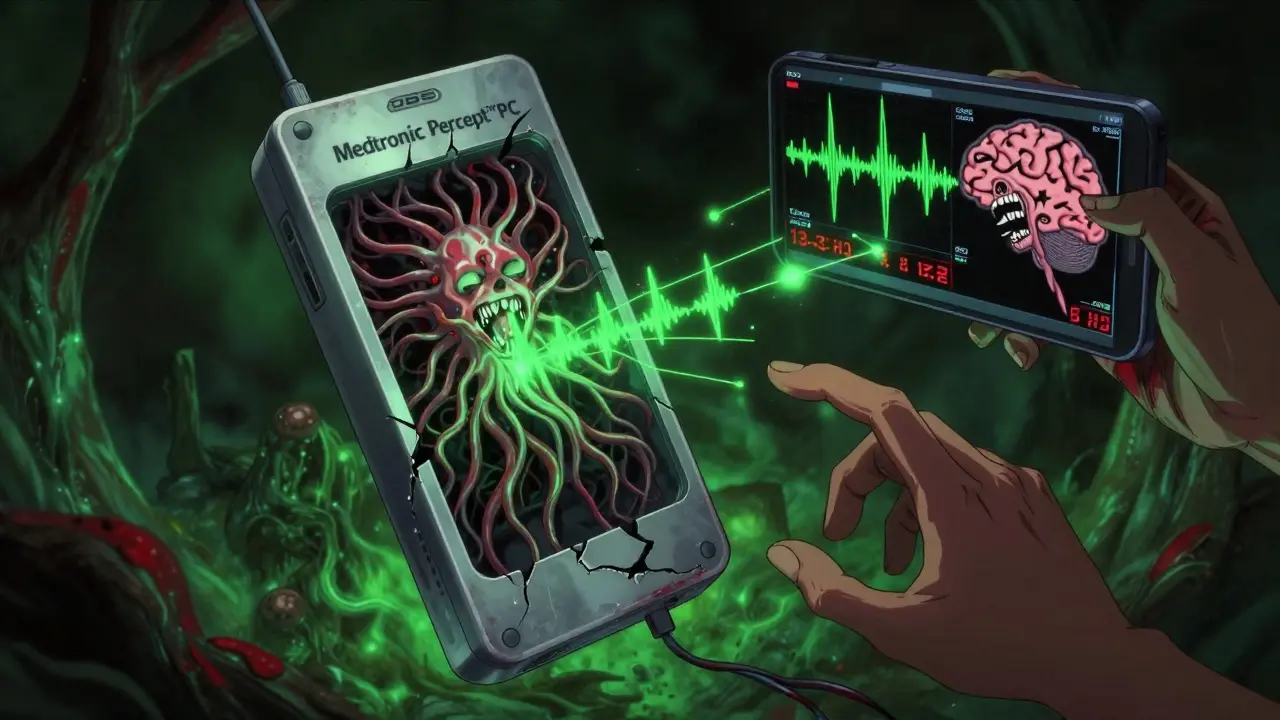
DBS is getting smarter. The latest devices, like Medtronic’s Percept™ PC, can detect abnormal brain waves (beta oscillations at 13-35 Hz) and adjust stimulation automatically. This is called “closed-loop” DBS. Early results show 27% better symptom control than older, constant-stimulation systems.
Future developments include:
- Integration with wearable tech (Apple Watch detecting tremors, syncing with DBS settings)
- Using genetic markers to predict who responds best (LRRK2 mutation carriers show 15% better outcomes)
- Expanding DBS to treat non-motor symptoms like depression and fatigue
- Personalized stimulation patterns based on your brain’s unique signals
One day, DBS might not just treat symptoms-it might predict them before they happen. But for now, the goal is simple: help people with Parkinson’s live better, longer, and more independently.
What to Do If You’re Considering DBS
If you think you might be a candidate, here’s your action plan:
- Ask your neurologist: “Do I meet the criteria for DBS?”
- Request a referral to a movement disorders specialist with a DBS program
- Prepare for a full evaluation: neurology exam, neuropsych testing, 3T MRI, and team review
- Bring a family member to appointments-this decision affects your whole life
- Ask about the center’s volume: How many DBS surgeries do they do per year?
- Ask about long-term programming support: Who handles follow-ups? Is there a DBS coordinator?
- Write down your biggest concerns: Is it the surgery? The battery changes? The cognitive risks?
Don’t let fear or misinformation stop you. If you’re still responding to levodopa and your symptoms are limiting your life, DBS could be the best thing you’ve done since your diagnosis.
Sarah Triphahn
January 15, 2026 AT 13:02Vicky Zhang
January 16, 2026 AT 05:06Allison Deming
January 16, 2026 AT 10:28Susie Deer
January 17, 2026 AT 08:11TooAfraid ToSay
January 18, 2026 AT 01:27Dylan Livingston
January 19, 2026 AT 11:47Sarah -Jane Vincent
January 21, 2026 AT 05:00Henry Sy
January 22, 2026 AT 12:15Anna Hunger
January 22, 2026 AT 22:39shiv singh
January 24, 2026 AT 07:42Robert Way
January 24, 2026 AT 16:32Andrew Freeman
January 26, 2026 AT 13:38says haze
January 28, 2026 AT 03:17Alvin Bregman
January 28, 2026 AT 21:58