
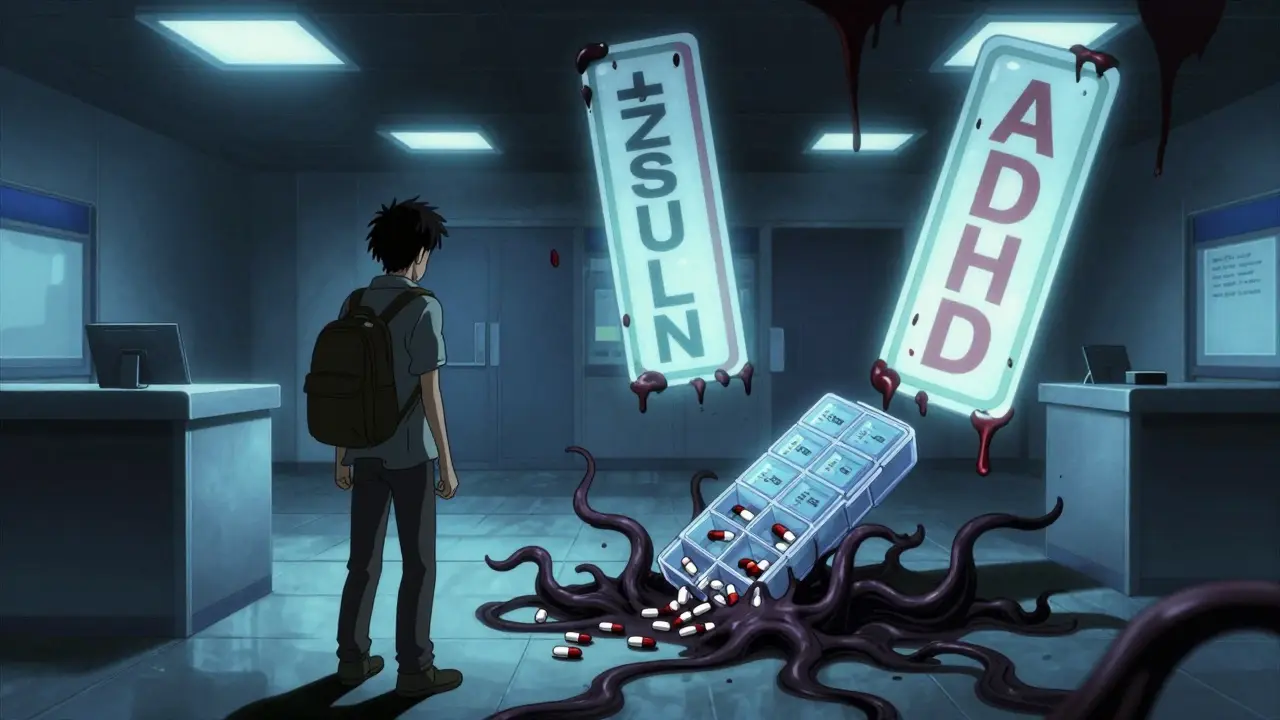
Imagine this: you’re at security, bags ready, and the TSA agent stops you because your insulin isn’t in the original bottle. Or worse - your child’s liquid ADHD medication gets confiscated because you thought a pill organizer was fine. These aren’t rare stories. They happen every day, and they’re avoidable. Packing medications for air travel isn’t just about convenience - it’s about safety, legality, and keeping your treatment on track. Whether you’re flying with insulin, biologics, liquid prescriptions, or injectables, getting it right means knowing the rules, preparing ahead, and understanding what can go wrong.
Original Containers Are Non-Negotiable
The number one rule? Keep every pill, liquid, or injection in its original pharmacy container. No exceptions. Not even if you’ve been taking the same dose for ten years. The TSA requires prescription labels to show your full name, the medication name, dosage, and prescribing doctor. This isn’t just bureaucracy - it’s a safety layer. Repackaging meds into travel pill organizers or ziplock bags can expose them to moisture, light, or contamination. According to pharmacists at Cleveland Clinic, this can reduce potency by up to 30% in just 72 hours. One Reddit user learned this the hard way when their Humira was denied at LAX because they’d transferred doses to a weekly pill box. Original packaging isn’t just about passing security - it’s about keeping your medicine effective.Liquids Over 3.4 Ounces? You’re Allowed - Just Declare Them
You’ve heard the 3.4-ounce rule for liquids in carry-ons. But that doesn’t apply to medications. The TSA explicitly allows medically necessary liquids in quantities larger than 100 mL - even a full 120 mL bottle of liquid ADHD medication or a 200 mL vial of insulin. You don’t need a doctor’s note for this, but you do need to declare it at the checkpoint. Bring it out separately from your other liquids. TSA agents will visually inspect it and may swab it for residue. If they ask, explain it’s a prescription medication. Most of the time, they’ll let it through without issue. According to TSA data from 2023, over 78% of medication-related screening issues were resolved simply by presenting the right documentation. Don’t hide it. Don’t sneak it. Just say it out loud.Temperature-Sensitive Meds Need a Cooling Plan
If you’re traveling with insulin, biologics, or any refrigerated medication, your biggest threat isn’t security - it’s temperature. Cargo holds can drop below -40°C (-40°F). That’s cold enough to ruin insulin by causing irreversible crystallization. On the flip side, if your bag sits on a hot tarmac or in a non-cooled airport lounge, your meds can overheat. The International Society of Travel Medicine says biologics lose 5% of their potency every hour above 25°C (77°F). That’s why you need a TSA-compliant cooler. Use an insulated bag with frozen gel packs - and make sure those packs are fully frozen when you get to security. Liquid gel packs are allowed as long as they’re solid. If they’re slushy, they’ll be treated like regular liquids and hit by the 3.4-ounce limit. St. Jude Children’s Research Hospital recommends freezing your ice packs for at least 24 hours before travel. A good cooler will keep meds between 2-8°C (36-46°F) for 12-18 hours. And never, ever check these meds. Checked luggage is the #1 cause of medication failure during travel.Injectables, Syringes, and Sharps - What You Can Bring
Needles, syringes, pen injectors, and insulin pumps? All allowed in carry-on luggage - as long as they’re accompanied by the medication they’re meant for. You don’t need a doctor’s note for these, but having one helps. If you’re carrying a sharps container, make sure it’s FDA-approved and sealed. TSA allows these in both carry-on and checked bags, but you’ll be asked to show them at screening. If you’re flying internationally, check local rules. Some countries restrict sharps or require special permits. The CDC says always carry a spare syringe and needle in case of malfunction. And never leave them in the car or checked bag - temperature swings and rough handling can damage them. United Airlines now offers in-flight refrigeration on all 787 Dreamliners as of January 2024, so if you’re flying on one, ask the crew about storage options.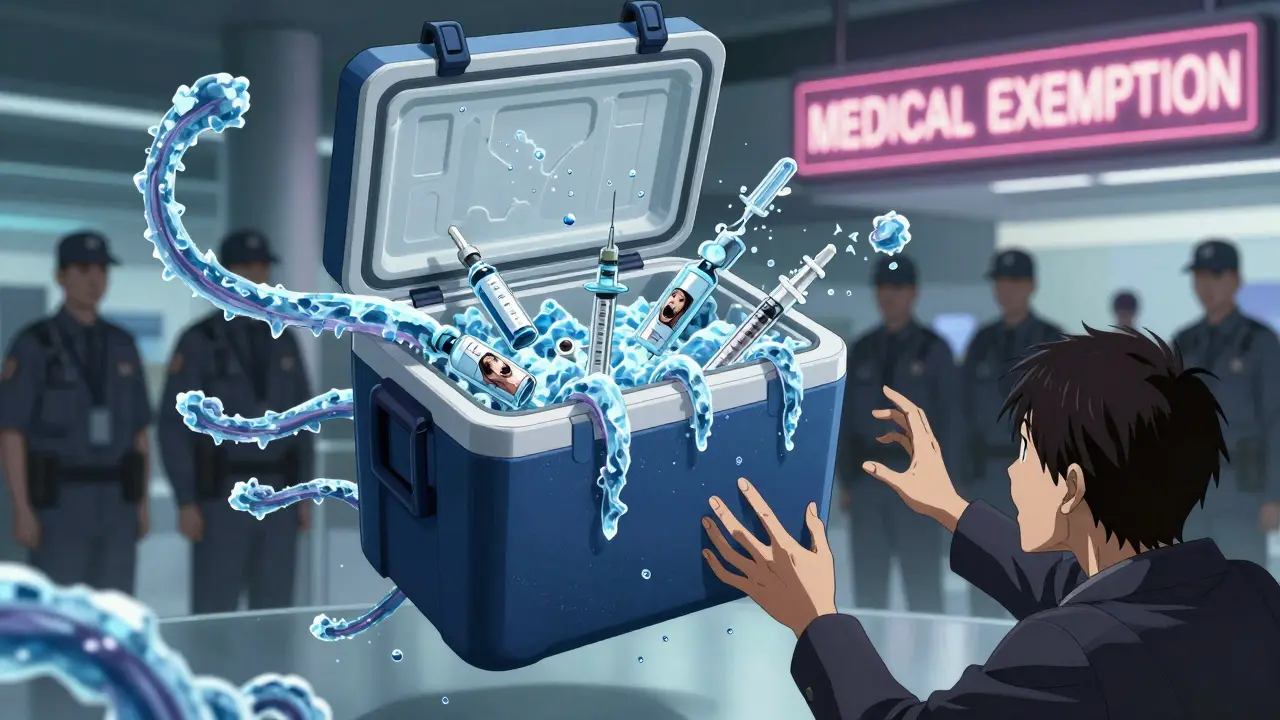
Documentation: Prescription, Letter, and Translation
Three documents make your trip smoother: your prescription label, a doctor’s letter, and translated copies if you’re going overseas. The prescription label is mandatory. The letter? Highly recommended. It should be on official letterhead, signed, and include your diagnosis, the medication’s purpose, and dosage. This isn’t just for TSA - it’s for foreign customs. Japan, South Korea, and the UAE require prior approval for medications containing pseudoephedrine, and Japan limits you to a 72-hour supply. The European Union allows up to 90 days’ supply with documentation, but many Asian countries cap it at 30 days. If you’re flying to a non-English-speaking country, get your doctor’s letter translated at least two weeks ahead. Services like the ATA Document Translation Network can help. Don’t wait until the airport. One traveler told a TripAdvisor forum that having a translated letter saved them from a 90-minute delay at Tokyo Narita.Time Zones and Scheduling - Don’t Just Wing It
Crossing five or more time zones? Your body clock shifts. Your meds shouldn’t. If you take a pill at 8 a.m. every day and you’re flying from Melbourne to New York, you can’t just keep taking it at 8 a.m. Melbourne time. You’ll end up with missed doses or double dosing. The American Academy of Sleep Medicine recommends adjusting your schedule 15-30 minutes earlier or later each day for 3-5 days before you fly. For example, if you normally take your blood pressure pill at 8 a.m. and you’re flying east, start taking it at 7:30 a.m. three days before departure. This reduces jet lag side effects and keeps your treatment consistent. Apps like Medisafe or MyTherapy can help you track and adjust your schedule automatically.What Not to Do - Common Mistakes
Here’s what gets travelers flagged at security:- Packing meds in checked luggage - risk of freezing, loss, or delay
- Using unlabeled pill organizers - even if they’re yours
- Bringing expired or partially used bottles - they’ll be questioned
- Not declaring liquids over 100 mL - even if they’re medically necessary
- Forgetting spare prescriptions - what if you lose your meds?
Technology Is Helping - Digital Passports and New Rules
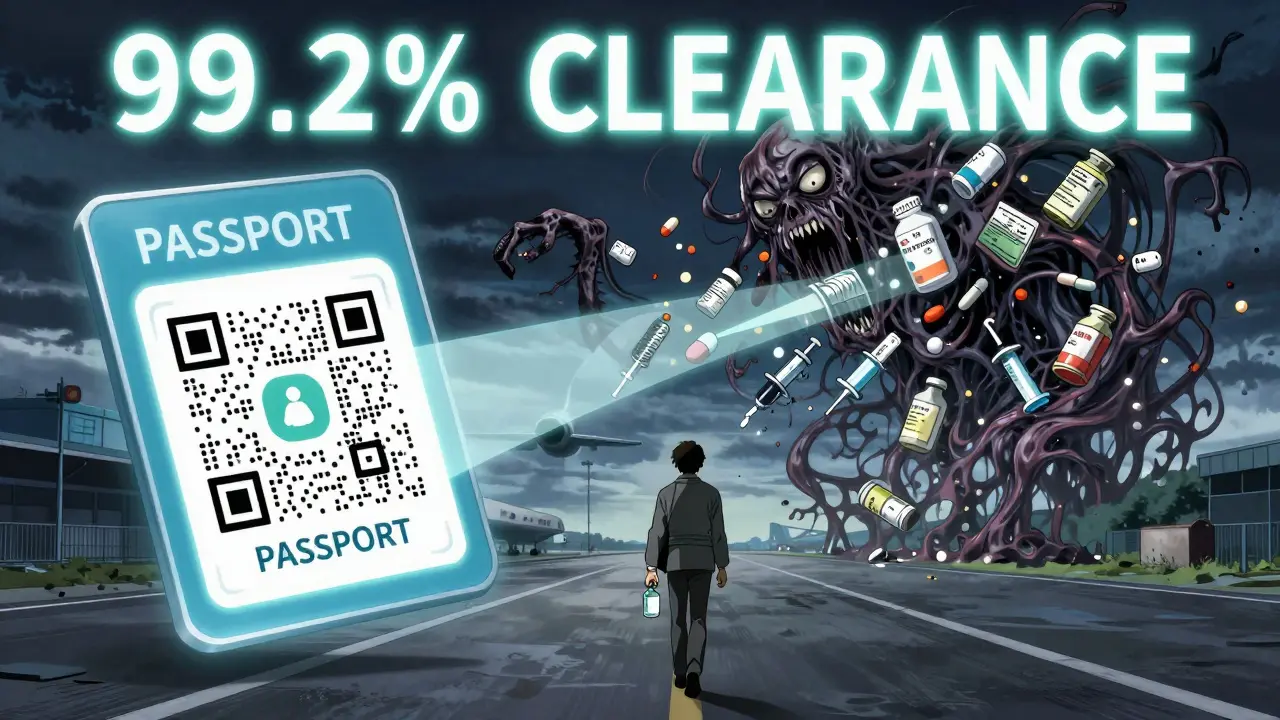
The good news? Things are getting easier. The TSA partnered with MyMediTravel in 2023 to launch a digital medication passport verified by blockchain. Over 127,000 travelers have used it since, with a 99.2% clearance rate. You upload your prescriptions, doctor’s letter, and medication list - then show a QR code at security. No paper needed. United Airlines now has in-flight refrigerators on all 787s. And by 2026, the FAA plans to require all U.S. airlines to offer temperature-controlled storage for medically necessary meds. The TSA also plans to expand dedicated “Medical Necessity” screening lanes to all major U.S. airports by the end of 2025. That means shorter waits and fewer hassles.Final Checklist: Pack Smart, Fly Confident
Before you leave, run through this:- Keep all meds in original pharmacy bottles with labels
- Carry liquid meds in your carry-on - declare them at security
- Use a frozen, insulated cooler for refrigerated meds - no slushy packs
- Bring syringes, pens, and pumps with their matching meds
- Print a doctor’s letter on letterhead - include diagnosis and dosage
- Translate documents if flying outside English-speaking countries
- Adjust your schedule 3-5 days before crossing 5+ time zones
- Bring extra doses - in case your bag gets lost
- Arrive 2 hours early for domestic, 3 hours for international
- Download a digital medication passport if you fly often
Frequently Asked Questions
Can I pack my medications in checked luggage?
No - never pack temperature-sensitive medications like insulin, biologics, or liquid prescriptions in checked bags. Cargo holds can reach -40°C (-40°F), which can permanently damage protein-based drugs. Even non-refrigerated pills risk being lost, stolen, or delayed. Always keep all medications in your carry-on.
Do I need a doctor’s note for my medications?
Not always - but it’s strongly recommended. The TSA doesn’t require a letter for U.S. domestic flights if your meds are in original containers. But for international travel, or if you’re carrying large quantities, injectables, or controlled substances, a signed letter from your doctor on official letterhead can prevent delays or confiscation. It’s a small step that saves big headaches.
How much liquid medication can I bring on a plane?
There’s no official limit for medically necessary liquids. The TSA allows as much as you need, even over 3.4 ounces (100 mL), as long as you declare it at security. The FAA caps total liquid volume at 2,000 mL (67.6 ounces) per passenger without special approval - but this rarely applies to personal medication. Just be ready to explain what it is and why you need it.
Can I bring my insulin pen through security?
Yes - insulin pens, auto-injectors, and infusion pumps are allowed in carry-on luggage. You don’t need to remove them from your bag, but you may be asked to show them at the checkpoint. Keep them with their matching medication. If you’re carrying spare needles or syringes, make sure they’re in a sealed sharps container. TSA allows these without issue if they’re clearly for personal medical use.
What if I’m flying to Japan or the UAE?
Some countries have strict rules. Japan and the UAE ban medications containing pseudoephedrine (common in cold meds) unless you get prior approval. Japan limits prescriptions to a 72-hour supply. The UAE requires a letter from your doctor and may inspect your meds at customs. Always check the U.S. Department of State’s travel advisory for your destination - updated April 2024 - before you fly. Don’t assume your U.S. prescription is valid abroad.
Ian Long
January 8, 2026 AT 17:59Bro, I packed my insulin in a ziplock once because I was in a rush. TSA let me through, but my meds got ruined by humidity. Learned the hard way. Never again.
Original bottles are non-negotiable. Period.
Pooja Kumari
January 10, 2026 AT 04:42OMG I had this nightmare last month in Delhi when I was flying to London with my son’s ADHD meds. I put them in a cute little pill organizer because I thought it looked ‘organized’ and the officer at Heathrow almost called the police. I cried in the security line. Turns out, even if you’ve been taking the same dose for 5 years, the label is everything. I now carry my meds like they’re sacred relics. And yes, I printed 3 copies of the doctor’s letter. One in my purse, one in my laptop bag, one taped to my passport. I’m not taking chances anymore. Also, I bought a TSA-approved cooler with gel packs frozen solid. My son’s meds are now the most pampered thing in my luggage. I even named the cooler ‘Buddy’.
Angela Stanton
January 12, 2026 AT 01:31Let’s be real - the TSA’s ‘medication exception’ is a legal loophole dressed up as compassion. The 3.4 oz rule doesn’t apply to meds? Cool. But they still swab your vials like you’re smuggling cocaine. And don’t get me started on the ‘doctor’s letter’ theater. It’s performative compliance. The real win is the digital passport. Blockchain-verified med logs? That’s the future. 99.2% clearance rate? That’s not luck - that’s system design. If you’re still printing paper copies in 2024, you’re doing it wrong. Also, gel packs must be solid? Bro, that’s a temperature engineering requirement, not a suggestion. Slushy = liquid = subject to 100mL cap. Basic thermodynamics. Stop winging it.
Darren McGuff
January 13, 2026 AT 14:23I’m a pharmacist in Manchester, and I’ve seen too many patients ruin their meds because they thought ‘it’s just a pill’ or ‘it’ll be fine in checked baggage.’ Insulin doesn’t care if you’re rich or poor - it freezes at -40°C and turns to glass. Biologics? They’re proteins. Heat them past 25°C for an hour, and they denature. No magic fix. No ‘it’ll work anyway.’ Your life depends on this. Don’t risk it. Use a proper cooler. Freeze your packs. Keep it in your lap. And yes - if you’re flying to Japan, check their list of banned substances. Pseudoephedrine is a red flag there. I’ve had patients deported over cold meds. It’s not a joke. This isn’t advice - it’s harm reduction.
Aron Veldhuizen
January 14, 2026 AT 13:19Let’s cut through the propaganda. The TSA doesn’t care about your meds. They care about liability. If you die because your insulin froze in cargo, they get sued. So they make you jump through hoops to protect themselves - not you. The ‘original container’ rule? It’s not about safety - it’s about paperwork. They don’t trust you. They don’t trust your doctor. They trust the pharmacy’s barcode. And yes, the digital passport is brilliant - but only if you’re tech-savvy. What about elderly patients? What about those without smartphones? This system excludes the very people it claims to protect. The real solution? Standardize global medication regulations. Not QR codes. Not letters. Legal harmonization. Until then, you’re just playing a rigged game.
RAJAT KD
January 16, 2026 AT 11:28Original bottle. Declare liquids. Freeze gel packs. Carry extra. Done.
Stop overcomplicating it.
Matthew Maxwell
January 16, 2026 AT 18:38It’s 2024 and people still think they can bypass medical regulations with ‘I’ve been taking this for ten years.’ That’s not bravery - it’s negligence. You’re not a rebel. You’re a walking public health risk. If you can’t follow basic instructions for your own medication, how can you be trusted with your own life? This isn’t about rules - it’s about responsibility. The fact that you need a guide like this to fly with insulin is a tragedy. And yet, here we are.
Jacob Paterson
January 17, 2026 AT 15:58Oh look, another ‘guide’ telling people to follow rules. How original. Meanwhile, people in India, Nigeria, and rural America can’t even afford original pharmacy bottles. They use pill organizers because they can’t afford 10 different bottles. But hey - TSA doesn’t care about your poverty. They care about compliance. So if you’re poor and sick, just don’t fly. That’s the real message here. This isn’t safety. It’s class enforcement disguised as healthcare.
Johanna Baxter
January 17, 2026 AT 16:58I once had my insulin confiscated because I forgot to declare it. I screamed. I cried. I begged. The TSA agent just shrugged. I had to buy a new pen at the airport for $300. I was 3 hours from my destination. My kid needed it. I still have nightmares. Don’t be me. Declare everything. Even if you think it’s obvious. Even if you’re not nervous. Just say it. Out loud. Like you mean it. I’m not even mad anymore. I’m just… tired.
Jerian Lewis
January 17, 2026 AT 21:44Why do we need all this? Why can’t we just trust people? Why do we treat every diabetic like a potential drug smuggler? It’s dehumanizing. The system is broken. But I still follow the rules. Because I have to. Not because I believe in it.
Kiruthiga Udayakumar
January 18, 2026 AT 03:54My daughter has type 1 diabetes. We fly to India every year. I carry 3 extra insulin pens, 2 coolers, 4 copies of the doctor’s letter, and I’ve memorized the names of every airport’s medical desk. I don’t sleep the night before. I check the weather at my destination. I call the airline 48 hours ahead. I know this is extra. But I’d rather be extra than lose her. You think this is a guide? No. This is survival.
Catherine Scutt
January 18, 2026 AT 18:24Ugh. I just packed my meds in my carry-on. Forgot the cooler. My Humira’s probably ruined. I’m so stupid. I thought it’d be fine. Now I’m stuck in Atlanta with a $2,000 dose that’s useless. I hate myself.
Alicia Hasö
January 20, 2026 AT 12:42You’re not alone. I’ve been there. But here’s the good news: you can fix this. Right now. Call the airline. Ask if they have refrigerated storage. Most major carriers do. If you’re in the US, TSA has a helpline for medical travelers. And yes - you can get emergency insulin at a hospital, even without insurance. You’re not helpless. You’re resilient. And you’ve already done the hardest part - you’re trying. Now go call that helpline. I believe in you.
Chris Kauwe
January 20, 2026 AT 21:29Let’s not forget: this whole system was built for American travelers. If you’re flying from the Global South, your meds are treated like contraband. The digital passport? Only works if you have a US-based pharmacy and a credit card. What about refugees? Migrant workers? People on Medicaid? This isn’t about safety - it’s about who gets to be trusted. And guess who doesn’t? The people who need it most.
Meghan Hammack
January 21, 2026 AT 01:54Okay, real talk - I used to think this was all overkill. Then my sister had a seizure because her anti-seizure meds got lost in checked luggage. She was in the hospital for a week. We didn’t even know they were gone until we landed. So now? I pack everything like my life depends on it - because it does. I’ve got my meds in a clear bag. I’ve got the doctor’s note in my wallet. I’ve got the cooler in my carry-on. I’ve got extra pills in my coat. And I say ‘medication’ out loud at every checkpoint. No shame. No hesitation. You’re not asking for a favor. You’re asserting your right to be alive. And that? That’s powerful.