
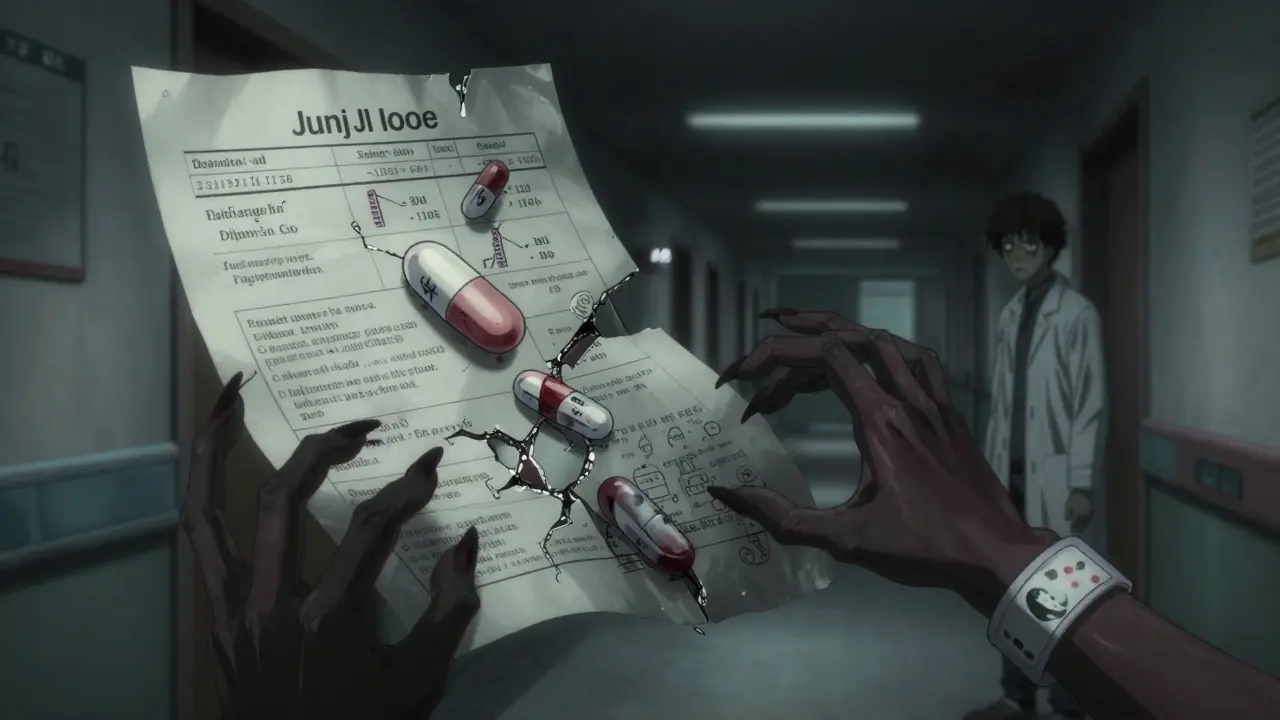
When someone is managing a mental health condition like depression, bipolar disorder, or schizophrenia, the right medication can be life-changing. But the wrong dose, a missed check-up, or a mix-up between prescriptions can turn treatment into danger. Medication safety in mental health isn’t just about giving the right pill-it’s about making sure every step, from prescription to daily intake, is tracked, checked, and coordinated across teams and settings. Too often, this doesn’t happen. And the consequences can be deadly.
Why Mental Health Medications Are Different
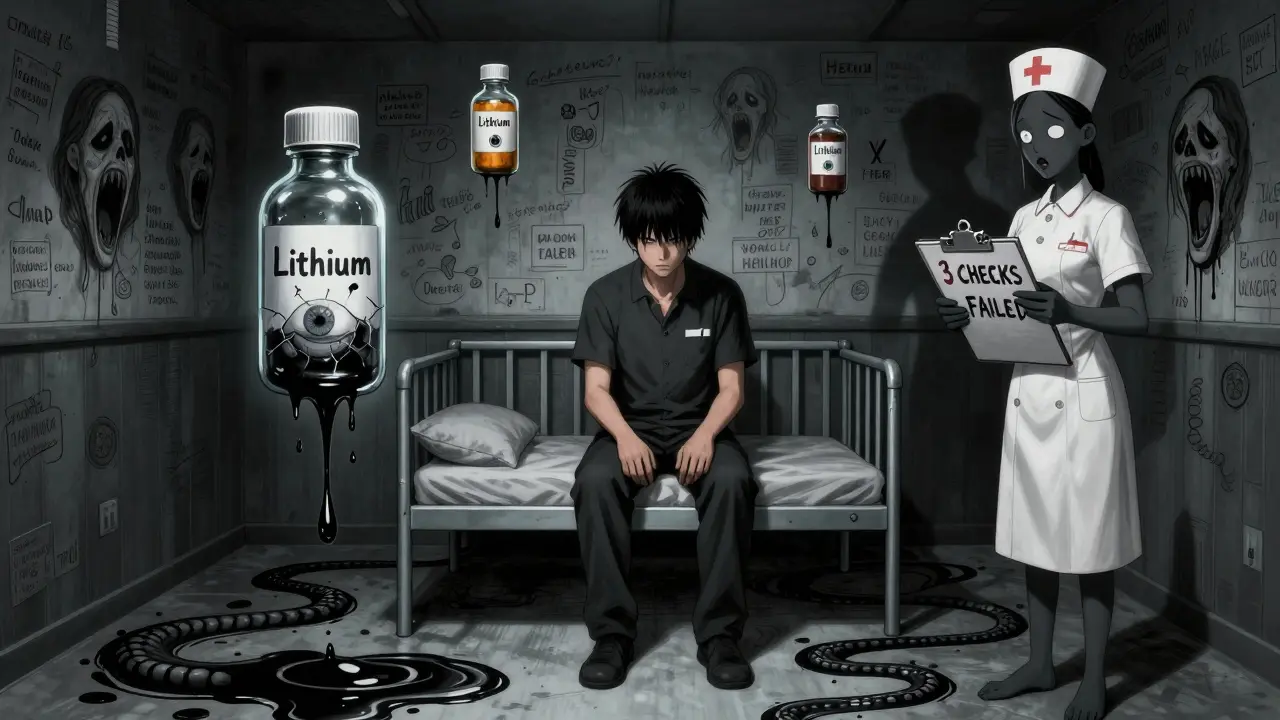
Psychotropic drugs aren’t like antibiotics or blood pressure pills. They affect the brain. That means side effects can be subtle, delayed, or mistaken for worsening symptoms. Lithium, for example, is a mood stabilizer that works well for bipolar disorder-but it only takes a small increase in blood levels to cause toxicity. Nausea, tremors, confusion-these aren’t just side effects. They’re warning signs. And without regular blood tests, they can go unnoticed.Then there’s clozapine. It’s powerful for treatment-resistant schizophrenia, but it can drop white blood cell counts dangerously low. Patients need weekly blood tests at first, then every two weeks. Yet in England, only 40% of people on lithium get their required blood tests. That’s not an outlier-it’s the norm in many places.
Why? Because mental health care is often split between specialists, GPs, emergency rooms, and even prisons. A patient might be stable on a community psychiatric team, then end up in jail, where records get lost, prescriptions get changed, and no one checks if the meds they were taking before even match what’s now in their chart.
The Ten Rights and Three Checks: A Simple System That Works
In Saskatchewan, psychiatric nurses follow a clear rule: the ten rights and three checks. It sounds basic, but it’s designed to catch errors before they happen.- Right patient
- Right medication
- Right dose
- Right route
- Right time
- Right documentation
- Right reason
- Right response
- Right to refuse
- Right education
And before giving any pill, the nurse checks: the medication label, the patient’s wristband, and the prescription order. Three times. No shortcuts.
This isn’t bureaucracy. It’s survival. In one Australian hospital, a patient was given a double dose of olanzapine because the nurse didn’t check the chart. The patient went into a coma. They survived-but only because a pharmacist caught the error during a routine review.
Medicines Reconciliation: The Lifeline Between Care Settings
The biggest risk comes when patients move between settings: from hospital to home, from prison to community care, from emergency room to outpatient clinic. That’s when meds get lost, forgotten, or wrongly changed.Medicines reconciliation isn’t just updating a list. It’s a full audit. Every drug the patient has ever taken-prescribed, bought over the counter, or picked up from a friend-must be verified. Then, the care team decides: what stays? What gets stopped? What needs tapering?
Why tapering? Because stopping certain psychiatric drugs suddenly can cause seizures, psychosis, or severe anxiety. A patient on high-dose sertraline can’t just quit. They need to come off slowly, over weeks. But in busy clinics, that step often gets skipped.
Studies show that when reconciliation is done right, medication errors drop by 50%. In New Zealand, hospitals that assigned a dedicated medicines coordinator to each transition saw a 30% drop in readmissions within 30 days.
Polypharmacy: When More Pills Don’t Mean Better Care
It’s common for someone with mental illness to be on five, six, even ten medications. Antidepressants. Antipsychotics. Sleep aids. Blood pressure pills. Painkillers. Supplements. All mixed together.This is polypharmacy-and it’s a ticking time bomb. The more drugs someone takes, the higher the chance of dangerous interactions. For example, combining an SSRI with tramadol can trigger serotonin syndrome-a rare but life-threatening condition. Or mixing clozapine with ciprofloxacin can spike clozapine levels to toxic ranges.
NHS England warns against using low-dose antidepressants like mirtazapine for sleep or sedation. It’s off-label. It’s common. And it’s risky. Patients on these meds are more likely to hoard pills, sell them, or overdose accidentally.
The fix? Start with one drug. Wait. See if it works. Only add more if absolutely necessary. And every three months, review every pill on the list. Ask: Is this still helping? Is it still safe?
Technology Can Help-If It’s Used Right
Electronic prescribing cuts out the biggest source of errors: illegible handwriting and lost paper scripts. In New Zealand, switching to e-prescribing reduced medication errors by 55%. In Australia, the National Medication Safety Standard now requires digital prescribing in all public hospitals.But tech alone doesn’t fix bad systems. A digital system can still send the wrong dose if the clinician selects it. It can still miss a drug interaction if the patient’s full history isn’t loaded.
The real win comes when e-prescribing is linked to clinical decision support. For example, if a GP tries to prescribe a new painkiller to someone on lithium, the system should flag: “High risk of kidney toxicity. Check recent creatinine levels.”
And when pharmacists are part of the team-really part of it, not just a back-office function-they reduce errors by 25%. They catch the hidden interactions. They spot the duplicate prescriptions. They talk to patients about how to take their meds correctly.
Who’s Responsible? Everyone.
Medication safety isn’t just the psychiatrist’s job. Or the pharmacist’s. Or the nurse’s.It’s the GP’s job to know what’s being prescribed by the specialist. It’s the community nurse’s job to check if the patient is swallowing their pills-or hiding them. It’s the family’s job to notice if someone’s acting confused or unusually drowsy. It’s the patient’s job to speak up when something feels off.
But too often, no one feels responsible. A GP assumes the psychiatrist is managing the mood meds. The psychiatrist assumes the GP is handling the blood pressure pills. The patient doesn’t know who to ask.
The solution? A shared care plan. Not just a note in a file. A written document, signed by the patient and all providers, that says: “Here’s what we’re treating. Here’s what meds we’re using. Here’s who to call if things go wrong.” It includes:
- Why each medicine was started
- When the next review is due
- What symptoms mean it’s time to call for help
- Who to contact after hours
- Therapeutic monitoring schedule (e.g., lithium levels every 3 months)
When this exists, care doesn’t fall through the cracks.
The Hidden Crisis: Training Gaps
Many GPs have never been trained to manage complex psychiatric meds. They know how to prescribe an antidepressant, but not how to monitor clozapine levels or manage lithium toxicity. A 2023 study from King’s College London found that nearly 60% of GPs felt unprepared to handle patients on multiple psychotropics.And it’s not just GPs. Even nurses in emergency departments often don’t know the risks of abruptly stopping antipsychotics. Patients show up agitated, confused, or aggressive-and the default is to give more sedatives. Not realizing the root cause might be withdrawal.
Training isn’t optional. It’s mandatory. Every clinician who prescribes, dispenses, or administers mental health meds needs to understand:
- Therapeutic actions of each drug
- Safe dosing ranges
- Contraindications
- Common interactions
- Signs of toxicity
And they need to practice it-not just read a manual. Simulation training, case reviews, and peer audits make a difference.
What You Can Do
If you or someone you care about is on mental health meds:- Keep a written list of every medication-name, dose, why you take it, and who prescribed it.
- Ask: “Is this still needed?” Every six months.
- Know the warning signs of overdose or toxicity for each drug.
- Never stop a psychiatric drug suddenly-ask your doctor about tapering.
- Insist on medicines reconciliation every time you change care settings.
- Ask for a copy of your shared care plan.
If you’re a clinician:
- Use the ten rights and three checks every time.
- Involve a pharmacist in every transition of care.
- Document the reason for every prescription.
- Don’t prescribe off-label for sleep or sedation unless you’ve ruled out safer options.
- Check blood levels on time. Lithium. Clozapine. Valproate. Don’t assume someone else is doing it.
Final Thought: Safety Is a Habit, Not a Policy
Medication safety in mental health doesn’t need fancy tech or expensive programs. It needs consistency. It needs people to slow down. To double-check. To ask questions. To speak up.One missed blood test. One unrecorded dose change. One unexplained pill bottle. That’s all it takes.
But when care is coordinated-when every person involved knows their role, when systems are simple, and when everyone is trained-people don’t just survive. They recover.
What is medicines reconciliation and why is it important?
Medicines reconciliation is the process of comparing a patient’s current medication list with what’s been prescribed during a transition of care-like moving from hospital to home or prison to community services. It’s important because up to 70% of patients have at least one error in their medication list during these transitions. These errors can lead to overdoses, dangerous interactions, or withdrawal symptoms. Reconciliation stops these mistakes by ensuring the right drugs, at the right doses, are continued or changed with full awareness.
Which psychiatric medications require regular blood tests?
Lithium, clozapine, valproate, and carbamazepine all require regular blood monitoring. Lithium levels must be checked every 3 months to avoid toxicity. Clozapine needs weekly blood tests at first to monitor white blood cell counts. Valproate and carbamazepine require liver and blood cell monitoring every few months. Skipping these tests is one of the most common causes of preventable harm in mental health care.
Can I stop my psychiatric medication if I feel better?
No-not without talking to your doctor. Stopping antidepressants, antipsychotics, or mood stabilizers suddenly can cause severe withdrawal symptoms, including anxiety, insomnia, nausea, seizures, or even psychosis. Some medications need to be tapered over weeks or months. Always ask for a tapering plan before stopping any psychiatric drug.
Why are GPs often unprepared to manage mental health meds?
Most medical training focuses on acute care, not long-term psychiatric management. GPs rarely get hands-on training in monitoring lithium levels, managing clozapine side effects, or recognizing drug interactions between psychotropics and common painkillers. As a result, many feel unsure and avoid prescribing or adjusting these meds, leading to gaps in care. Formal training and access to specialist support are critical.
How does polypharmacy increase risk in mental health patients?
Taking five or more medications increases the chance of harmful drug interactions, side effects, and confusion about what each pill does. For example, combining an SSRI with tramadol can cause serotonin syndrome. Mixing clozapine with certain antibiotics can lead to toxic levels. Polypharmacy also makes it harder to spot which drug is causing a problem. The safest approach is to start with one drug, wait, and only add more if absolutely necessary.
What role do pharmacists play in mental health medication safety?
Pharmacists are the last line of defense. They check for duplicate prescriptions, drug interactions, incorrect doses, and missing monitoring. When involved in care teams, they reduce medication errors by 25%. They also educate patients on how to take their meds correctly and spot signs of misuse or diversion. In mental health, their role isn’t just filling scripts-it’s preventing harm.
What should I do if I suspect a medication error?
If you notice a change in behavior, confusion, unusual drowsiness, or if a medication doesn’t match your list, speak up immediately. Contact your prescriber, pharmacist, or mental health team. Don’t wait. Bring your written medication list with you. If you’re in a hospital or prison, ask to speak with the clinical pharmacist. Reporting errors helps fix systems so others don’t get hurt.
Are electronic prescribing systems really safer than paper?
Yes-by a wide margin. Paper prescriptions lead to errors from illegible handwriting, lost forms, or miscommunication. Electronic systems reduce these errors by 55%, according to New Zealand’s health commission. They also flag potential drug interactions and missing monitoring requirements. But they’re only as good as the data entered. If the patient’s full history isn’t loaded, the system can’t help.
Bennett Ryynanen
January 2, 2026 AT 04:42This is the kind of post that makes me want to scream at the system. I’ve seen people get discharged from hospitals with zero meds reconciliation and end up back in ER within a week. No one checks if the patient even knows what they’re taking. It’s not negligence-it’s systemic abandonment. And yeah, I’m mad.
Chandreson Chandreas
January 3, 2026 AT 18:05life’s weird like that 🤷♂️ one pill can save you or end you. no one talks about how scary it is to trust a system that forgets your name but remembers your prescription number. maybe we need more humans, less algorithms. just saying.
Retha Dungga
January 4, 2026 AT 09:20so like... if you take 10 meds are you a walking pharmacy or just a statistic 😅
Jenny Salmingo
January 6, 2026 AT 00:39I know someone who almost died because they stopped their mood stabilizer cold turkey. No one told them not to. Just said 'you're fine now.' That’s not care. That’s luck.
Lawver Stanton
January 6, 2026 AT 22:41Let me get this straight-we’ve got AI that can predict stock trends but can’t track whether someone’s taking lithium safely? We have drones delivering pizza but can’t make sure a nurse checks a wristband? This isn’t a healthcare crisis. This is a societal failure dressed up as bureaucracy. And don’t even get me started on GPs who think 'mirtazapine for sleep' is a legitimate treatment plan. That’s not medicine. That’s a lazy cop-out wrapped in a white coat.
Sara Stinnett
January 8, 2026 AT 13:24Oh, so now we’re pretending that ‘ten rights’ are the solution? That’s like saying ‘don’t drive drunk’ is the fix for traffic fatalities. It’s a bandage on a hemorrhage. The real problem is that mental health is still treated like a side note in medicine-not a core discipline. Until we fund training, integrate pharmacists into every team, and stop outsourcing responsibility to overworked GPs, none of this matters. The system is broken. Stop romanticizing checklists.
linda permata sari
January 8, 2026 AT 22:32I’m from Indonesia and we don’t even have proper mental health clinics in half the villages. People take pills their cousin brought from the city. No blood tests. No records. Just hope. This post? It’s a luxury. But I still cried reading it. Because someone, somewhere, is trying.
Brandon Boyd
January 9, 2026 AT 05:25Just because something sounds simple doesn’t mean it’s easy. The ten rights? Yeah, it’s basic. But if every nurse did it, every time, we’d cut deaths in half. It’s not rocket science-it’s discipline. And discipline is the rarest thing in healthcare right now.
Branden Temew
January 9, 2026 AT 17:17So we’re gonna fix medication safety by... asking patients to keep a written list? Wow. That’s like solving homelessness by handing out maps to shelters. The system’s designed to fail. We just pretend it’s the patient’s fault for not being organized enough. Wake up.
Frank SSS
January 11, 2026 AT 07:39Look, I get it. Lithium’s dangerous. Clozapine’s a beast. But here’s the thing-most of these patients are already drowning. They’re not gonna remember to ask for a taper plan. They’re not gonna show up for blood tests if they’re homeless. Or depressed. Or paranoid. So yeah, checklists are cute. But if you don’t fix housing, income, access, and trauma, none of this matters. You’re treating symptoms while the whole damn house burns down.
Paul Huppert
January 11, 2026 AT 20:31My sister’s on clozapine. She gets her blood drawn every two weeks. No one ever forgets. Her nurse calls her by name. That’s all it takes. Just someone who cares enough to remember.
Hanna Spittel
January 12, 2026 AT 15:55they’re watching your meds. they know when you miss a dose. they’re using it to track you. 🤫👁️