
Antidepressant Transition & Interaction Checker
Washout Period Calculator
Calculate the safe gap between switching medications.
Compatibility Quick-Check
Check if a medication can be combined with an MAOI.
For many, the journey to mental wellness is a trial-and-error process. According to the STAR*D study, about 20-30% of people with depression don't respond to standard treatments. When the usual pills fail, doctors might reach for MAOIs like phenelzine (Nardil) or tranylcypromine (Parnate). But before you or a loved one starts one, you need to understand the high stakes of drug interactions. This isn't just about a few side effects; it's about avoiding potentially fatal reactions.
The Danger Zone: Serotonin Syndrome
The biggest red flag in psychopharmacology is combining MAOIs with Selective Serotonin Reuptake Inhibitors (SSRIs), such as fluoxetine (Prozac) or sertraline (Zoloft), or Serotonin-Norepinephrine Reuptake Inhibitors (SNRIs). Why is this so dangerous? MAOIs stop the breakdown of serotonin, while SSRIs stop its reabsorption. When you do both, serotonin floods the brain, leading to serotonin syndrome.
This isn't a mild reaction. It's a medical emergency characterized by hyperthermia (dangerously high body temperature), rigid muscles, erratic heart rates, and mental confusion. In one stark case series published in the Journal of Clinical Psychiatry, nearly every single report of a patient taking fluoxetine combined with an MAOI resulted in death. Because of this, the FDA has issued a boxed warning-the most serious type of warning-against this combination.
Timing is Everything: The Washout Period
You can't just stop an SSRI on Monday and start an MAOI on Tuesday. Your brain needs time to clear the old chemicals and for the monoamine oxidase enzymes to grow back. This is called a "washout period." If you rush it, you're still at risk for serotonin syndrome.
The rules are strict: most SSRIs require a 14-day wait. However, fluoxetine is the exception. Because it has an incredibly long half-life (meaning it stays in your system for weeks), you must wait at least 5 weeks after your last dose of fluoxetine before starting an MAOI. If you're moving in the opposite direction-stopping an MAOI to start an SSRI-you generally need to wait 14 days. Skipping these windows is a gamble with your life.
The Grey Area: Tricyclics (TCAs)
When it comes to Tricyclic Antidepressants (TCAs, an older class of antidepressants that affect multiple neurotransmitters), the rules are a bit more complicated. Historically, doctors avoided mixing TCAs and MAOIs entirely. But more recent data suggests that for people with severe TRD, this combination can actually be effective and tolerable if managed by an expert.
| TCA Type | Compatibility with MAOIs | Key Precaution |
|---|---|---|
| Nortriptyline | Generally Considered Safer | Must be started before or with the MAOI |
| Clomipramine | High Risk / Contraindicated | Strong serotonergic effects increase toxicity risk |
| Imipramine | Use with Extreme Caution | Requires strict titration and monitoring |
The golden rule here is sequencing. If you add an MAOI to a patient who is already stable on a TCA, it's often safe. But if you add a TCA to someone already on an MAOI, the risk of adverse effects spikes. It's a delicate balance that only a psychiatrist experienced in MAOI therapy should handle.

Finding a Safer Path: Compatible Alternatives
If you're on an MAOI but still need additional help for depression or anxiety, you don't always have to risk a dangerous interaction. There are "serotonin-neutral" or low-risk options that can be combined with MAOIs without triggering a crisis.
- Bupropion: Since it primarily affects dopamine and norepinephrine, it's a common and safe addition to MAOIs.
- Mirtazapine: This is often used to tackle insomnia and appetite loss in TRD patients and has been documented as safe when combined with MAOIs.
- Trazodone: Frequently used for sleep, this is generally considered a viable option.
- Benzodiazepines: For those dealing with severe panic or anxiety, these are typically safe to use alongside MAOIs.
For those struggling with anhedonia (the inability to feel pleasure), some specialists use dopaminergic agents like pramipexole. While effective, these require a "start low, go slow" approach to avoid intense nausea or impulse control issues.
Living with MAOIs: Beyond the Pharmacy
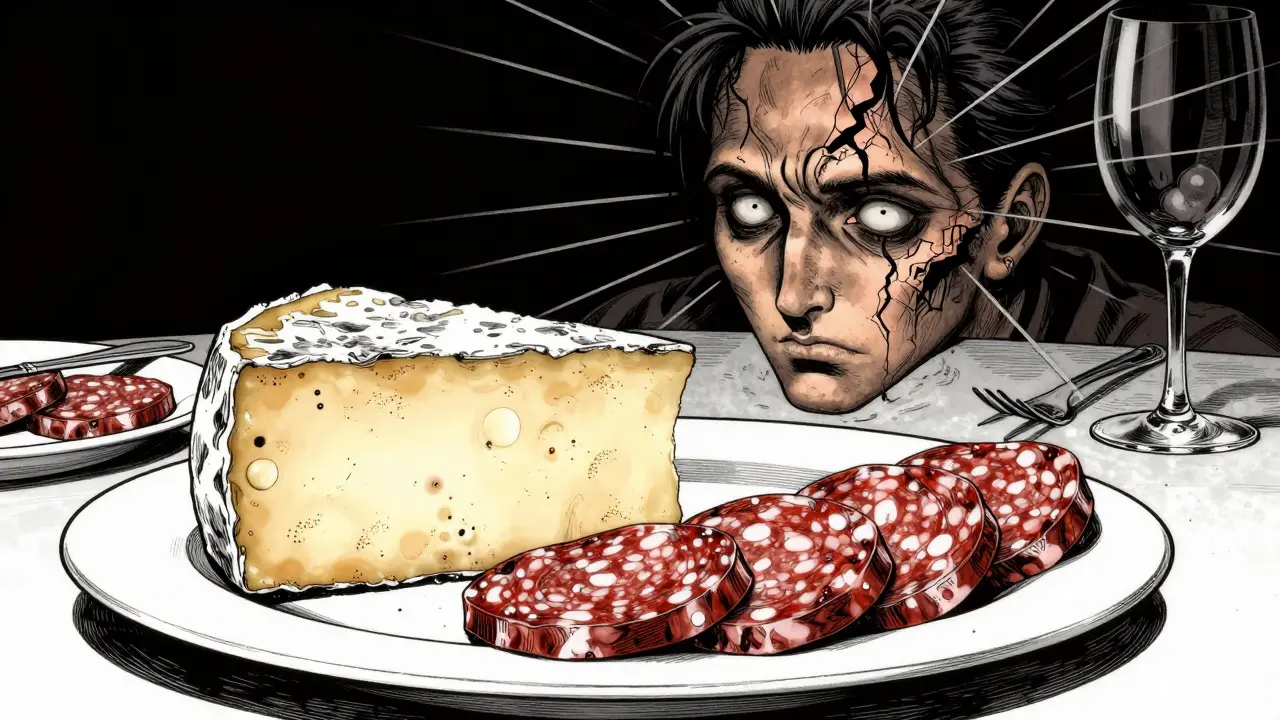
The danger doesn't just come from other pills; it comes from your kitchen. MAOIs block the enzyme that breaks down tyramine, an amino acid found in aged and fermented foods. If you eat too much tyramine while on an MAOI, your blood pressure can skyrocket instantly-a phenomenon known as a hypertensive crisis.
To stay safe, avoid these specific triggers:
- Aged Cheeses: Avoid things like cheddar, stilton, or parmesan. Fresh cheeses like ricotta or cottage cheese are usually fine.
- Fermented Meats: Stay away from salami, pepperoni, and other cured sausages.
- Certain Beverages: Avoid tap beers and some red wines.
If you're looking for a more flexible option, the Selegiline Patch (a transdermal MAOI delivery system) is a game-changer. Because the drug is absorbed through the skin, it bypasses much of the gut's processing, meaning at lower doses (6mg/24hr), many users can avoid the strict diet altogether.
The Exit Strategy: Tapering Off
Stopping an MAOI abruptly is a recipe for disaster. You can't just quit cold turkey. Doing so often leads to a discontinuation syndrome that feels like a severe flu mixed with a panic attack. Patients have reported restlessness in over 60% of abrupt cessation cases, along with sleep disturbances and burning sensations in the skin.
A safe exit involves a gradual taper over two to four weeks. Even after your last dose, you must maintain your dietary restrictions for at least two weeks. Your enzymes don't just snap back to normal the second the drug leaves your system; they need time to regenerate.
Can I take an SSRI and an MAOI at the same time?
No. This combination is strictly contraindicated due to the high risk of serotonin syndrome, which can be fatal. You must follow a strict washout period between these two classes of medication.
How long do I have to wait after stopping Prozac before starting an MAOI?
You must wait at least 5 weeks. Fluoxetine (Prozac) has a very long half-life and remains in your system much longer than other antidepressants, making the 5-week window critical for safety.
What are the symptoms of serotonin syndrome?
Warning signs include high fever (hyperthermia), muscle rigidity or twitching, rapid heart rate, sweating, mental confusion, and agitation. If these occur, seek emergency medical help immediately.
Is the dietary restriction necessary for the Selegiline patch?
At the lowest dose (6mg/24hr), the Selegiline patch often doesn't require the strict tyramine diet because it doesn't inhibit the enzyme in the gut as strongly as oral MAOIs. However, you should always confirm this with your doctor.
What happens if I eat aged cheese while on an MAOI?
You risk a hypertensive crisis. Tyramine in the cheese causes a sudden, massive release of norepinephrine, which can lead to a dangerous spike in blood pressure, severe headache, and potential stroke.
Next Steps for Patients and Caregivers
If you are transitioning to an MAOI or managing a loved one who is, the first step is to create a comprehensive list of every medication, supplement, and over-the-counter drug you use. Even some common cough medicines (like those containing dextromethorphan) can interact dangerously with MAOIs.
For those with treatment-resistant depression, don't lose hope. While the restrictions are burdensome, the efficacy of MAOIs for "atypical" symptoms-like extreme sleepiness or sensitivity to rejection-is often superior to newer drugs. Work closely with a psychiatrist who specializes in these medications to ensure your sequence of dosing and your diet are handled with precision.