
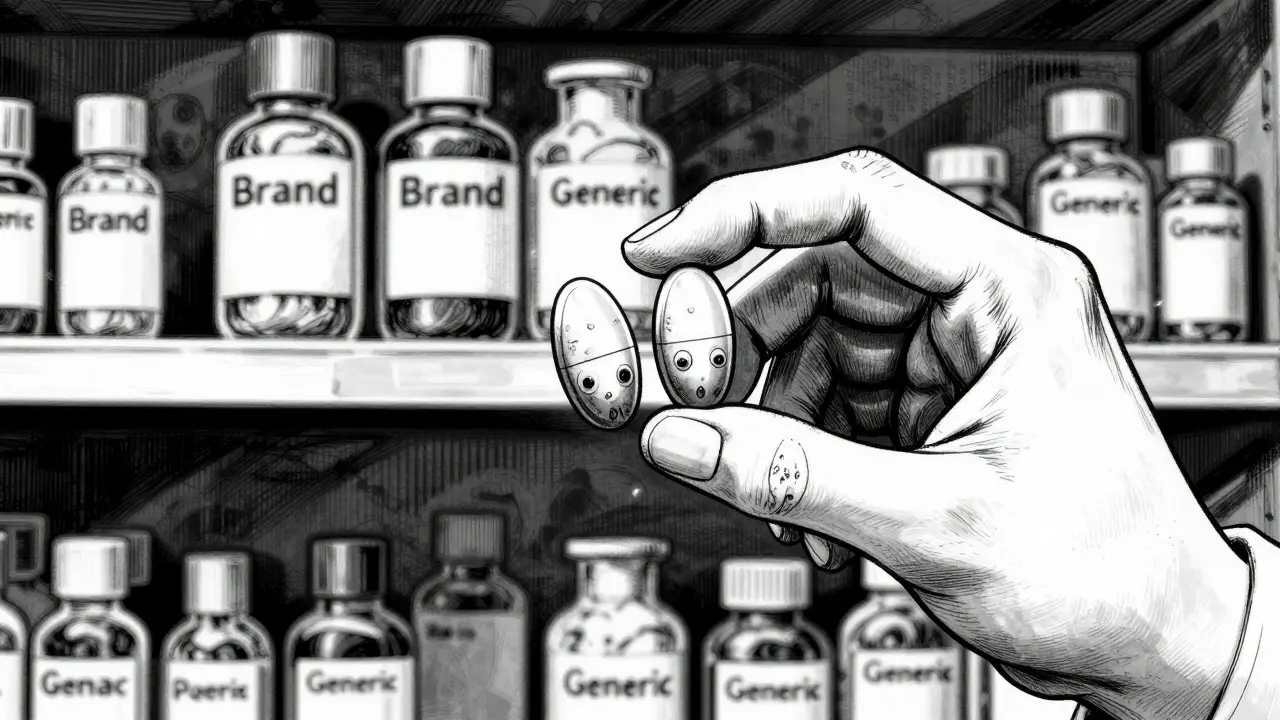
Ever wondered why your pharmacist sometimes swaps your brand-name pill for a generic one, or why changing a combination drug can feel like a gamble? It all comes down to something called therapeutic equivalence. In the world of medicine, it is not enough for two drugs to have the same name; they have to behave exactly the same way in your body. When we talk about combination products-pills that pack two or more active ingredients into one-the math gets a lot trickier. If the doses aren't managed perfectly, a "equivalent" swap could actually change how your treatment works.
What Exactly is Therapeutic Equivalence?
At its simplest, Therapeutic Equivalence is the concept where different drug products containing identical active ingredients, dosage forms, and strengths can be safely swapped to produce the same clinical effect . Think of it as a gold standard for generics. If a drug is therapeutically equivalent, it means the FDA is confident that the generic version will work just as well as the brand-name original.
To get this stamp of approval, a drug can't just be "close enough." It has to meet three strict criteria: it must be proven safe and effective, it must be a pharmaceutical equivalent (meaning the same active ingredient, same strength, and same way of taking it), and it must meet high standards for purity and quality. To make this easy for pharmacists, the FDA Orange Book is the official publication that lists approved drug products and their therapeutic equivalence ratings . If a drug has an "A" rating in the Orange Book, it's generally a green light for substitution.
The Complexity of Combination Products
Now, things get complicated when we move to Combination Products, which are pharmaceuticals that combine two or more active therapeutic moieties into a single dosage form . When you have two drugs in one pill, like amlodipine and benazepril for blood pressure, you aren't just managing one chemical reaction-you're managing two.
The biggest challenge here is that different drugs in the same pill often have different levels of potency. For example, in a combination of sirolimus and topotecan, one drug might reduce a symptom by 69.8% while the other hits 88.9%. You can't just add them together like 1+1=2. Instead, clinicians have to use complex dose-equivalence formulas to ensure that swapping a combination product doesn't accidentally overdose the patient on one component while under-dosing the other.
| Feature | Pharmaceutical Equivalent | Therapeutic Equivalent | Pharmaceutical Alternative |
|---|---|---|---|
| Active Ingredient | Identical | Identical | Same moiety, different salt/ester |
| Strength/Dose | Identical | Identical | Can differ |
| Clinical Effect | Expected to be same | Proven to be same | May vary |
| Substitution | Common | Standardized (A-rated) | Requires caution |
The Danger Zone: Narrow Therapeutic Index (NTI) Drugs
Not all drugs are created equal. Some belong to a group called Narrow Therapeutic Index (NTI) drugs, which are medications where the difference between a dose that heals and a dose that harms is very small . Common examples include warfarin for blood thinning or levothyroxine for thyroid issues.
With NTI drugs, the standard rules for generics are too loose. While most drugs have a bioequivalence range of 80-125%, the FDA tightens the leash for NTI drugs to 90-111%. Why? Because a tiny shift in absorption can lead to a toxic reaction or a treatment failure. In fact, a 2018 study showed that about 12% of patients experienced adverse events after switching between "equivalent" levothyroxine products. When these are part of a combination therapy, the risk of a medication error spikes.
Real-World Risks and Pharmacy Pitfalls
On paper, an "A" rating means a drug is safe to swap. In the real world, the human element and formulation differences can cause issues. Pharmacists often report confusion when dealing with different strengths of combination pills. For instance, swapping a 10/20mg version of a drug for a 20/10mg version of the same combination is a classic recipe for a dosing error.
Even inactive ingredients (excipients) can play a role. You might have seven different generic manufacturers for a drug like rivaroxaban, all with "A" ratings. However, some use croscarmellose sodium while others use sodium starch glycolate to help the pill break apart. While the active drug is the same, these small differences can slightly alter how the drug is absorbed, which becomes a bigger deal when that drug is paired with another medication in a combination product.

How to Manage Substitutions Safely
If you are a healthcare provider or a patient managing a complex regimen, relying on a simple "it's a generic" isn't enough. The FDA recommends a strict three-step verification process for combination products:
- Verify that the active ingredients and their exact strengths are identical.
- Confirm that the dosage form (tablet, capsule, liquid) and the route of administration are the same.
- Double-check the TE code in the Orange Book to ensure it has an "A" rating.
For high-risk patients, especially those on NTI combinations, the Institute for Safe Medication Practices suggests a 72-hour monitoring period after any switch. Using barcode scanning during the dispensing process and standardized conversion tables can also prevent the kind of dose-conversion errors that lead to hospitalizations.
The Future of Dose Management
We are moving toward a world where "one size fits all" doesn't apply to generics. The FDA is currently exploring machine learning algorithms that can predict if a substitution will be problematic based on the specific formulation. There is even talk of an "A*" rating for combinations that prove bioequivalence across multiple different strengths.
Looking further ahead, we are heading toward pharmacogenomics. By 2030, it is predicted that 30% of these equivalence decisions will involve your genetic data. This means the "equivalent" dose for me might be slightly different than the "equivalent" dose for you, based on how our livers process the medication.
Is a generic combination drug always the same as the brand name?
If the drug has an "A" rating in the FDA Orange Book, it is considered therapeutically equivalent. This means it has the same active ingredients, strength, and effectiveness. However, inactive ingredients may differ, which can occasionally affect some patients.
What is an "A" rating in the Orange Book?
An "A" rating signifies that the generic drug is therapeutically equivalent to the reference listed drug (the brand name). This means it can be substituted without affecting the clinical outcome for the vast majority of patients.
Why are NTI drugs more dangerous to switch?
Narrow Therapeutic Index (NTI) drugs have a very slim margin between a dose that works and a dose that is toxic. Because of this, even a small variation in how a generic is absorbed (within the standard 80-125% range) can cause adverse effects or treatment failure.
Can inactive ingredients change how a combination drug works?
Yes, potentially. While inactive ingredients aren't meant to treat the condition, they affect how the pill dissolves and is absorbed into the bloodstream. In combination therapy, this can subtly change the ratio of the two drugs being absorbed.
What should I do if I'm switching to a generic combination product?
Consult your pharmacist to ensure the TE rating is an "A". If you are taking high-risk medications (like blood thinners or thyroid meds), notify your doctor and monitor your symptoms closely for the first 72 hours after the switch.
Quinton Bangerter
April 17, 2026 AT 13:17The FDA Orange Book is basically a suggestion list for Big Pharma to keep the masses compliant.
You really think a few "inactive" excipients don't change the bio-availability? It's a joke. They're just playing with our blood chemistry to see who survives the switch to the cheapest generic possible. Totally rigged system.
Lynn Smith
April 17, 2026 AT 19:46I totally agree that those excipients can be a real headache for some people.