
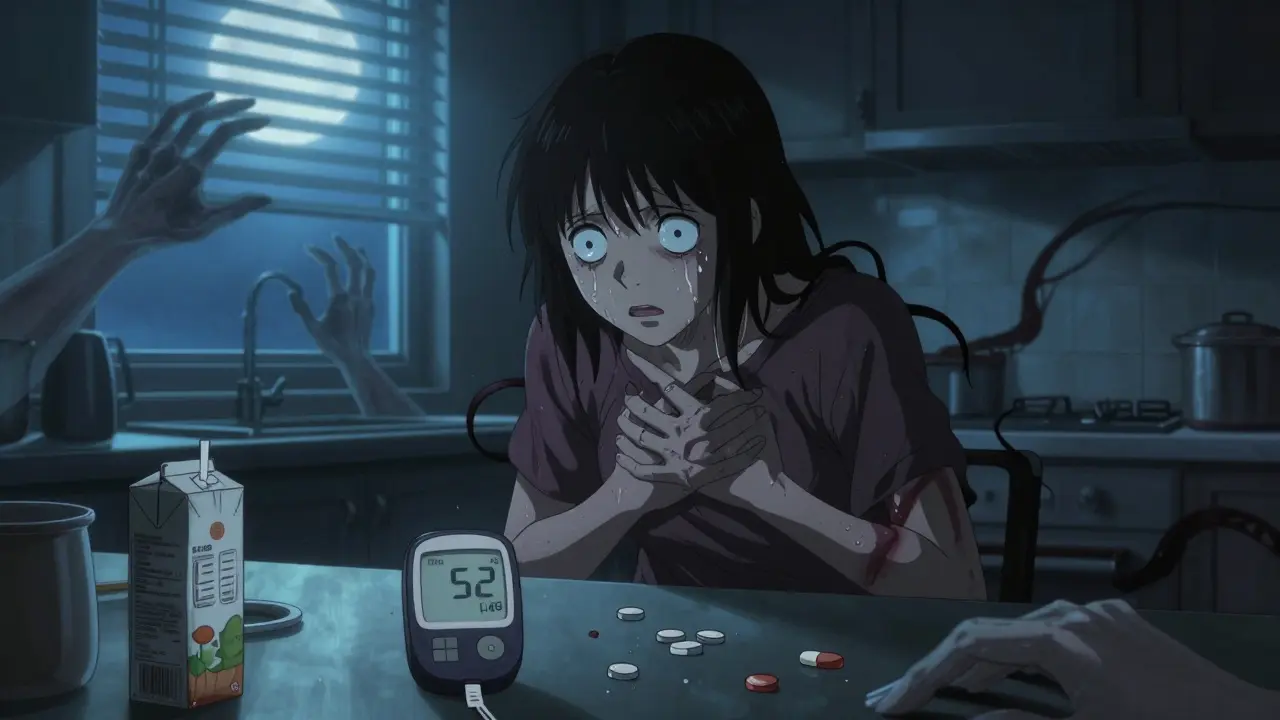
Low blood sugar isn’t just a minor inconvenience-it’s a medical emergency that can happen to anyone with diabetes, and sometimes even to those without it. If you’ve ever felt shaky, sweaty, or confused out of nowhere, you might’ve had a hypoglycemic episode. It’s not rare. In fact, nearly half of people with Type 1 diabetes experience it at least once a week. The good news? You can learn to spot it early, treat it fast, and prevent most episodes from happening again.
What Exactly Is Hypoglycemia?
Hypoglycemia means your blood glucose has dropped below 70 mg/dL (3.9 mmol/L). For people with diabetes, this is the official warning line. For those without diabetes, it’s even lower-at 55 mg/dL (3.1 mmol/L). But numbers alone don’t tell the whole story. What matters more is how your body reacts.Your brain runs on glucose. When levels fall too low, it starts to struggle. That’s when symptoms kick in. Some people feel their heart racing, hands trembling, or breaking out in cold sweat. Others get dizzy, confused, or suddenly irritable. In severe cases, people pass out, have seizures, or slip into a coma. Left untreated, these episodes can be deadly.
The most common cause? Too much insulin or diabetes medication, not enough food, or too much exercise without adjusting for it. In the U.S., over 70% of hypoglycemic events in people with diabetes are linked to insulin dosing errors. Even a small miscalculation-like skipping a snack after a walk or taking your usual insulin dose after eating less than normal-can trigger it.
How to Spot the Signs Before It’s Too Late
Symptoms fall into two categories: physical and mental. Physical signs come from your body’s stress response-your adrenal glands releasing adrenaline to try and raise your blood sugar. That’s what causes:- Shaking or trembling
- Sweating (even when it’s not hot)
- Fast heartbeat
- Hunger
- Numbness or tingling in the lips or tongue
Mental symptoms happen when your brain doesn’t get enough fuel. These are more dangerous because you might not realize what’s happening:
- Blurred vision
- Confusion or trouble concentrating
- Slurred speech
- Feeling anxious or irritable
- Loss of coordination
- Passing out
Here’s the catch: after living with diabetes for years, some people lose the ability to feel these early warning signs. This is called hypoglycemia unawareness. It affects about 1 in 4 long-term Type 1 patients. That means they can go from fine to unconscious in minutes-no warning. That’s why checking your blood sugar regularly isn’t optional. It’s lifesaving.
What to Do When Your Blood Sugar Drops
If you feel symptoms or your meter reads below 70 mg/dL, act fast. The standard rule is the 15-15 Rule:- Consume 15 grams of fast-acting carbohydrates.
- Wait 15 minutes.
- Check your blood sugar again.
What counts as 15g of carbs? Here are real, practical options:
- 4 glucose tablets
- 1/2 cup (4 oz) of regular soda (not diet)
- 1 tablespoon of honey or sugar
- 1 tube of glucose gel
- 1/2 cup of fruit juice
Don’t use chocolate or candy bars. The fat slows down sugar absorption. You need quick-acting glucose, not a snack.
After 15 minutes, if your blood sugar is still under 70, repeat the process. Once you’re back above 70, eat a small snack with protein and carbs-like peanut butter on toast or cheese and crackers-to keep your levels steady.
But what if you’re too confused to treat yourself? Or if someone else is passing out? Then you need glucagon. Glucagon is a hormone that tells your liver to dump stored glucose into your bloodstream. It comes as an injection or nasal spray. If you or someone you care for is on insulin, keep glucagon on hand at all times. Know where it is. Know how to use it. Practice with a trainer kit. In emergencies, every second counts.

Why Nighttime Low Blood Sugar Is Especially Dangerous
Nocturnal hypoglycemia-low blood sugar while sleeping-is one of the most feared complications. You’re asleep. You can’t feel the shaking or sweating. Your body’s natural defenses are weaker at night. And if you don’t wake up? That’s when the rare but deadly “dead-in-bed” syndrome can occur. It accounts for about 6% of unexpected deaths in young people with Type 1 diabetes.Signs of nighttime lows include:
- Waking up with a headache
- Soaked pajamas from night sweats
- Feeling unusually tired in the morning
- Having nightmares or restless sleep
Continuous glucose monitors (CGMs) have changed the game here. They alert you if your blood sugar is dropping while you sleep. Some even auto-suspend insulin delivery if levels fall too low. Studies show these systems reduce nighttime lows by nearly half. If you’re on insulin and not using a CGM, talk to your doctor. It’s not a luxury-it’s a safety tool.
How to Prevent Hypoglycemia Before It Starts
Prevention isn’t about being perfect. It’s about being smart and consistent.- Match food to insulin. If you take rapid-acting insulin, you need to eat carbs within 15-20 minutes of injecting. Don’t guess. Count them. Use apps or food labels. One unit of insulin usually covers 10-15g of carbs-but that varies by person. Know your ratio.
- Adjust for exercise. Physical activity lowers blood sugar. If you’re going for a long walk, bike ride, or workout, reduce your insulin dose by 20-50% or eat extra carbs before or during. Even a 10-minute walk after dinner can drop your sugar. Plan ahead.
- Don’t skip meals. Even if you’re not hungry, eat something small. A banana, a handful of nuts, or a yogurt can prevent a crash later.
- Check your sugar before driving. Driving with low blood sugar is like driving drunk. At 50 mg/dL, your reaction time and judgment are impaired. Never drive if your sugar is below 70. Wait until it’s stable.
- Wear medical ID. A bracelet or necklace that says “Diabetic” or “Insulin Dependent” can save your life if you’re found unconscious. Emergency responders look for this.
- Teach your family and friends. 54% of people with diabetes report bystanders mistaking hypoglycemia for drunkenness. Make sure your partner, coworkers, or kids know what to do. Show them how to give glucagon.
What’s New in Hypoglycemia Management
Technology is making big strides. In 2023, the FDA approved Dasiglucagon, a new nasal glucagon that works faster and easier than older injectable versions. It’s now available in most pharmacies and works in under 15 minutes for 94% of users.Also, the first fully automated “artificial pancreas” systems are now on the market. These devices use real-time glucose data to adjust insulin delivery automatically. One system reduced time spent below 54 mg/dL by over 3 hours per week.
Looking ahead, AI-powered tools are being tested to predict low blood sugar up to 45 minutes before it happens-using your glucose trends, activity, and even meal logs. Early results show 85% accuracy. This could mean the end of surprise lows.
But none of this works if you can’t afford it. Glucose strips, CGM sensors, and glucagon kits are expensive. In Australia and the U.S., nearly 1 in 4 people skip testing because of cost. Talk to your doctor about assistance programs. Many manufacturers offer free samples or discounts for low-income patients.
When to Call for Help
You don’t need to handle every low on your own. Call emergency services if:- Someone is unconscious or having a seizure
- Glucagon was given but there’s no response after 15 minutes
- You’ve had three or more severe lows in one week
- You’re confused and can’t treat yourself
And if you’re having frequent lows-even mild ones-schedule a review with your diabetes care team. You might need to adjust your insulin type, timing, or dose. Hypoglycemia isn’t a personal failure. It’s a signal that your treatment plan needs tweaking.
Can non-diabetics get low blood sugar?
Yes, but it’s rare. Non-diabetic hypoglycemia usually happens in two forms: reactive (after eating) or fasting (during long periods without food). Reactive hypoglycemia can occur after gastric bypass surgery or in people with very sensitive insulin responses. Fasting hypoglycemia may signal a serious issue like a tumor in the pancreas (insulinoma) or liver or kidney disease. If you’re not diabetic and keep having low blood sugar, see a doctor for testing.
Does eating sugar always fix low blood sugar?
Not always. You need fast-acting carbs-like glucose tablets, juice, or soda-not candy bars or chocolate. Fat and fiber slow sugar absorption, which delays recovery. Stick to pure glucose sources. After your sugar comes up, eat a balanced snack to prevent another drop.
Why do I feel low even when my blood sugar is normal?
If your blood sugar has been high for days or weeks, your body may start reacting to normal levels as if they’re low. This is called relative hypoglycemia. It’s not dangerous, but it’s confusing. Talk to your doctor about gradually lowering your target range so your body readjusts.
Can stress cause low blood sugar?
Stress usually raises blood sugar, but in some people, especially those with Type 1 diabetes, it can trigger unpredictable drops. Stress hormones can interfere with insulin timing or cause you to skip meals. If you notice lows during stressful times, check your sugar more often and keep snacks handy.
Is it safe to use glucagon if I’m not sure someone is having a low?
Yes. Glucagon is safe to use even if the person isn’t hypoglycemic-it won’t cause dangerously high blood sugar. If someone is unconscious or having a seizure, and you suspect low blood sugar, give glucagon. It could save their life. The risk of not acting is far greater.
If you’re managing diabetes, hypoglycemia doesn’t have to control your life. With the right knowledge, tools, and support, you can reduce these episodes to rare events-not daily fears. Stay informed. Stay prepared. And never hesitate to ask for help.
Nicole Rutherford
December 17, 2025 AT 18:35People still don’t get it. You don’t just ‘eat sugar’ and call it a day. I’ve seen friends chow down on chocolate bars during lows and wonder why they crash again 20 minutes later. Glucose tablets aren’t glamorous but they work. Stop treating this like a snack time problem.
Mark Able
December 19, 2025 AT 12:31Bro I was at a BBQ last weekend and my cousin passed out from a low. Nobody knew what to do. I had to dig out his glucagon nasal spray from his fanny pack like a superhero. Literally saved his life. If you’re on insulin, get the damn spray. It’s not optional. It’s like a fire extinguisher for your pancreas.
Chris Clark
December 20, 2025 AT 21:42Just wanted to add-CGMs are a game changer but they ain’t cheap. I got mine through my work insurance but my buddy in Texas pays $400 a month outta pocket. Some folks skip checks just to afford rent. Also, the new dasiglucagon nasal spray? Totally worth it. Way easier than the old injectable ones. My kid’s school nurse now keeps one in the office. Small win.
And yeah, non-diabetics can get lows too. My aunt had an insulinoma. Turns out she wasn’t ‘just tired’-her pancreas was making too much insulin. Took 3 years to diagnose. If you keep crashing for no reason, get scanned. Don’t ignore it.
Also, ‘relative hypoglycemia’? Real. Been there. My sugar’s at 90 and I feel like I’m gonna pass out. Docs say my body’s just used to 200. Took weeks to adjust. Don’t panic. Just talk to your endo.
Dorine Anthony
December 21, 2025 AT 08:22Love how this post breaks it down without shaming. I used to feel like a failure every time I had a low. Turns out it’s not about willpower-it’s about biology and dosing. My CGM alerts me before I even feel it. I used to think I was ‘bad’ at managing diabetes. Now I know I just needed better tools.
William Storrs
December 21, 2025 AT 22:44You got this. Seriously. Every single person reading this has the power to reduce their lows. It’s not magic. It’s consistency. Check your numbers. Carry glucose. Teach your people. Use your CGM. Don’t wait until you’re in crisis to make changes. Small steps every day add up. You’re not alone. I’ve been there. You’re stronger than you think.
James Stearns
December 22, 2025 AT 21:05It is imperative to underscore that the indiscriminate administration of glucagon, while ostensibly benign in the context of normoglycemia, constitutes a pharmacological intervention of non-trivial consequence. One must not, under any circumstances, treat this as a casual or recreational protocol. The medical community must maintain rigorous standards in patient education to prevent the normalization of potentially hazardous self-administration practices. Furthermore, the commodification of glucose monitoring devices, while technologically laudable, exacerbates systemic inequities in healthcare access, particularly among socioeconomically disadvantaged populations. This discourse, while informative, remains insufficiently critical of structural failures.
Nina Stacey
December 24, 2025 AT 13:54My sugar was 85 and I felt like I was gonna die so I ate a whole bag of gummy bears and now I’m high and tired and mad at myself but also like why does no one talk about how emotionally exhausting this is like I just want to eat a sandwich without doing math first
and why does everyone act like low blood sugar is just a ‘thing’ like it’s not terrifying when your brain turns to mush and you forget your own name
and also my dog knows when I’m low he licks my face and whines like a drama queen but honestly he’s the best alarm system i’ve ever had
Dominic Suyo
December 25, 2025 AT 06:13Let’s be real-this whole hypoglycemia thing is just capitalism’s way of selling you $800 CGMs and $150 glucagon sprays. You think they care about your life? Nah. They care about your insurance copay. The ‘15-15 rule’? Cute. But what if you’re homeless? What if you’re in a rural town with no pharmacy open after 8? This isn’t ‘management’-it’s survival theater. And don’t get me started on ‘artificial pancreas’ tech. Sounds like a sci-fi movie where the rich get to sleep while the poor are still counting carbs on a broken meter.