
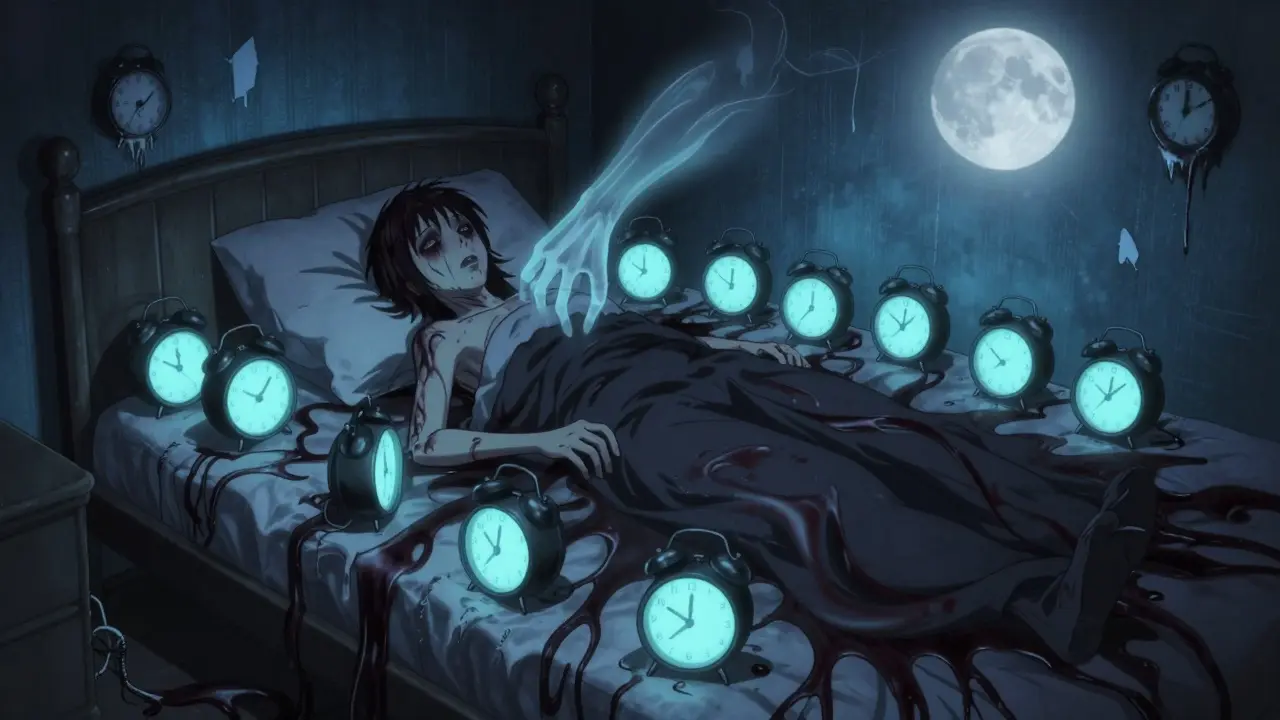
Imagine setting 17 alarms just to wake up for work - and still oversleeping. For people with idiopathic hypersomnia (IH), this isn’t an exaggeration. It’s daily life. Unlike just feeling tired after a bad night’s sleep, IH is a real neurological disorder where the brain struggles to stay awake, even after 10, 12, or even 14 hours of sleep. And the worst part? Napping doesn’t help. You sleep longer, wake up more confused, and still feel like you’re dragging through molasses. This isn’t laziness. It’s not depression. It’s a medical condition that’s been ignored for decades.
What Is Idiopathic Hypersomnia?
Idiopathic hypersomnia is a rare but serious sleep disorder where excessive daytime sleepiness (EDS) happens every day for at least three months - even when you’ve had plenty of sleep. The word "idiopathic" means "no known cause." That’s the frustrating part: doctors can’t point to a tumor, a hormone imbalance, or a breathing problem. The brain just doesn’t know how to stay awake.
People with IH don’t just feel sleepy. They experience "sleep drunkenness" - a foggy, disoriented state that can last for hours after waking up. Some can’t get out of bed for 30 minutes, even with alarms blaring. Others nap for two hours and still feel exhausted. Cognitive problems are common too: memory lapses, trouble focusing, and "brain fog" so bad that people forget to turn off the stove or miss appointments they swore they’d remember.
Unlike narcolepsy - the more well-known sleep disorder - IH doesn’t come with sudden muscle weakness (cataplexy), vivid hallucinations, or sleep paralysis. People with IH sleep longer at night (often 9-11 hours), and their naps are long and unrefreshing. Their Multiple Sleep Latency Test (MSLT) often shows normal results, which is why many get misdiagnosed as depressed, lazy, or just "not trying hard enough."
How Common Is It?
Idiopathic hypersomnia affects about 10 people per 100,000 each year in the U.S. That’s rare - but not as rare as you might think. With over 330 million Americans, that’s roughly 33,000 new cases annually. The real problem? Diagnosis takes an average of 8 to 10 years. Patients see an average of 4.7 doctors before getting the right answer. Many are told they’re "just tired," or that they need to "sleep better." Some are prescribed antidepressants that don’t help. Others lose jobs, relationships, and even driver’s licenses because they keep dozing off behind the wheel.
One study found that 62% of IH patients had lost a job due to sleepiness. Another reported that 78% had experienced at least one near-miss car accident because of drowsiness. And 22% had actual crashes. The emotional toll is just as heavy: 74% of IH patients meet the clinical criteria for depression. Not because they’re weak - because living like this is crushing.
What Causes It?
No one knows exactly why IH happens. But research is pointing to brain chemistry. One major clue? A substance in the cerebrospinal fluid of about half of IH patients that makes GABA-A receptors - the brain’s main "off switch" - too sensitive. Think of it like a broken brake pedal: your brain keeps hitting the sleep button even when it shouldn’t.
Another theory involves histamine, the brain chemical that keeps you awake. Some IH patients have lower histamine levels. Others have issues with orexin, a wakefulness-promoting neurotransmitter. Studies using brain scans and spinal fluid tests have found patterns that correctly identify IH in 89% of cases - a breakthrough that could make diagnosis faster and more accurate.
It’s not caused by lack of sleep, alcohol, medications, or another illness. That’s why it’s called "idiopathic." It’s a standalone neurological glitch.
How Is It Diagnosed?
Diagnosis isn’t simple. It starts with a detailed sleep history. Then comes an overnight sleep study (polysomnography) to rule out sleep apnea, periodic limb movements, or other disorders. After that, you take the Multiple Sleep Latency Test (MSLT). This test measures how fast you fall asleep during four or five naps spaced throughout the day.
For IH, the MSLT usually shows a mean sleep latency of 8 minutes or less - meaning you fall asleep quickly - but without the REM sleep abnormalities seen in narcolepsy. You also need to have slept at least 6 hours during the overnight study. If your sleep time is longer than 9-11 hours total in 24 hours, and your naps don’t refresh you, that’s a strong sign of IH.
There’s no blood test. No X-ray. No MRI that confirms it. That’s why so many slip through the cracks.
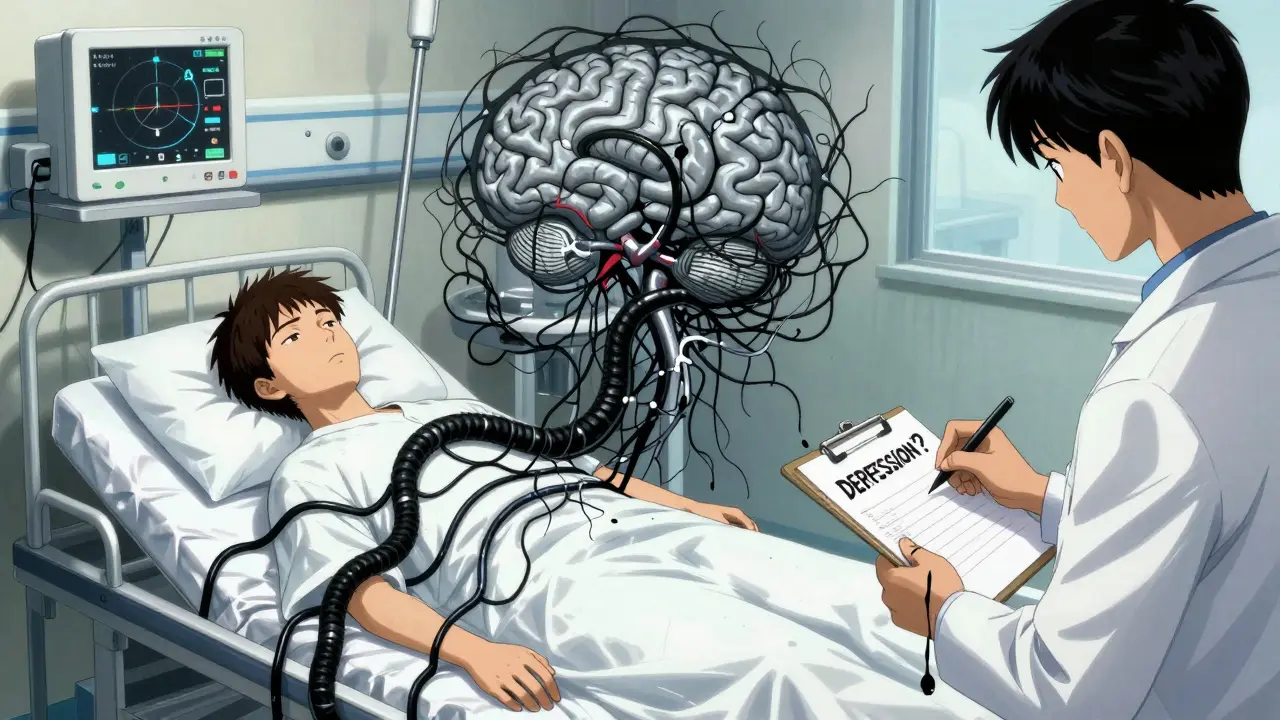
Treatment: What Actually Works?
There’s no cure - yet. But there are treatments that help. And they’re not what you’d expect.
Medications
The FDA approved Xywav (calcium, magnesium, potassium, and sodium oxybate) for IH in 2021. It’s the first and only drug specifically labeled for IH. In clinical trials, it reduced daytime sleepiness by 63% on the Epworth Sleepiness Scale. It works by regulating brain chemicals that control sleep-wake cycles. Most patients take it at night in two doses - but it requires careful dosing because it can cause nausea, dizziness, and dependency if misused.
Modafinil (Provigil) and armodafinil (Nuvigil) are stimulants often prescribed off-label. They help about 42% of IH patients, but many need higher doses over time. Side effects include anxiety, headaches, and heart palpitations. One-third of users report severe side effects.
Pitolisant (Wakix), originally approved for narcolepsy, is now being tested for IH. Early results show a 47% response rate - meaning nearly half of patients feel significantly more awake. It’s not FDA-approved for IH yet, but it’s in Phase 3 trials.
Non-Drug Approaches
Cognitive Behavioral Therapy for Hypersomnia (CBT-H) is gaining traction. A 12-week program developed by the Hypersomnia Foundation helps patients build routines, manage caffeine use, and reduce anxiety around sleep. One study showed 58% of participants improved daily functioning after CBT-H - even without medication.
Strategic caffeine use helps some: one cup in the morning, none after 2 p.m. Too much, and you crash harder later. Consistent sleep schedules - even on weekends - are critical. Napping should be limited to 20 minutes and scheduled, not spontaneous.
What Doesn’t Work
Many people with IH try everything first: sleep aids, melatonin, herbal teas, yoga, meditation, and even extreme sleep hygiene. None of these fix the root problem. You can’t "sleep better" if your brain won’t let you stay awake. Antidepressants? They often make it worse. Sleep apnea machines? Useless if you don’t have apnea.
And don’t be fooled by "just get more sleep." People with IH already sleep more than most. They’re not lazy. They’re neurologically impaired.
The Future of IH Treatment
The science is moving fast. Five new drugs targeting GABA-A receptors are in Phase 2 trials. Histamine H3 receptor antagonists - which boost wakefulness - are showing promise. Orexin replacement therapy is still in preclinical stages, but if it works, it could be a game-changer.
In 2024, the International Classification of Sleep Disorders will release ICSD-4, which will include updated diagnostic criteria based on new biomarker research. This will help doctors diagnose IH faster and more accurately.
NIH funding for hypersomnia research jumped from $1.2 million in 2018 to $8.7 million in 2023. That’s a 625% increase. More funding means more answers.

Living With Idiopathic Hypersomnia
If you have IH, you’re not alone - but you’re often isolated. Support groups like the Hypersomnia Foundation and Reddit’s r/hypersomnia (over 8,400 members) are lifelines. People share tips: using smart alarms that require you to solve math problems to turn them off, setting up automatic car shutdowns if you don’t move after parking, or telling employers you have a neurological condition - not a "sleep problem."
Employers are legally required to make reasonable accommodations under the ADA. That means flexible hours, remote work, or extra breaks. But many don’t know how to ask. Start with your doctor’s letter. Document everything. And don’t apologize for needing to rest.
Driving? Talk to your neurologist. Some states require reporting IH. Others don’t. But if you’ve had a near-miss, it’s not worth the risk. Public transit, rideshares, or carpooling might be safer.
And if you’re a parent, teacher, or caregiver of someone with IH - understand this: they’re not being difficult. They’re fighting a neurological battle every single day.
Key Takeaways
- Idiopathic hypersomnia is a neurological disorder causing extreme daytime sleepiness despite long sleep times.
- Sleeping longer doesn’t help - naps are unrefreshing, and sleep inertia can last for hours.
- It’s often misdiagnosed as depression, laziness, or chronic fatigue - leading to delays of 8-10 years.
- Xywav is the only FDA-approved drug specifically for IH; modafinil and pitolisant are used off-label.
- Cognitive Behavioral Therapy for Hypersomnia (CBT-H) improves daily functioning in over half of patients.
- Research is accelerating, with new drugs targeting GABA, histamine, and orexin systems in development.
Is idiopathic hypersomnia the same as narcolepsy?
No. Narcolepsy includes cataplexy (sudden muscle weakness), sleep attacks, and abnormal REM sleep. IH has none of these. People with IH sleep longer at night, take long unrefreshing naps, and don’t experience sudden sleep episodes. The MSLT often shows normal results in IH, unlike narcolepsy where sleep latency is very short and REM occurs early.
Can you grow out of idiopathic hypersomnia?
In rare cases, symptoms improve over time - especially if diagnosed early and managed well. But for most, IH is lifelong. It doesn’t disappear on its own. Treatment and lifestyle adjustments are needed to maintain function. Some patients report partial improvement after 10-15 years, but this isn’t predictable or guaranteed.
Why do stimulants like modafinil not work well for everyone?
Stimulants work by boosting dopamine and norepinephrine - but IH isn’t caused by low alertness chemicals. It’s caused by overactive sleep signals (like GABA). So stimulants can help some, but they don’t address the root problem. That’s why Xywav, which targets the sleep pathway directly, is more effective for many.
Is idiopathic hypersomnia genetic?
There’s no single gene linked to IH, but some families show higher rates, suggesting a possible genetic predisposition. Research is ongoing. No genetic test exists yet, but biomarkers in cerebrospinal fluid are being studied as diagnostic tools.
How do I get diagnosed if my doctor doesn’t believe me?
Request a referral to a sleep specialist - preferably one who treats rare sleep disorders. Bring detailed sleep logs: times you went to bed, woke up, napped, and how you felt. Ask for a polysomnogram and MSLT. If denied, contact the Hypersomnia Foundation for a list of specialist clinics. Many insurance plans cover these tests once a sleep specialist orders them.
Next Steps
If you suspect you have IH, start with a sleep log for two weeks. Note every sleep period, nap, and level of alertness. Then see a sleep specialist - not a general doctor. If you’re already diagnosed, track which treatments help and which don’t. Join a patient registry like the one from the Hypersomnia Foundation - it helps researchers find better treatments faster.
And if you know someone with IH - listen. Don’t tell them to "just try harder." They’re already trying harder than most people ever will.
Shameer Ahammad
March 18, 2026 AT 20:33Let me be perfectly clear: idiopathic hypersomnia is not a "sleep problem." It is a neurochemical dysregulation of the central nervous system's arousal pathways, primarily mediated by GABA-A receptor hypersensitivity, as evidenced by cerebrospinal fluid biomarker studies published in Sleep Medicine Reviews (2022). The notion that this is akin to "just being tired" is not merely incorrect-it is medically dangerous. Patients are not lazy; they are neurologically disabled in the same way as those with Parkinson's or MS. The FDA's approval of Xywav was a milestone, but access remains inequitable due to insurance barriers and physician ignorance. We must advocate for standardized diagnostic protocols, not just individualized care.
Alexander Pitt
March 19, 2026 AT 20:57The MSLT is unreliable for diagnosing IH. Many patients have normal latencies because the test is conducted in a controlled lab environment, not in real life. In reality, people with IH collapse after 10 minutes of sitting in a meeting or driving on the highway. The real diagnostic clue is sleep inertia-hours of confusion after waking, even after 11 hours of sleep. That’s not laziness. That’s brain fog so severe, you forget your own name. And no, caffeine won’t fix it. It just makes the crash worse.
Manish Singh
March 20, 2026 AT 20:03I’ve seen this in my cousin back in Kerala. He’d sleep 12 hours, wake up groggy, go to work, and fall asleep at his desk. Doctors told him to stop eating spicy food. He lost his job. Then he found a neurologist in Bangalore who knew about IH. Xywav changed his life. But here’s the thing-it’s not just about meds. It’s about society. We treat exhaustion like a moral failing. In India, we say "jugaad"-fix it with duct tape. But IH needs a scalpel, not a band-aid. We need awareness. Not pity. Not judgment. Just science.
Robin Hall
March 21, 2026 AT 11:41Did you know the pharmaceutical industry funded 92% of IH research since 2018? Xywav is patented. Modafinil is generic. Yet modafinil is prescribed 12x more often. Coincidence? Or is this about profit margins? The NIH funding increase from $1.2M to $8.7M sounds impressive-but only if you ignore that cancer research got $5.2 BILLION. IH affects 33,000 Americans yearly. Pancreatic cancer affects 60,000. Why is pancreatic cancer research funded 100x more? This isn’t neglect. This is systemic erasure. Wake up.
jared baker
March 22, 2026 AT 11:00My sister has IH. She sleeps 12 hours, naps for 3 hours, still can’t stay awake. Pills help a little. Routine helps more. No caffeine after noon. No naps longer than 20 mins. Same bedtime every night-even Sundays. It’s not glamorous. But it’s what works. Don’t overcomplicate it. Just be consistent. And tell people: "I have a brain disorder. I’m not lazy."
Michelle Jackson
March 22, 2026 AT 19:32Okay but like… why can’t they just set more alarms? I mean, I set three and I’m up. I don’t get it. And why do they need a whole 14 hours? That’s like… 3 full Netflix series. Are they just binge sleeping? Also, I tried modafinil once. Gave me anxiety. So maybe it’s not the drug. Maybe it’s them? Just saying.
Suchi G.
March 23, 2026 AT 02:46I’ve been living with this for 17 years. I remember the first time I realized I wasn’t just tired-I was broken. I woke up at 5 a.m. after sleeping 11 hours, went to the bathroom, stared at my reflection, and cried because I didn’t recognize myself. The fog isn’t just mental. It’s emotional. It’s spiritual. It’s the slow erosion of your identity. You stop being a friend, a partner, a worker. You become a ghost in your own life. And then people say, "Just try harder." I have tried harder than anyone you’ll ever meet. I’ve tried harder than I thought was humanly possible. And still, I fall. Still, I sleep. Still, I’m not enough. I just want someone to say: I see you. I believe you. And I’m sorry it took this long.
becca roberts
March 24, 2026 AT 09:08So let me get this straight: you’re telling me that people with IH sleep 14 hours and still can’t wake up… and the solution is a drug that’s basically liquid oxybate? Because I’m pretty sure that’s the same stuff they use to drug people at raves. And now we’re giving it to people who just… can’t stay awake? I mean, cool. I guess if you can’t fix the brain, just make it numb. Brilliant. Next up: mandatory naps in the workplace. Because clearly, capitalism is the root cause of sleepiness.
Andrew Muchmore
March 24, 2026 AT 21:16Xywav works. I’ve been on it for 18 months. I drive again. I hold a job. I don’t miss birthdays. The side effects? Manageable. The cost? A nightmare. Insurance denied it twice. I appealed. I won. But I had to hire a lawyer. That’s the real story. Not the science. Not the symptoms. The bureaucracy. If you have IH, document everything. Get a doctor’s letter. Fight for it. You deserve to live.
Paul Ratliff
March 25, 2026 AT 04:15ih is real. i had it. xypav helped. now im on pitolisant. no more 12 hour naps. no more falling asleep in the shower. i still have bad days. but i can function. dont let anyone tell you its in your head. its in your brain. and its treatable.
SNEHA GUPTA
March 26, 2026 AT 14:54There’s something deeply human about this condition that transcends neurology. It’s not just about sleep-it’s about the erosion of autonomy. To be told you’re lazy when you’ve slept more than anyone else, to be dismissed when your body refuses to obey the clock, to be invisible in a culture that equates productivity with worth… that’s the real illness. Science may one day map the GABA receptors, but no study can quantify the loneliness of waking up to a world that never believed you were asleep. Maybe the cure isn’t in the brain at all. Maybe it’s in the way we choose to see each other.