
Why Proper Insulin Storage Matters
Insulin isn’t like other medications. If it gets too hot, too cold, or sits out too long, it stops working - and that can be dangerous. People who rely on insulin to manage diabetes can’t afford unpredictable blood sugar spikes or crashes. A single vial or pen of insulin can cost over $100, and throwing it out because of bad storage isn’t just expensive - it’s risky. The FDA, American Diabetes Association, and other health bodies agree: if insulin isn’t stored right, it loses potency. That means your body doesn’t get the dose it needs, and your blood sugar goes off track - sometimes without you even knowing why.
Unopened Insulin: Keep It Cold
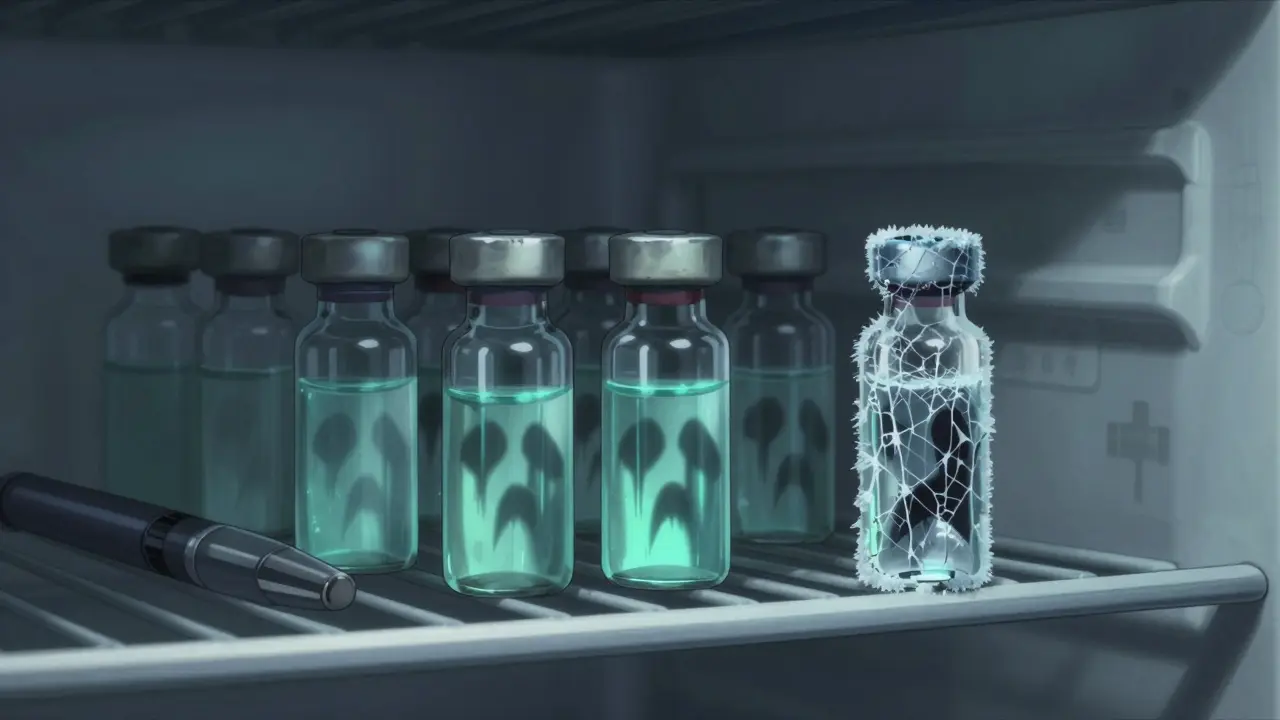
When you first buy insulin - whether it’s in a vial, pen, or cartridge - it must stay refrigerated. The ideal range is between 36°F and 46°F (2°C to 8°C). That’s your fridge’s main compartment, not the door or the freezer. Storing it near the back wall or next to frozen foods can accidentally freeze it. Frozen insulin turns cloudy, forms clumps, or develops crystals. Once that happens, it’s ruined. No amount of warming it up fixes it. You have to toss it.
Unopened insulin stays good until the printed expiration date - as long as it stays cold. That’s true for all major brands: Eli Lilly, Novo Nordisk, and Sanofi. Don’t assume it’s fine just because it looks clear. Always check the date. If you’re unsure whether your insulin was ever frozen, don’t risk it. Replace it.
Opened Insulin: Room Temperature Is Okay - But Only for a While
Once you start using insulin - whether you’ve inserted a new pen or drawn from a vial - you can keep it at room temperature. The safe range is 59°F to 86°F (15°C to 30°C). That’s your kitchen counter, bedside table, or purse - as long as it’s not in direct sunlight or near a heater.
But here’s the catch: most insulin only lasts 28 days after opening. That’s the standard rule for types like Humalog, NovoLog, Lantus, and Levemir. Mark the date you opened it on the pen or vial with a permanent marker. That simple step cuts down on accidental overuse by nearly 70%, according to a University of Michigan study.
There are exceptions. Isophane insulin (NPH) expires after just 14 days at room temperature. Insulin Degludec (Tresiba) is different - it lasts up to 8 weeks once opened. And since January 2023, Sanofi’s Toujeo (insulin glargine U300) got FDA approval for 56 days at room temperature. Always check the package insert or ask your pharmacist. Don’t guess.
Insulin Pumps: A Different Set of Rules
If you use an insulin pump, storage rules change. Once insulin is loaded into the pump’s reservoir or tubing, it must be replaced every 72 hours - no exceptions. Even if it’s still within the 28-day window, heat from your body and the pump’s electronics can break it down faster.
And if the insulin in your pump gets too hot - above 98.6°F (37°C) - throw it out immediately. That’s true even if you’ve only used it for 24 hours. A 2010 study in the Diabetes Technology & Therapeutics journal found that pump insulin exposed to high heat can degrade in under an hour. Many users don’t realize this. They think, “It’s only been a day,” and keep using it. That’s when blood sugars go wild.

What Happens When Insulin Goes Bad
Bad insulin doesn’t always look bad. Sometimes it still looks clear. But its structure changes at a molecular level. The molecules break apart or clump together. That means your body absorbs it slower, faster, or not at all. You might notice:
- Blood sugar levels that won’t drop, even with a full dose
- Unexplained high readings after meals
- More frequent low blood sugar episodes
- Increased insulin needs without a clear reason
Dr. Robert Gabbay of the American Diabetes Association says improperly stored insulin causes about 17% of unexplained blood sugar swings in insulin users. That’s not a small number. It’s a major reason people end up in the ER with diabetic ketoacidosis - especially in summer. A 2019 IDF Europe study found that 8.2% of emergency cases during hot months were linked to degraded insulin.
Common Storage Mistakes (And How to Avoid Them)
Most people mean well. But they make the same mistakes over and over:
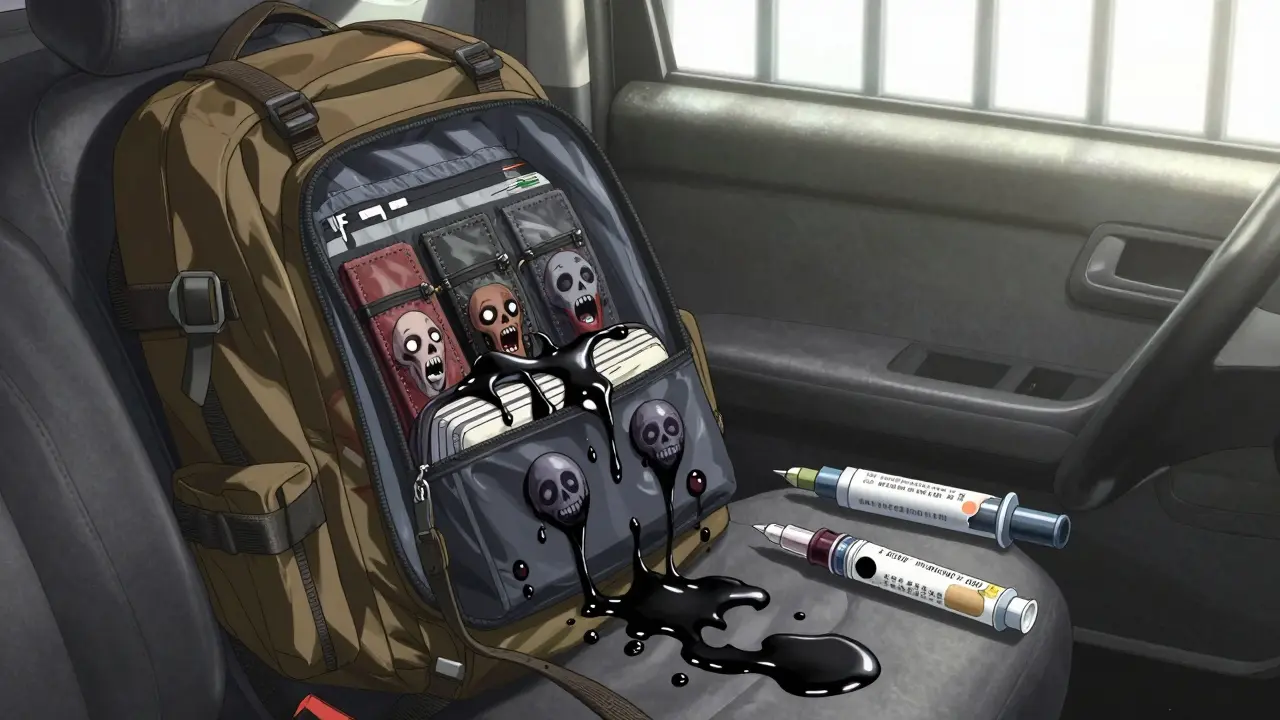
- Leaving insulin in the car. On a 75°F day, the inside of a car can hit 120°F in 30 minutes. That’s way above the safe limit. Never leave insulin in your glove box or center console.
- Storing it in the fridge door. Every time you open the door, the temperature swings. The back of the fridge is the coldest spot - and the safest.
- Using insulin past 28 days. 63% of users in a Diabetes Daily survey admitted to using opened insulin beyond the recommended time. 28% of them reported worse blood sugar control.
- Not marking the date. 41% of users don’t check expiration dates regularly. Write it down. Use a sticky note, a marker, or a phone reminder.
- Keeping it in a hot bathroom. Steam from showers and heat from hair dryers can warm it up. Store it in a cool, dry place - not the medicine cabinet.
Traveling With Insulin: What Works
Traveling doesn’t mean you have to risk your insulin. There are affordable, reliable options:
- Frio Wallets - These reusable cooling packs use water-activated gel. They keep insulin below 86°F for up to 45 hours. Over 2,800 Amazon users rate them 4.3 stars. They’re lightweight, TSA-friendly, and perfect for flights or road trips.
- Insulin cooling cases - Brands like MedAngel and Senseonics offer temperature-monitored cases that sync with your phone. They alert you if the insulin gets too hot or cold. Prices range from $25 to $50.
- Carry-on only. Never check insulin in luggage. Baggage holds can get extremely cold or hot. Keep it with you.
- Bring extra. Always pack at least one extra pen or vial - and store it separately. If one gets damaged, you’ve got a backup.
What to Do in an Emergency
Power outages, natural disasters, or travel mishaps can leave you without refrigeration. The FDA’s 2023 emergency guidelines say this: if your insulin has been kept at or below 86°F for up to 28 days, it’s still safe to use - even if it’s been unrefrigerated. But if it’s been above 86°F for more than a few hours, or above 95°F for over a week, its potency drops by 35%. At that point, it’s not worth risking.
If you’re in a crisis and have no cold storage, keep insulin in a cool, dark place - like a basement, wrapped in a wet towel, or buried in a cooler with ice packs (but not touching the ice). Use it as soon as possible. Don’t wait. And replace it as soon as you can.
Disposal: Don’t Just Toss It
Never throw used insulin pens, needles, or vials in the regular trash. They’re medical waste. Many pharmacies, hospitals, and local health departments offer sharps disposal programs. Some even have drop boxes. If you’re unsure, call your pharmacy or check your city’s waste management website.
For unused insulin that’s expired or damaged: seal it in a container, mark it “DO NOT USE,” and take it to a medication take-back site. Some areas allow you to mix it with kitty litter or coffee grounds and throw it in the trash - but only if no take-back option exists. Always check local rules.
What’s Changing in Insulin Storage
The good news? Insulin is getting more stable. Newer formulations like Toujeo and the upcoming biosimilars from Biocon are designed to last longer at room temperature. By 2027, experts predict 60% of new insulins will stay effective for 35+ days without refrigeration. That’s a game-changer for people in hot climates or without reliable power.
But until then, stick to the rules. Just because a new insulin lasts longer doesn’t mean all of them do. Always follow the label. Your health depends on it.
Quick Checklist for Safe Insulin Storage
- ✅ Keep unopened insulin refrigerated (36°F-46°F)
- ✅ Never freeze insulin - ever
- ✅ Once opened, store at room temperature (59°F-86°F)
- ✅ Mark the opening date on every pen and vial
- ✅ Use most opened insulin within 28 days (check label)
- ✅ Replace pump insulin every 72 hours
- ✅ Never leave insulin in a hot car, bathroom, or direct sun
- ✅ Use a cooling case for travel
- ✅ Dispose of used pens and needles properly
- ✅ Discard insulin if it’s cloudy, clumpy, or expired
Storing insulin correctly isn’t complicated - but it’s easy to forget. One mistake can throw your whole diabetes management off track. Take five minutes today to check your insulin, mark the dates, and organize your storage space. It’s not just about saving money. It’s about staying safe, healthy, and in control.
Chris Buchanan
December 23, 2025 AT 19:52Rachel Cericola
December 24, 2025 AT 19:44Paula Villete
December 25, 2025 AT 00:12Joe Jeter
December 26, 2025 AT 23:23Wilton Holliday
December 26, 2025 AT 23:24suhani mathur
December 27, 2025 AT 03:07Jeffrey Frye
December 28, 2025 AT 18:05siddharth tiwari
December 29, 2025 AT 23:00Diana Alime
December 30, 2025 AT 19:27Andrea Di Candia
January 1, 2026 AT 10:54