
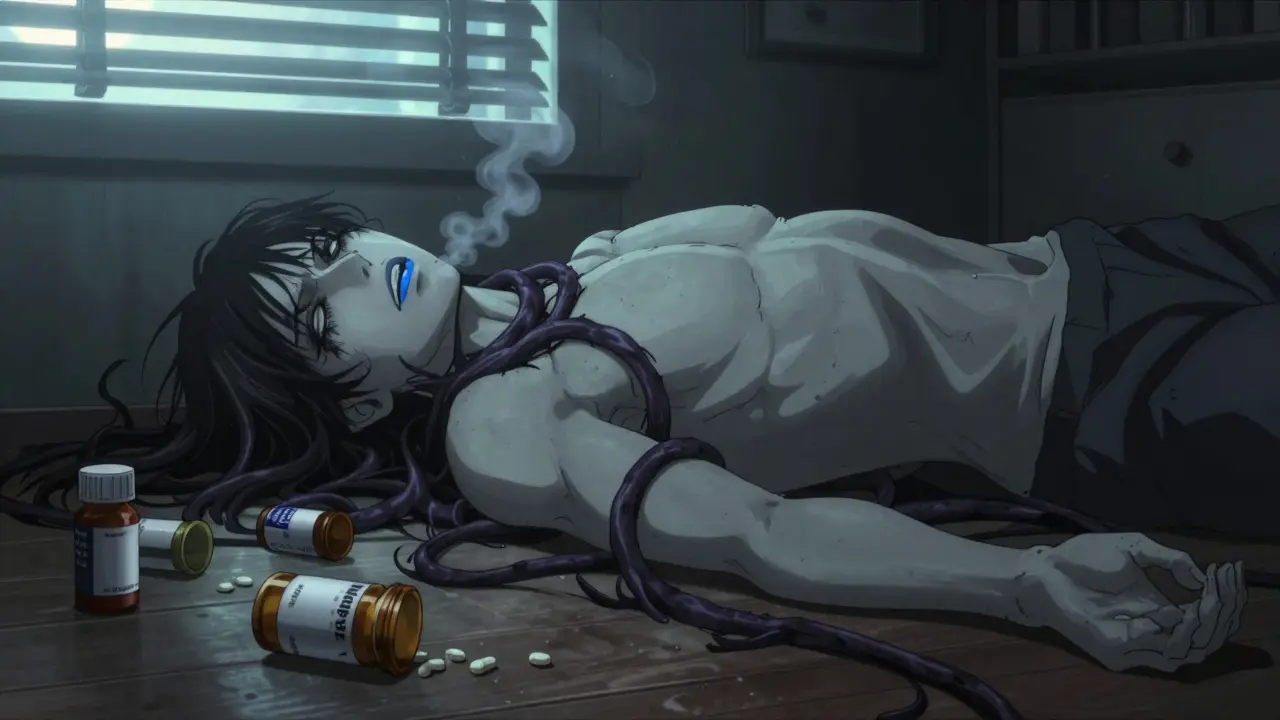
When someone takes too much of a sedative or sleep medication, their body doesn’t just feel sleepy-it starts shutting down. This isn’t just being tired. It’s life-threatening. Every year, thousands of people in the U.S. end up in emergency rooms because they or someone they know took too much of a pill meant to help them sleep. And too often, bystanders don’t realize what’s happening until it’s too late.
What Counts as an Overdose?
An overdose happens when the amount of a drug in your system overwhelms your body’s ability to handle it. With sedatives and sleep meds-like zolpidem (Ambien), eszopiclone (Lunesta), temazepam (Restoril), or alprazolam (Xanax)-this means your brain stops sending the right signals to your lungs and heart. You don’t need to take 10 pills at once. Sometimes, just doubling your normal dose, especially with alcohol or other drugs, can push you over the edge.Even "safe" medications like melatonin aren’t risk-free at high doses, but they rarely cause breathing problems. Prescription sedatives are different. They’re designed to slow your nervous system. When you take too much, that slowing becomes dangerous.
The Warning Signs: What to Look For
The signs don’t always come all at once. They build slowly. Here’s what to watch for, in order of appearance:- Extreme drowsiness-not just sleepy, but unable to stay awake even when shaken or called loudly.
- Slurred speech-words sound thick, slow, or mumbled, like someone who’s drunk, even if they haven’t had alcohol.
- Uncoordinated movements-stumbling, dropping things, or inability to walk in a straight line.
- Confusion or memory loss-they don’t know where they are, can’t remember what happened, or can’t answer simple questions.
- Slow breathing-count breaths for 30 seconds. If it’s fewer than 6 breaths (less than 12 per minute), that’s an emergency. Normal is 12-20.
- Cyanosis-lips, fingertips, or nails turning blue or gray. This means oxygen levels are dropping.
- Unresponsiveness-no reaction to shouting, shaking, or a firm sternal rub (pressing hard on the center of the chest).
- Cold, clammy skin-body temperature drops as the nervous system fails.
- Vomiting-especially if they’re unconscious. This can lead to choking.
These aren’t guesses. These are the signs emergency responders are trained to spot. A 2022 study of over 1,200 overdose cases found that 68% of people around the victim thought they were just "deep asleep"-not realizing they were dying.
Why This Is So Dangerous
Sedatives don’t just make you sleepy-they depress your breathing. Your brain tells your lungs to breathe. When too many sedatives are in your system, that signal gets lost. Your breathing gets shallow, then stops. Your heart slows. Your body cools. Your oxygen drops.According to the CDC, respiratory depression causes 92% of deaths from pure sedative overdoses. And it doesn’t take long. If breathing drops below 8 breaths per minute, survival chances drop by 7-10% every minute. That’s why waiting to see if they "wake up on their own" is deadly.
And here’s something many don’t realize: mixing sedatives with alcohol or opioids makes the risk skyrocket. In 2021, 23% of benzodiazepine overdose deaths also involved fentanyl. The combination doesn’t just add up-it multiplies. One pill, one drink, and suddenly your body can’t keep you alive.

Different Drugs, Different Risks
Not all sleep meds are the same. Knowing the difference can save time-and a life.- Benzodiazepines (Xanax, Valium, Klonopin): Cause deep sedation, confusion, slurred speech. Vital signs (heart rate, blood pressure) often stay normal until late stages. Overdose deaths are rare without other drugs-but still happen.
- Z-drugs (Ambien, Lunesta): Similar to benzodiazepines but slightly less likely to cause death alone. Still dangerous in high doses or with alcohol.
- Barbiturates (phenobarbital): Rarely prescribed now, but still used. These cause rapid, severe breathing shutdown. Much deadlier than benzodiazepines.
- OTC sleep aids (Tylenol PM, Benadryl): Contain diphenhydramine. Overdose can cause hallucinations, seizures, fast heart rate, and urinary retention-not just sleepiness. Different from prescription sedatives.
- Melatonin: Even at 240mg (60 times normal), it causes headaches and nausea-not respiratory failure. Not a true sedative overdose.
Don’t assume a drug is "safe" just because it’s prescribed. The FDA added stronger warnings to insomnia drugs in April 2023 after hundreds of deaths linked to misuse.
What to Do If You Suspect an Overdose
There’s no time to wait. Here’s what to do, step by step:- Check responsiveness. Shout their name. Shake their shoulders. Do a sternal rub-press hard on the center of their chest. If they don’t respond, move to step two.
- Check breathing. Look at their chest. Count breaths for 30 seconds. If fewer than 6, or if breathing is shallow, irregular, or absent-call 911 immediately.
- Check for blue lips or skin. This means oxygen is low. They need help now.
- Call emergency services. Don’t wait. Say: "I think someone overdosed on sleep medication." Give your location. Stay on the line.
- Start rescue breathing if they’re not breathing. Tilt head back, lift chin, pinch nose, give one breath every 5 seconds. Don’t stop until help arrives.
- Don’t give them coffee, cold showers, or induce vomiting. These don’t help. They can make things worse.
- Don’t try to give flumazenil. It’s a reversal drug-but only safe in a hospital. In people who are dependent, it can trigger seizures.
Even if they seem to wake up, don’t assume they’re fine. The effects can come back. They need to be monitored by medical staff for at least 6-12 hours.
Who’s at Highest Risk?
It’s not just people who misuse drugs. Many overdoses happen to people taking their prescribed dose:- Adults aged 25-54-this group saw the biggest spike in overdose deaths since 2010.
- People taking multiple prescriptions for sleep or anxiety.
- Those who drink alcohol regularly while on sedatives.
- People with depression or a history of substance use.
- Older adults-slower metabolism means drugs build up faster.
West Virginia has the highest overdose death rate from sedatives in the U.S. But it’s happening everywhere. In 2021, over 9.5 million Americans misused prescription sedatives. That’s more than the population of Australia.
How to Prevent It
Prevention starts with awareness:- Never mix sleep meds with alcohol or opioids.
- Keep pills locked up, especially if teens or visitors are around.
- Don’t take extra doses if you don’t fall asleep right away. Wait until morning.
- Ask your doctor if you really need the medication long-term. Many people take them longer than needed.
- Know the signs. Share them with family. If you’re the one taking them, tell someone you trust what to look for.
California’s "Don’t Die" campaign gave out 250,000 overdose recognition cards to pharmacies. They’re free. You can ask for one. Or print one online. Keep it by your bed.
Final Thought: It’s Not Weakness. It’s a Medical Emergency.
Too many people feel shame when someone overdoses. They whisper about "bad choices." But this isn’t about willpower. It’s about biology. These drugs affect the same part of the brain that controls breathing. Once that system shuts down, you can’t talk yourself awake.If you see someone with slurred speech, blue lips, and no response-don’t wait. Don’t hope. Call 911. Start rescue breathing. You might be the only thing standing between them and death.
Can you overdose on melatonin?
Yes, you can take too much melatonin, but it’s very rare for it to cause a life-threatening overdose. High doses (like 240mg) may cause headaches, dizziness, nausea, or vivid dreams-but they don’t suppress breathing like prescription sedatives. Melatonin isn’t a true sedative; it’s a hormone that helps regulate sleep cycles. It’s much safer than benzodiazepines or Z-drugs.
What’s the difference between a sedative overdose and an opioid overdose?
The biggest clue is pupil size. Opioid overdoses usually cause pinpoint pupils, while sedative overdoses don’t change pupil size. Sedative overdoses often show slow breathing and unresponsiveness without the extreme pinpoint pupils. But if someone took both drugs-like fentanyl and Xanax-the signs can overlap. Don’t rely on pupils alone. If someone is unresponsive and breathing slowly, treat it as a medical emergency regardless of the drug.
Can you reverse a sedative overdose at home?
No. The only approved reversal agent for benzodiazepines is flumazenil, and it’s only given in hospitals. Giving it at home can cause seizures, especially in people who’ve been using sedatives regularly. There’s no safe home remedy. The only effective action is calling 911 and providing rescue breathing until help arrives.
How long does it take for sedatives to cause an overdose?
It depends on the drug and how it’s taken. Fast-acting pills like zolpidem can cause symptoms within 30 minutes. Slower ones like temazepam may take 1-2 hours. If you mix them with alcohol, symptoms can come on faster and be more severe. Overdose doesn’t always happen right after taking the pill-it can build over hours, especially if someone takes more than one dose thinking the first didn’t work.
Is it safe to let someone sleep it off after taking too many sleep pills?
Absolutely not. Sedative overdose is a silent killer. People often appear to be deeply asleep-but their breathing is slowing or stopping. Waiting can mean the difference between life and death. If someone is unresponsive, breathing fewer than 12 times per minute, or has blue lips, they need emergency care immediately. Don’t wait. Don’t hope. Call 911.
jeremy carroll
December 15, 2025 AT 10:20man i never realized how sneaky these meds can be. my uncle took his normal dose and just... stopped responding. we thought he was passed out from stress. turned out he was dying. this post saved my life. sharing it with everyone i know.
Daniel Thompson
December 17, 2025 AT 06:16It is imperative to underscore the clinical significance of respiratory depression as the primary mechanism of mortality in sedative overdose. The data presented in this article is both statistically robust and clinically actionable. One must not underestimate the pharmacodynamic synergy between benzodiazepines and ethanol, which exponentially increases the risk of central nervous system suppression.
Natalie Koeber
December 19, 2025 AT 00:50they don't want you to know this but the FDA and pharma companies are hiding the truth. sedatives are just a gateway to the new world order mind control program. they make you docile so you don't question the vaccines or the 5g towers. melatonin? that's just a placebo to distract you from the real poison in your water supply. i've seen the documents. they're all connected.
Wade Mercer
December 19, 2025 AT 11:12people who take these meds are just lazy. if you can't sleep, get up and read a book. stop relying on chemicals to fix your life. i've never taken a sleeping pill in my life and i sleep like a baby. this whole thing is just another symptom of our weak society. no discipline, no willpower, just pills.
Sarthak Jain
December 21, 2025 AT 08:25bro this is gold. i'm a med student in delhi and we barely cover this in class. the part about cyanosis and sternal rub? life saver. i showed this to my roommate who’s on zolpidem - he didn’t even know his grandma almost died from mixing it with whiskey. we printed 10 copies and taped them to the pharmacy counter. also, check out the 2022 JAMA study on polysubstance sedative OD - it’s wild how much overlap there is with opioid patterns. shoutout to the author for keeping it real.
Tim Bartik
December 22, 2025 AT 21:56AMERICA IS DYING BECAUSE OF THESE PILL-PUSHING DOCTORS AND THEIR COWARDLY PATIENTS. YOU WANT TO SLEEP? GO OUTSIDE. WALK. BREATHE AIR. NOT SOME CHEMICAL CRUTCH FROM A BIG PHARMA SHILL. I’VE SEEN IT - MY NEIGHBOR’S KID TOOK 12 LUNESTA AND HIS MOM SAID "HE JUST NEEDED TO RELAX." RELAX? HE WAS DYING. WE NEED TO BAN THESE DRUGS. AND PUT THE DOCTORS IN JAIL.
Edward Stevens
December 23, 2025 AT 12:45so let me get this straight - we’ve got a post that literally could save your life, and the first three comments are either a conspiracy theorist, a moralizing jerk, and a guy yelling about "the system"... and somehow the only one who knows what they’re talking about is the med student from India? 🤦♂️
Alexis Wright
December 24, 2025 AT 06:39the tragedy here isn’t the overdose - it’s the collective denial of human fragility. we’ve turned death into a technical problem to be solved with protocols and 911 calls, when what we really need is existential reckoning. sedatives don’t kill you - the illusion of control does. you think counting breaths saves lives? it just delays the inevitable truth: we are all one bad decision away from becoming a statistic in a CDC report. and yet, we still scroll, still click, still pretend we’re in charge. the body doesn’t lie. but we? we lie to ourselves every night before we swallow that little white pill. and then we wonder why we can’t wake up.