

Steroid Side Effect Sodium Calculator
Track your daily sodium intake to help reduce moon face and facial swelling from corticosteroid use. The article recommends limiting sodium to under 1,500 mg per day.
No items added yet
Tips for reducing sodium intake:
- Limit to under 1,500 mg daily
- Avoid processed foods, canned soups, deli meats, and restaurant meals
- Drink 2-3 liters of water daily to help flush excess sodium
When you're taking corticosteroids like prednisone to control inflammation from conditions like lupus, Crohn’s disease, or rheumatoid arthritis, the goal is to feel better. But for many people, the side effects-especially moon face and weight gain-can make you feel worse than the original illness. Moon face isn’t just a cosmetic issue. It’s a real, visible sign of hormonal changes in your body, and it can shake your confidence, make you avoid social situations, and even cause you to skip doses of medicine you desperately need.
What Exactly Is Moon Face?
Moon face, also called Cushingoid facies, is that round, puffy, swollen look in your cheeks and jawline. It’s not caused by gaining fat everywhere-it’s fat moving to your face. Your cheeks bulge, your chin looks less defined, and your face might feel tight or heavy. It often comes with fluid retention, so your skin may feel stretched, and you might notice your rings don’t fit or your shoes feel tighter.
This isn’t something that happens overnight. It usually shows up after three months or more of daily steroid use, especially at doses higher than 7.5 mg of prednisone per day. Studies show about 25-30% of people on long-term steroids develop this appearance. Women and younger adults are more likely to see it, likely because of how hormones interact with fat distribution.
It’s not dangerous on its own, but it’s a red flag. Moon face often goes hand-in-hand with other metabolic changes: higher blood sugar, increased abdominal fat, muscle weakness, and acne. These are signs your body is under metabolic stress from too much cortisol-like activity.
Why Do Steroids Cause This?
Corticosteroids like prednisone mimic cortisol, your body’s natural stress hormone. When you take them for weeks or months, your body thinks it has too much cortisol. So, it starts doing things it normally wouldn’t.
First, steroids trigger fat cells in your face, neck, and upper back to store more fat. At the same time, they cause your body to hold onto sodium and water. That’s why your face swells-it’s not just fat, it’s fluid too. You might not be eating more, but your body is storing energy differently. Research shows steroids increase appetite and change how your body uses glucose and fat, leading to weight gain even without overeating.
Another key factor: your adrenal glands slow down. When you take external steroids, your body says, “We don’t need to make our own cortisol anymore.” Over time, your adrenals get lazy. If you stop the medication suddenly, your body can’t snap back fast enough, leading to dangerous adrenal insufficiency. That’s why you can’t just quit steroids cold turkey.
Can You Prevent Moon Face?
No, you can’t fully prevent it if you need to be on steroids long-term. But you can significantly reduce how bad it gets. The most effective strategy isn’t about quick fixes-it’s about managing the underlying causes: sodium, water, and hormone balance.
The biggest mistake people make? Thinking they just need to eat less. That rarely works. The issue isn’t calories-it’s how your body is processing salt and fluids. So here’s what actually helps:
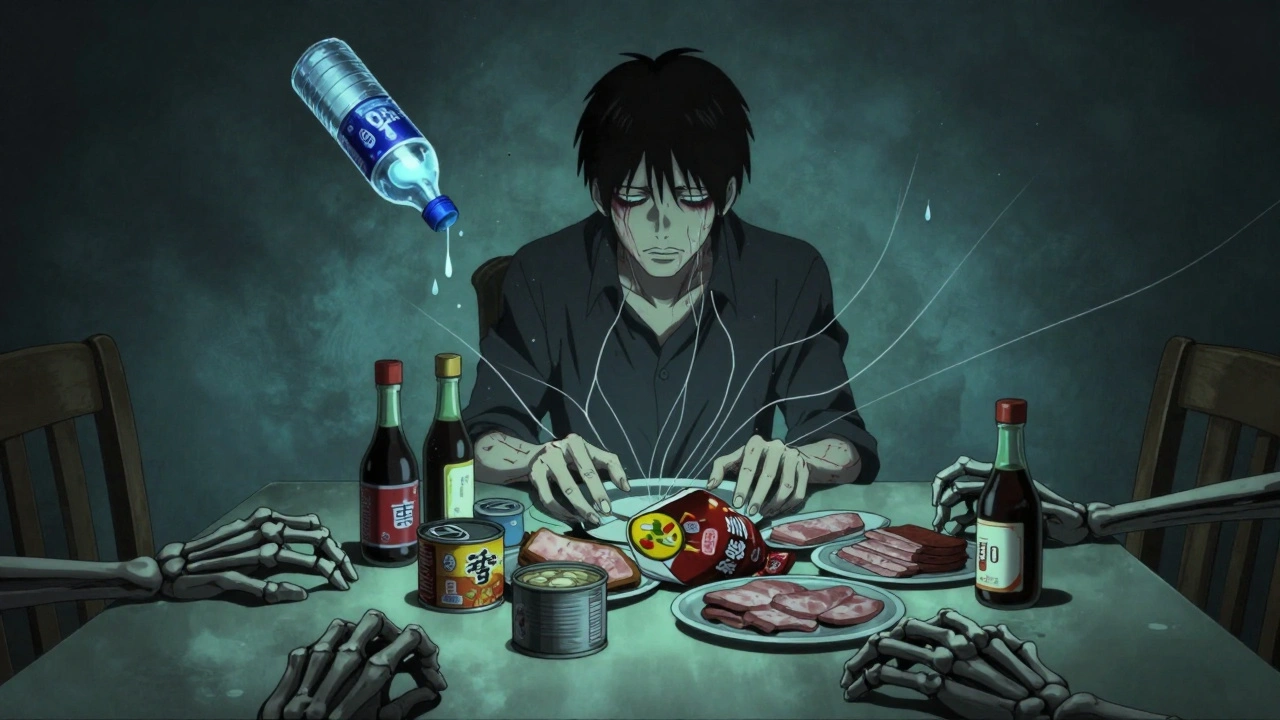
- Lower your sodium intake to under 1,500 mg per day. That’s less than one teaspoon of salt. Avoid processed foods, canned soups, deli meats, soy sauce, and restaurant meals. Read labels-salt hides everywhere.
- Drink more water. It sounds backwards, but drinking 2-3 liters of water daily helps your kidneys flush out excess sodium. When you’re dehydrated, your body holds onto water. When you’re well-hydrated, it lets go.
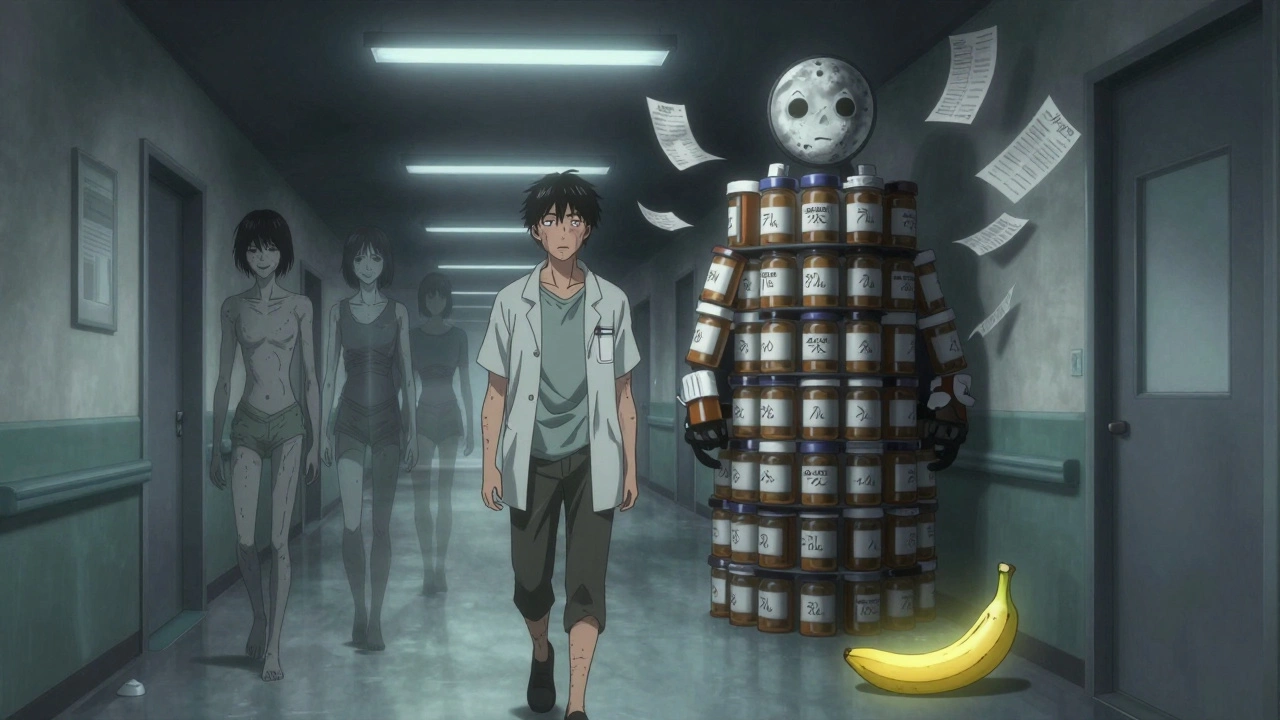
- Eat potassium-rich foods. Bananas, spinach, sweet potatoes, avocados, and beans help balance sodium. Potassium tells your body to release water, which reduces puffiness.
- Limit sugar and refined carbs. Steroids already raise blood sugar. Adding sugar makes it worse and can lead to more fat storage, especially around your midsection.
One patient on a prednisone taper described her experience: “I cut out salt, started drinking 3 liters of water, and within two weeks, my face looked less swollen. Not gone-but noticeably better.”
What About Exercise?
Exercise won’t “burn off” moon face, but it helps manage other side effects. Steroids cause muscle loss and weakness, especially in your arms and legs. That makes you burn fewer calories, which adds to weight gain.
Focus on gentle resistance training: light weights, resistance bands, or bodyweight exercises like seated leg lifts or wall push-ups. These help maintain muscle mass and improve metabolism. Avoid intense cardio at first-it can increase fluid retention in some people.
Also, avoid alcohol. It worsens fluid retention and can spike blood sugar, making both moon face and weight gain worse.
How Long Does It Take to Go Away?
This is the question most people want answered: “Will this ever go back to normal?”
The good news? Yes, it usually does. Once your doctor starts tapering your steroid dose, moon face begins to fade. Most people see noticeable improvement within 6-12 months after stopping. Some notice changes in as little as 4-6 weeks after reducing their dose.
But timing depends on how long you were on steroids and at what dose. Someone on 60 mg of prednisone for a year will take longer to recover than someone on 5 mg for three months. Your metabolism, age, and genetics also play a role.
There’s no magic pill or cream to speed this up. Topical treatments are still experimental. One 2024 pilot study showed a lipolytic cream reduced facial fat by 18% in a small group, but it’s not available yet.
When to Talk to Your Doctor
Don’t try to manage this alone. Your doctor needs to know how you’re feeling-not just physically, but emotionally.
- If your face swelling is sudden or severe, it could signal worsening Cushing’s syndrome.
- If you have headaches, blurry vision, or slow-healing wounds, these could be signs of high cortisol levels.
- If you’re skipping doses because you hate how you look, tell your doctor. That’s a real problem. Studies show 23% of people with inflammatory bowel disease stop their steroids because of appearance side effects-and that puts their health at risk.
Your doctor might consider:
- Lowering your dose to the lowest effective amount
- Switching to a different steroid with fewer side effects
- Adding a medication like metformin if your blood sugar is rising
- Referring you to a dietitian or mental health professional
New drugs called SEGRMs (selective glucocorticoid receptor modulators) are in clinical trials and show promise-reducing moon face by 63% compared to traditional steroids. But they’re not approved yet. For now, smart management is your best tool.
The Emotional Toll
Moon face isn’t just a physical change. It’s a psychological one.
Patients describe it as losing a part of themselves. One person wrote: “I looked in the mirror and didn’t recognize my own face. I stopped taking photos. I canceled plans with friends.”
The American Psychological Association now recognizes steroid-induced body image disturbance as a real issue. It’s not “just being vain.” It’s a legitimate source of anxiety, depression, and social withdrawal.
If you’re struggling:
- Join a support group like the Cushing’s Support & Research Foundation. 47% of their members seek counseling for appearance-related distress.
- Consider therapy. Cognitive behavioral therapy (CBT) helps people reframe how they see themselves when their body changes.
- Talk to your doctor about connecting you with a counselor who understands chronic illness.
You’re not alone. Thousands of people on steroids feel the same way. What matters is that you keep taking your medicine for your health-and find ways to care for your mind too.
Final Thoughts
Moon face and weight gain from corticosteroids are frustrating, but they’re not permanent. They’re side effects-not failures. You’re not doing anything wrong. Your body is responding to powerful medicine, and you’re managing it the best you can.
Focus on what you can control: your salt intake, your water, your movement, and your mental health. Don’t wait for your face to change before you feel better about yourself. Celebrate small wins: less puffiness, better energy, clearer skin. These are victories.
And remember: your worth isn’t tied to your appearance. You’re fighting a real illness. The fact that you’re here, looking for answers, means you’re already doing the hard work. Keep going.
Can moon face go away after stopping steroids?
Yes, moon face usually fades after you stop or reduce corticosteroids. Most people see noticeable improvement within 6-12 months, though some notice changes in as little as 4-6 weeks after lowering their dose. The timeline depends on how long you were on steroids, your dose, and your metabolism. It’s not instant, but it’s reversible.
Does drinking water really help reduce moon face?
Yes, drinking 2-3 liters of water daily helps reduce facial swelling. Steroids cause your body to hold onto sodium and water. Drinking more water signals your kidneys to flush out the excess sodium, which reduces fluid retention. Many patients report visible improvement in puffiness within 10-14 days of increasing water intake and cutting salt.
Can I lose weight while on steroids?
Losing weight is hard on steroids because they increase appetite and change how your body stores fat. But you can prevent further gain by eating low-sodium, whole foods, limiting sugar, and doing light resistance exercise. Focus on maintaining muscle mass and managing fluid retention-not rapid weight loss. Weight loss often happens naturally as you taper off the medication.
Is moon face dangerous?
Moon face itself isn’t dangerous, but it’s a visible sign of high cortisol levels, which can lead to serious health problems like high blood sugar, high blood pressure, muscle loss, and osteoporosis. If you have moon face, your doctor should check your blood sugar, blood pressure, and bone density regularly.
Can I stop taking steroids to get rid of moon face?
Never stop or reduce steroids without your doctor’s guidance. Abruptly stopping can cause adrenal insufficiency-a life-threatening condition where your body can’t make enough cortisol. Symptoms include extreme fatigue, low blood pressure, vomiting, and confusion. Tapering slowly under medical supervision is the only safe way to reduce side effects.
Are there any creams or treatments that remove moon face?
There are no approved creams or treatments that reliably remove steroid-induced moon face. Some experimental topical lipolytic agents have shown modest results in early studies, but they’re not available to the public. The only proven methods are reducing steroid dose, managing sodium and water intake, and time.
Ethan McIvor
December 3, 2025 AT 04:36Man, I felt this so hard. I was on prednisone for 18 months after my Crohn’s flare-up. Moon face hit me like a truck. I stopped taking selfies. Cancelled birthdays. Felt like a stranger in the mirror. But I kept the meds - because my gut was screaming if I didn’t. Water, no salt, bananas every day. Took 9 months, but my face slowly came back. Not perfect, but me again. 🥹
Michael Bene
December 3, 2025 AT 20:37LMAO you people are acting like moon face is the end of the world. It’s just cortisol making your cheeks puff up like a chipmunk hoarding nuts. You’re not dying. You’re not even ugly - you’re just temporarily swollen. Stop being dramatic. Also, ‘drink water’? DUH. That’s not science, that’s mom advice. If you want real results, get off steroids. But no, you’d rather whine and eat kale.
Brian Perry
December 5, 2025 AT 16:33ok so i read this whole thing and i think i got it?? like… water good, salt bad, dont quit steroids or u die?? 😅 i just started on 10mg and my face already feels like a balloon. help. also why do i feel so tired all the time? is that part of it too??
Mindy Bilotta
December 6, 2025 AT 11:56Hi Brian - I’m so glad you’re asking. Yes, fatigue is 100% part of it. Steroids mess with your cortisol rhythm and your sleep cycle. Try to nap 20 mins in the afternoon if you can, and avoid caffeine after noon. Also, potassium is your BFF - sweet potatoes, spinach, coconut water. I swear by it. You got this. 💪
Charles Moore
December 7, 2025 AT 12:45There’s a quiet dignity in enduring this. Most people don’t understand what it’s like to take medicine that saves your life but steals your reflection. I’ve seen patients cry over their own faces in the mirror. It’s not vanity - it’s grief. The body changes, and with it, your sense of self. Be gentle with yourself. Healing isn’t linear. Neither is identity.
Rashi Taliyan
December 8, 2025 AT 10:29OMG I thought I was the only one! I canceled my sister’s wedding because I didn’t want to be in photos. My aunt said, ‘You’re still beautiful inside.’ But that didn’t help. I started journaling. Wrote letters to my old self. Took one photo a week - just to track the changes. Now, 10 months after my last dose? My jawline is back. And I took the first selfie in 2 years. I cried. But it was good tears.
Gene Linetsky
December 9, 2025 AT 07:40They’re lying to you. Moon face isn’t from steroids - it’s from the pharmaceutical industry pushing fake ‘doses’ to keep you dependent. They don’t want you to heal. They want you addicted. The real fix? Raw food diets, sunlight, and quitting all meds. I’ve seen people reverse Cushing’s in 3 weeks with lemon water and fasting. Your doctor won’t tell you this because they’re paid by Big Pharma. Wake up.
Chloe Madison
December 9, 2025 AT 10:30YOU ARE NOT ALONE. I was on 60mg for 8 months. My face looked like a balloon animal. I lost my job because I looked ‘unprofessional.’ I cried in the shower every morning. But I didn’t quit. I drank 3 liters of water. I lifted light weights. I found a therapist who specialized in chronic illness. Today? My face is 90% back. And I’m stronger than I ever was. You’re not broken. You’re becoming.
Vincent Soldja
December 11, 2025 AT 10:16Water intake is irrelevant. The mechanism is adipocyte redistribution under glucocorticoid receptor activation. Sodium restriction has marginal effect. The only proven intervention is dose reduction under endocrine supervision. Any other advice is anecdotal and potentially harmful.
Makenzie Keely
December 12, 2025 AT 22:11Can I just say - thank you for writing this with such compassion? So many medical articles treat this like a side note. But this? This is human. Moon face isn’t just ‘a look’ - it’s a silent scream of a body under siege. And the emotional toll? It’s real. I’m a nurse, and I’ve seen patients skip doses because they can’t bear to look in the mirror. Please, if you’re reading this - tell your doctor. You deserve care for your mind, too.
Joykrishna Banerjee
December 13, 2025 AT 08:11Pathetic. You’re all treating this like some tragic Shakespearean tragedy. It’s a physiological side effect - not a character arc. If you can’t handle the metabolic consequences of exogenous glucocorticoid administration, perhaps you shouldn’t have requested the prescription in the first place. Also, ‘potassium-rich foods’? Please. That’s not a treatment - it’s a wellness influencer’s marketing ploy.
Myson Jones
December 14, 2025 AT 15:04I appreciate the depth of this post. It’s rare to see emotional health addressed with the same rigor as physiology. For those struggling with body image - you’re not weak for feeling this way. In fact, feeling it deeply means you’re still connected to yourself. That’s courage. I’m not a doctor, but I’ve walked this path. You’re not alone. Reach out. One conversation can change everything.
parth pandya
December 15, 2025 AT 14:21hey i had this too!! after 12 months on prednisone for RA. i started eating more eggs and nuts and drinking water - and my face got better. also, i stopped eating bread. idk if that helped but i felt better. also, yoga? kinda helped with stress. ps: i spell weird sorry
Albert Essel
December 17, 2025 AT 04:02Thank you for this. The most important part isn’t the sodium or the water - it’s the validation. Too many patients are told to ‘just lose weight’ or ‘get over it.’ But this isn’t about vanity. It’s about dignity. You’re not failing. You’re surviving. And that matters more than any reflection in the mirror.