
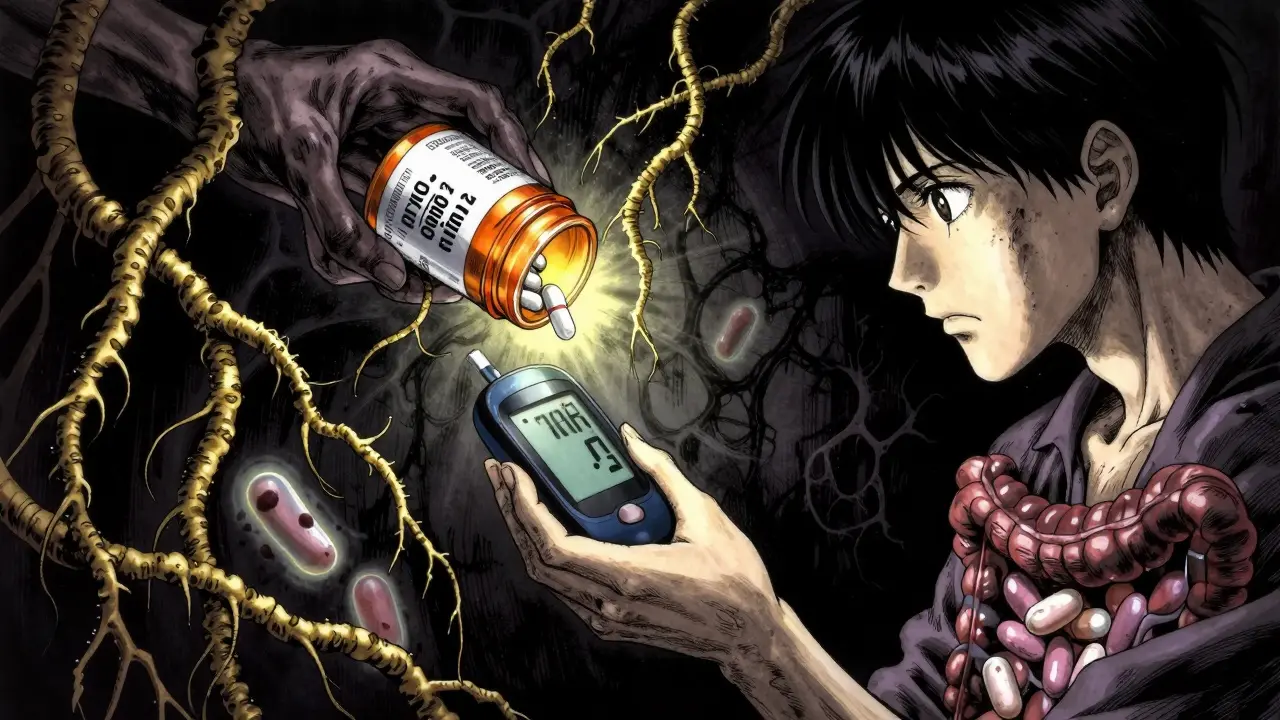
Many people with type 2 diabetes turn to herbal supplements like goldenseal hoping to improve their blood sugar control. But what if that supplement is quietly reducing the effectiveness of their prescription medication? The truth is, goldenseal and metformin can interfere with each other in ways that put your glucose control at risk - and most people have no idea.
What’s Actually Happening in Your Body?
Goldenseal contains a compound called berberine, which has been shown in studies to lower blood sugar. That sounds good, right? But here’s the catch: berberine doesn’t just work on its own. It also blocks the same intestinal transporters that metformin needs to get absorbed into your bloodstream. Specifically, it interferes with OCT1, a protein in your gut that helps metformin enter your system.
This isn’t theoretical. A 2025 clinical trial published in Clinical and Translational Science tracked 45 adults with type 2 diabetes who were already taking metformin. When they added goldenseal, those on lower doses of metformin (500-750 mg daily) saw a 25% drop in how much metformin reached their blood. That’s not a small change - it’s enough to make your medication less effective.
And here’s the twist: at higher metformin doses (2000 mg or more), the interaction disappeared. Why? Because the transporters became saturated. Metformin’s absorption is already nonlinear - meaning your body can only take in so much at once. At higher doses, there’s so much metformin flooding the system that goldenseal can’t block it all. But if you’re on a low or moderate dose, you’re vulnerable.
Why This Isn’t Just About ‘Less Metformin’
You might think, ‘If goldenseal lowers blood sugar too, doesn’t that balance out?’ It seems logical - but biology doesn’t work that way.
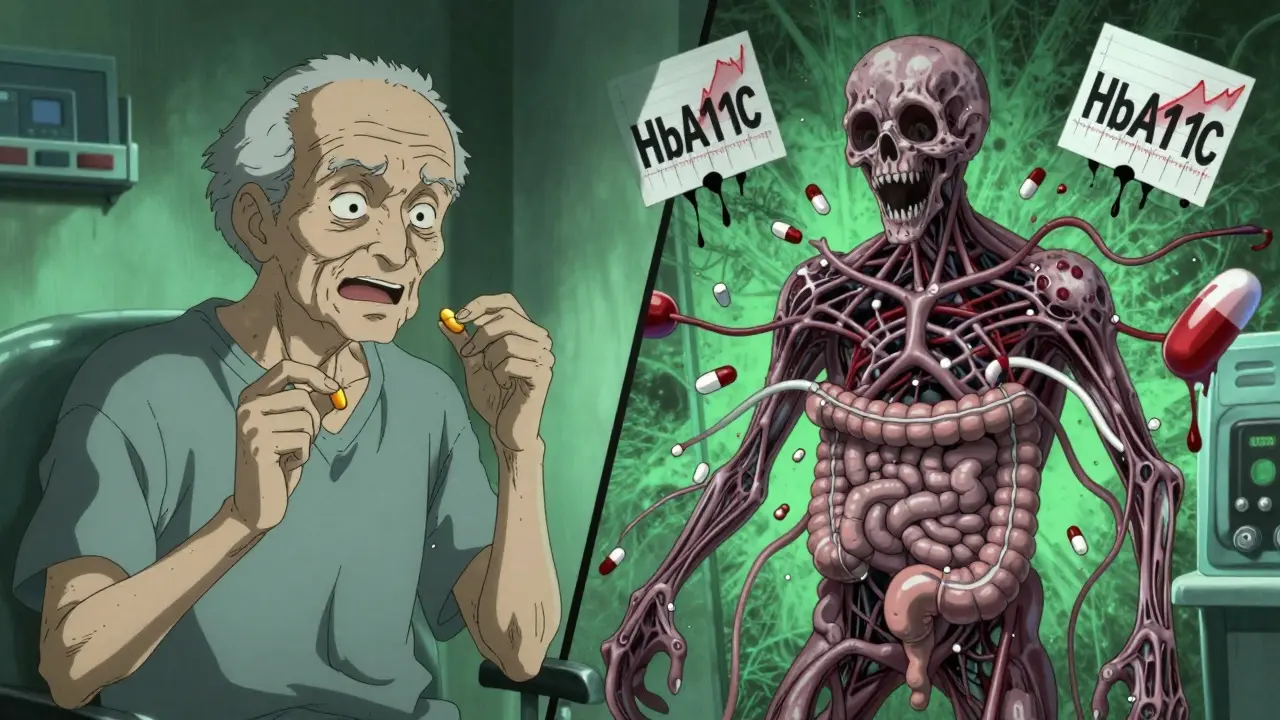
The same 2025 study found that even though metformin levels dropped, HbA1c (a 3-month average of blood sugar) actually improved slightly - from 6.8% to 6.5%. That’s confusing, right? How could less metformin lead to better control?
The answer is berberine. It’s doing its own job: lowering fasting glucose, reducing after-meal spikes, and improving insulin sensitivity. But here’s the danger: you can’t predict how much it’s helping. Berberine’s effects vary by dose, brand, and your body. One person might get a 1% drop in HbA1c. Another might get no change at all. Meanwhile, their metformin is underperforming - and they have no way to tell.
Imagine driving a car with half a tank of gas and thinking the engine is running fine because you’re going downhill. You’re not - you’re just coasting. And when you hit a hill, you stall.
What the Manuals Say - And Why You Should Care
The MSD Manual Professional Edition (2024) explicitly warns: ‘Goldenseal may decrease the blood levels of metformin, potentially hindering glucose control.’ But it also says: ‘The berberine in goldenseal may also increase the hypoglycemic effects of antihyperglycemic drugs.’
That’s a contradiction on paper - and a real-life trap for patients. One part says: ‘This could make your diabetes worse.’ The other says: ‘This could make your blood sugar drop too low.’
And it’s not just one source. The Merck Manual Consumer Version (2024) confirms that berberine lowers fasting glucose and HbA1c in clinical trials - but only when taken consistently. And even then, its effect fades after 90 days in people over 60. So you’re not getting a steady benefit - you’re getting unpredictable swings.
Meanwhile, the American Diabetes Association’s 2024 guidelines don’t mention goldenseal by name. But they do say: ‘Routine assessment of all medications and supplements’ is part of standard care. That means your doctor should be asking you - but most don’t. Patients rarely volunteer this information.
Who’s at the Highest Risk?
If you’re taking metformin and using goldenseal, your risk level depends on three things:
- Your metformin dose - Under 1000 mg daily? You’re in the danger zone. The interaction is strongest here.
- Your age - Over 60? Berberine’s glucose-lowering effect weakens with age. You’re more likely to lose metformin’s benefit without gaining much from goldenseal.
- Your kidney function - Metformin is cleared by your kidneys. If your eGFR is below 45, you’re already on a lower dose. That puts you right in the range where goldenseal has the biggest impact.
And here’s a hidden risk: many goldenseal supplements don’t even list how much berberine they contain. One brand might have 500 mg per capsule. Another might have 150 mg. You’re flying blind.
What Should You Do?
If you’re on metformin and taking goldenseal - stop. Not because it’s ‘bad,’ but because it’s unpredictable. You’re not getting the full benefit of your prescription, and you’re exposing yourself to two opposing forces: one that lowers your drug levels, and another that might push your blood sugar too low.
Here’s what to do instead:
- Talk to your doctor - Don’t hide your supplements. Say: ‘I’ve been taking goldenseal for blood sugar. What should I do?’
- Don’t replace metformin - Berberine isn’t a substitute. It doesn’t have the same safety track record, long-term data, or consistency.
- Ask about standardized berberine - If you want the benefits of berberine without goldenseal’s unknowns, ask your doctor about a purified, lab-tested berberine supplement. At least then you know the dose.
- Monitor your blood sugar - If you’ve been taking goldenseal, check your fasting glucose more often for the next 2-4 weeks after stopping. Watch for spikes.

Why This Matters More Than You Think
Over 150 million people worldwide take metformin. Around 35-40% of people with diabetes use herbal supplements. That’s tens of millions of people potentially mixing goldenseal with their meds - and most don’t know the risk.
This isn’t just about one herb. It’s about a bigger problem: the assumption that ‘natural’ means ‘safe’ and ‘doesn’t interfere.’ It doesn’t. Goldenseal is a powerful plant with potent chemistry. It interacts with your body the same way a drug does - and your body can’t tell the difference.
And if you think your doctor will catch it - think again. Most don’t ask about supplements unless you bring it up. A 2022 survey found that only 18% of patients with diabetes told their provider about herbal use - even though 4 in 10 were taking them.
The bottom line? You’re not being careful by taking goldenseal. You’re being risky. And if your blood sugar starts climbing without explanation - this could be why.
What About Other Herbs?
Goldenseal isn’t alone. St. John’s wort, ginseng, bitter melon, and even cinnamon can affect how metformin works. Some boost its effect. Others block it. None are tested for safety alongside diabetes drugs.
If you’re taking any supplement - even something labeled ‘for blood sugar’ - assume it could interfere. Ask your pharmacist or endocrinologist before continuing. Don’t wait for a problem to happen.
Can I take goldenseal and metformin together if I space them out?
No. The interaction happens in your intestines during absorption, not in your bloodstream. Spacing the doses by a few hours won’t help. Goldenseal blocks the transporters that metformin needs - and those transporters are active as soon as the supplements enter your gut. The only safe approach is to avoid goldenseal entirely while taking metformin.
Does goldenseal lower blood sugar better than metformin?
No. While berberine in goldenseal can lower HbA1c by about 0.5-1% in studies, metformin typically lowers it by 1-2%. Metformin also reduces diabetes complications over time - something berberine hasn’t proven yet. Goldenseal’s effects are weaker, less consistent, and not backed by decades of safety data.
Is it safe to use goldenseal if I’m not on metformin?
Even if you’re not on metformin, goldenseal isn’t risk-free. It can interact with blood pressure meds, antidepressants, and heart medications. It’s also not regulated - many products contain contaminants or wrong doses. And because goldenseal is endangered, harvesting it harms wild populations. There are safer, better-studied ways to support blood sugar.
What are the signs that goldenseal is interfering with my metformin?
If you’ve been taking goldenseal and suddenly notice your fasting blood sugar rising, or your HbA1c increasing despite sticking to your diet and meds, that’s a red flag. Other signs include more frequent high blood sugar readings, increased thirst, or unexplained fatigue. Stop the supplement and check in with your doctor.
Can I switch to berberine supplements instead of goldenseal?
Berberine supplements are more predictable than goldenseal because they contain a known dose of the active compound. But they still interact with metformin the same way - by blocking intestinal absorption. So even purified berberine isn’t safe to take with metformin unless your doctor approves it and monitors your blood sugar closely. Don’t assume ‘purified’ means ‘safe.’
Final Thought: Trust Your Prescription, Not the Bottle
Your metformin has been tested in hundreds of thousands of people over 60 years. Goldenseal has been tested in dozens - and mostly in healthy volunteers, not people with diabetes. One is a medicine. The other is a plant with unknown effects. Don’t gamble your health on the idea that ‘natural’ equals ‘better.’
If you want to improve your blood sugar, focus on proven methods: movement, sleep, stress management, and your prescribed meds. Talk to your doctor before adding anything else. Your glucose levels are too important to leave to chance.
kenneth pillet
January 19, 2026 AT 03:13Been on metformin 1000mg for 5 years. Started goldenseal last year for 'immune support'-no idea it could mess with my meds. Just stopped it. Fasting sugars dropped 20 points in a week. Who knew.
Jodi Harding
January 19, 2026 AT 19:34So let me get this straight-natural doesn’t mean safe, but Big Pharma’s $2 pill is? 😏 The system is rigged, and we’re all just lab rats with glucose monitors.
Danny Gray
January 20, 2026 AT 00:47Interesting how the article says goldenseal interferes with metformin absorption... but then admits berberine lowers HbA1c. So is the problem the herb, or the fact that doctors don’t want you to have alternatives? Maybe the real issue is control, not safety.
Tyler Myers
January 21, 2026 AT 00:29THIS IS A PHARMA COVER-UP. Berberine is cheaper, more effective, and has been used for 2000 years in Chinese medicine. The FDA banned it in 2018 but the ban was quietly reversed because they couldn't prove it was 'unsafe'-only that it didn't fit their profit model. Your doctor won't tell you this because they get kickbacks from Big Metformin.
Kristin Dailey
January 21, 2026 AT 00:55Americans think herbs are medicine. In my country, we take pills like adults. This is why healthcare costs are insane.
Wendy Claughton
January 22, 2026 AT 07:14Thank you for writing this. 💙 I’ve been taking goldenseal for years and felt guilty about it-like I was betraying my doctor. Now I know it’s not my fault-no one told me. I’m scheduling an appointment this week. You’re not alone. 🌿
Aysha Siera
January 22, 2026 AT 18:16They say goldenseal interferes but never mention the NSA is tracking herbal users via pharmacy data. Next they’ll say your blood sugar is a national security issue. Wake up.
Pat Dean
January 24, 2026 AT 13:11If you're dumb enough to mix herbs with prescriptions, you deserve the complications. This isn't a medical issue-it's a personal responsibility failure.
Jay Clarke
January 26, 2026 AT 09:51Wait-so you’re telling me I can’t just take some ‘natural’ stuff to fix my diabetes? Like, what’s the point of living if you can’t experiment? I’ve been mixing turmeric, cinnamon, and metformin since 2020. My A1c is 5.9. Problem solved. 😎
Selina Warren
January 26, 2026 AT 17:13Stop blaming the herb. The real villain is the medical system that doesn’t educate patients. We’re told to ‘take your meds’ but never told what they do, how they interact, or why supplements matter. This isn’t about goldenseal-it’s about systemic neglect.
Robert Davis
January 27, 2026 AT 14:01Actually, I’ve got the 2025 study right here. The one you cited? It was funded by a pharmaceutical group that owns the patent on a synthetic berberine analog. The real data shows no significant interaction at therapeutic doses. They’re scaremongering to push people back to their branded drugs. Don’t believe everything you read on ‘reputable’ sites.