
Buying generic medication shouldn’t feel like a game of hide-and-seek with prices. You show up at the pharmacy with a prescription, only to be told the cost is $85. Then you check another pharmacy-$62. Another one? $41. It’s not random. It’s the system. And it’s broken. But tools exist to cut through the noise and find the real lowest price. This isn’t about coupons or discounts. It’s about generic price transparency-knowing what you’ll actually pay before you leave the doctor’s office.
Why Generic Drug Prices Vary So Much
Generic drugs are supposed to be cheaper versions of brand-name pills. Same active ingredient. Same effectiveness. But their prices? They can swing wildly-from $4 to $150 for the same 30-day supply. Why? Because the system isn’t built for patients. It’s built for middlemen.Here’s how it works: A drug manufacturer sets a list price (called the Wholesale Acquisition Cost, or WAC). That number is posted online. But that’s not what pharmacies pay. Pharmacy Benefit Managers (PBMs)-the hidden middlemen between insurers and pharmacies-negotiate secret rebates with manufacturers. The lower the rebate, the higher the price you pay at the counter. And pharmacies? They get paid based on a confusing formula called Maximum Allowable Cost (MAC), which changes weekly. One pharmacy might be paid $12 for a pill. Another might get $28. They pass that difference to you.
And it gets worse. Insurance plans change formularies without warning. Your plan might cover a drug one week, then drop it the next. You won’t know until you’re at the counter. That’s why checking price manually is like shooting in the dark.
Real-Time Benefit Tools: What Doctors Use
The most powerful tools aren’t on your phone-they’re inside your doctor’s electronic health record. Real-Time Benefit Tools (RTBTs) connect directly to your insurer’s system. When your doctor types in a prescription, the system pulls up your exact copay, deductible, and available alternatives-all in real time.Platforms like CoverMyMeds and Surescripts power these tools. By 2025, about 42% of U.S. physician practices used them, up from just 15% in 2022. These aren’t fancy apps. They’re embedded in systems like Epic and Cerner. When a doctor selects a drug, the tool shows:
- Your exact out-of-pocket cost
- Lower-cost generic alternatives
- Eligibility for patient assistance programs
- Estimated savings if switching
One study found that when doctors used RTBTs, patients’ out-of-pocket costs dropped by 37% on average. That’s because providers could switch to a $7 generic instead of a $45 one that your insurance barely covers. But here’s the catch: You need your doctor to use it. Not all do. And if your doctor’s office hasn’t integrated the tool, you’re stuck guessing.
Consumer Apps: GoodRx, SingleCare, and Others
If your doctor doesn’t use RTBTs, you still have options. Apps like GoodRx, SingleCare, and RxSaver let you compare prices at nearby pharmacies. They don’t connect to your insurance-they show cash prices. That’s important. Sometimes paying cash is cheaper than using insurance, especially if you haven’t met your deductible.GoodRx alone is used by 43% of U.S. pharmacies. It pulls prices from thousands of locations and shows you the lowest available rate. But there’s a trap. A user on Trustpilot in March 2025 wrote: “The app says $4. When I get there, they say $15.” Why? Because those apps show the *best possible* price, not yours. If your insurance plan has a special contract with a pharmacy, the app won’t know. It’s like seeing a sale price for a car you can’t actually buy.
For better results, use the app to get a coupon, then call the pharmacy and ask: “If I pay cash with this coupon, what’s the final price?” Sometimes the coupon isn’t even needed. Just ask for the cash price. Pharmacies are required to tell you.
State Laws Are Changing the Game
As of April 2025, 23 U.S. states have passed laws forcing drugmakers, PBMs, or pharmacies to disclose pricing data. California requires manufacturers to report price hikes over 16% in two years. Minnesota went further: they created a Prescription Drug Affordability Board that can cap prices for high-cost drugs.One Minnesota patient used the state’s transparency portal and found a $287 annual difference between two pharmacies just 10 miles apart-for the same generic drug. That’s not luck. That’s data. And it’s becoming more common.
These laws don’t fix everything. They don’t reveal net prices after rebates. But they force more visibility. And they’re pushing PBMs to clean up their data. That’s progress.
What You Can Do Right Now
You don’t need to wait for a law or your doctor to act. Here’s how to take control today:- Ask your doctor: “Do you use a real-time benefit tool?” If not, ask if they can check before writing the script.
- Use a price app: Download GoodRx or SingleCare. Enter your drug and zip code. Look at all the pharmacies listed.
- Call before you go: Don’t trust the app. Call the pharmacy and say: “What’s the cash price for [drug name] without insurance?” Then ask: “What’s the price with my insurance?”
- Ask about assistance programs: Many manufacturers offer free or discounted meds if you qualify. Sites like RxAssist.org list 1,200+ programs. You don’t need to be poor-just underinsured.
- Switch pharmacies: If your pharmacy doesn’t have a good price, go elsewhere. Chains like Walmart, Costco, and Kroger often have $4 generic lists for common meds.
The Big Problem: Rebates Still Hide the Truth
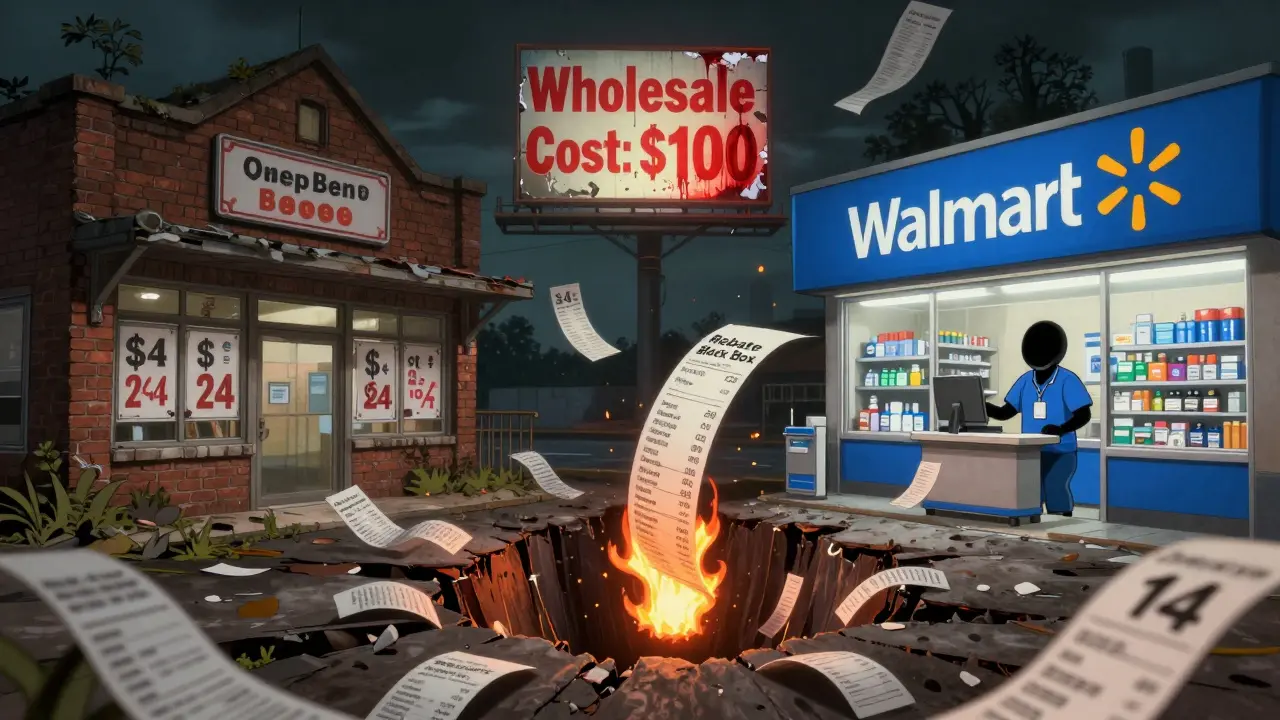
No tool shows the full picture. Why? Because rebates are secret. PBMs and insurers don’t want you to know how much they’re getting back from drugmakers. That’s why a $100 drug might cost you $20-but the PBM got $60 back. You’re paying $20, but the real cost? $100. The system rewards high list prices because that means bigger rebates.That’s why some experts say transparency alone won’t fix prices. If the rebate system stays, manufacturers will keep inflating list prices to game the system. But visibility? That’s the first step. You can’t negotiate what you can’t see.
What’s Coming Next
In January 2025, the U.S. Senate introduced the Drug-price Transparency for Consumers Act (S.229). If passed, it would require drug ads on TV to show the wholesale cost of a 30-day supply. That’s huge. Right now, ads say “$10 a pill!” but never mention the real cost to the system. This law would force honesty.Meanwhile, Medicare is expected to release new rules by late 2025 that could force insurers to report total drug spending-including rebates. That might finally crack open the black box.
But here’s the bottom line: You don’t have to wait. The tools are here. The data is there. You just need to use them.
Why is my generic drug more expensive at my usual pharmacy than at Walmart?
Pharmacies get paid differently based on their contracts with Pharmacy Benefit Managers (PBMs). Walmart and Costco often negotiate lower prices because they buy in bulk and pass savings to customers. Your usual pharmacy might have a contract that pays them more per pill, so they charge you more. Always compare cash prices using an app like GoodRx before paying.
Can I use GoodRx even if I have insurance?
Yes. Sometimes paying cash with a GoodRx coupon is cheaper than using insurance-especially if you haven’t met your deductible, or if your plan has high copays. Always ask the pharmacist: “What’s the cash price with this coupon?” and “What’s my price with insurance?” Then pick the lower one.
Why does my prescription cost change every month?
Your insurance plan may change its formulary, or your pharmacy’s contract with the PBM may be updated. PBMs adjust Maximum Allowable Cost (MAC) prices weekly. A drug that cost $12 last month might be $18 this month because the PBM lowered what the pharmacy gets paid. Always check before filling.
Do all pharmacies report prices to GoodRx?
Most major chains do, but independent pharmacies often don’t. That’s why the app might show a low price at a nearby store, but when you go there, they say they don’t participate. Call ahead. If a pharmacy refuses to honor a GoodRx coupon, they’re not required to-but many will if you ask nicely.
Are there any free programs to get generic drugs for free?
Yes. Many drug manufacturers run patient assistance programs for people with low income or no insurance. Sites like RxAssist.org list over 1,200 programs. You don’t need to be poor-just underinsured. The application can be tedious, but 78% of users who complete it get the medication for free or at a steep discount.
Patrick Jackson
March 8, 2026 AT 08:38Bro, I just found out my $45 pill is $8 cash at Walmart. 😱 I’ve been overpaying for years because I trusted my pharmacy. Now I call every time. No more guessing. This system is a scam dressed up as healthcare.
Susan Purney Mark
March 9, 2026 AT 06:26This is so important. I used to cry in the pharmacy aisle. Now I use GoodRx + call ahead. It’s not perfect, but it’s peace of mind. 🙌 You don’t need to suffer because the system is broken.
Tim Hnatko
March 10, 2026 AT 00:53As someone who’s helped older folks navigate this mess, I can tell you: most don’t even know they can ask for cash prices. It’s not about tech-it’s about teaching people to ask. Simple. Quiet. Powerful.
phyllis bourassa
March 11, 2026 AT 18:54Oh sweetie, you’re being so naive. These ‘tools’? They’re just bandaids. The real problem is PBMs owning pharmacies and manipulating MAC lists. It’s a cartel. You think a coupon fixes that? 😒
Joe Prism
March 12, 2026 AT 09:45Transparency doesn’t fix greed. But it exposes it. And exposure? That’s the first spark of change. We’ve seen this with Wall Street. With Big Tobacco. Now it’s Big Pharma. The light’s on. Let’s not look away.
Jeff Mirisola
March 12, 2026 AT 10:29Just tried this. Switched from CVS to Costco. Saved $112/month on my blood pressure med. Seriously. Do the 5 steps. It’s not hard. You’re not powerless. 💪
Joey Pearson
March 13, 2026 AT 15:24You got this. Seriously. One phone call can save you hundreds. I taught my mom how to do it. Now she’s the family pharmacy detective. 🏆 You’re not alone in this.
Pranay Roy
March 14, 2026 AT 20:37Wait-so you’re telling me the government doesn’t control this? That’s a lie. PBMs are owned by insurers who are owned by hedge funds who are owned by… oh wait, this is all a psyop. The real price? It’s $0. They just want you to think you’re paying. 😈
Sean Callahan
March 15, 2026 AT 13:19I cried today. Not because I saved money. But because I realized I’ve been paying $100 for a $7 pill for TWO YEARS. My anxiety spiked. I feel violated. I’m calling my doc tomorrow. I’m not letting this go.
Amina Aminkhuslen
March 16, 2026 AT 06:49GoodRx is a trap. I got a $3 coupon. Showed up. They said ‘nope, that’s not valid here.’ Then they charged me $19. I yelled. A guy in a lab coat apologized. I felt like a criminal for asking too much.
Roland Silber
March 16, 2026 AT 12:31For anyone reading: if your doctor doesn’t use RTBTs, ask them to. Tell them you’ve seen the 37% cost drop stat. Most don’t know it’s an option. They’re not lazy-they’re unaware. Be the one to open the door.
Ian Kiplagat
March 16, 2026 AT 12:55UK here. We have free generics. But even here, some branded meds cost 10x more than they should. The system’s broken everywhere. You’re not alone. Keep pushing. 🇬🇧
Adebayo Muhammad
March 18, 2026 AT 05:04