
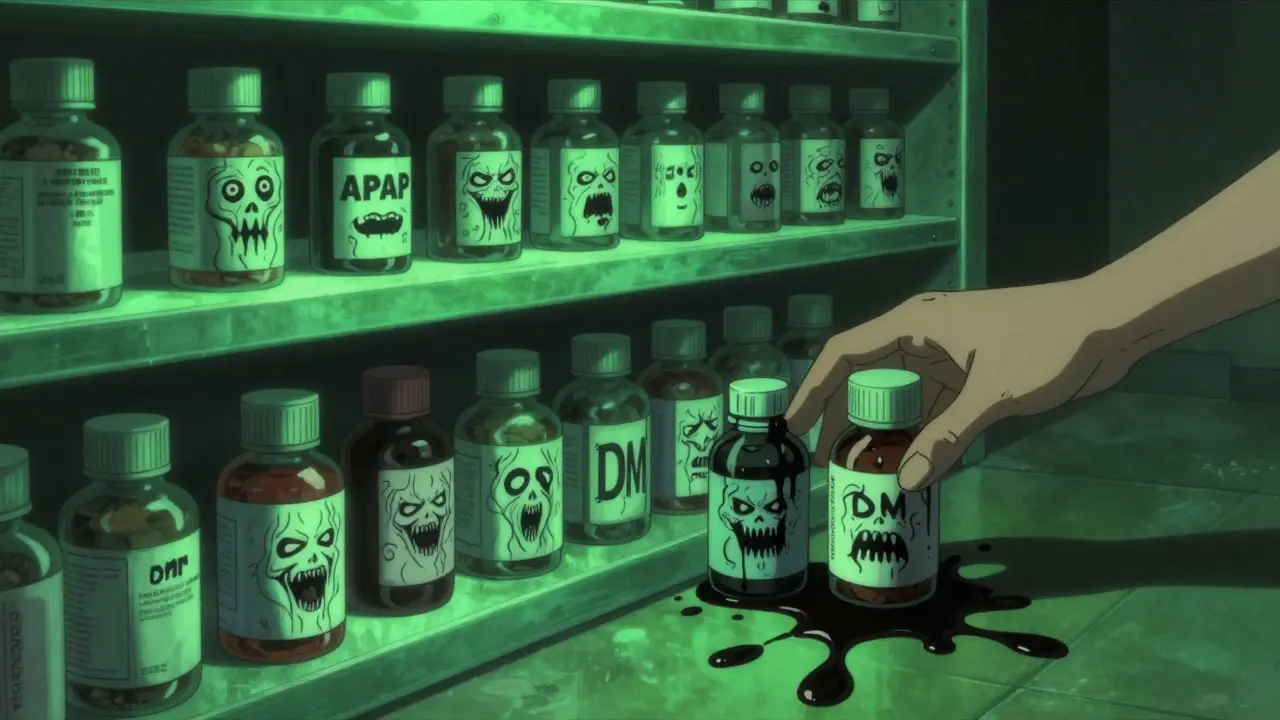
Medication Safety Checker
Check if your cold, allergy, or other medications contain dangerous combinations. Enter active ingredients from your medications to see if they interact.
Remember: If you're taking prescription medications or have health conditions, always consult your doctor or pharmacist before combining medications.
Every winter, millions of people grab a bottle of cold medicine without reading the label. They think they’re doing the right thing-relieving a stuffy nose, a sore throat, and a headache all at once. But what they don’t realize is that they might be mixing dangerous chemicals without knowing it. This isn’t just a mistake. It’s a silent health risk that lands people in the ER every year.
Why Combination Medications Are a Double-Edged Sword
Combination cold and allergy medications promise convenience. One pill does it all: reduces fever, clears congestion, stops coughing, and dries up a runny nose. That’s why they make up 65% of all over-the-counter cold and allergy sales in the U.S. But here’s the catch: each of those pills contains two, three, or even four active ingredients. And when you take more than one of these products, or combine them with other meds, you’re playing Russian roulette with your liver, heart, and brain.The most common danger? Acetaminophen overdose. You might not even know you’re taking it. On labels, it’s often hidden as “APAP.” If you’re taking Tylenol for a headache and then grab DayQuil for your cold, you’re doubling up. The FDA says you shouldn’t take more than 4,000mg of acetaminophen in 24 hours. But 6.7 million Americans accidentally cross that line every year. That’s enough to cause liver failure-sometimes without warning.
Decongestants: The Hidden Blood Pressure Risk
Most cold meds include a decongestant to shrink swollen nasal passages. Two main types: pseudoephedrine and phenylephrine. You’ve probably seen them labeled as “Sudafed” or “Tylenol Sinus.” But here’s the truth: phenylephrine, the more common one today, doesn’t even work well at standard doses. A 2023 FDA advisory panel found that 10mg of oral phenylephrine is no better than a placebo at clearing congestion. Yet it’s still in nearly every shelf product because it’s easier to sell than pseudoephedrine, which is kept behind the counter.But here’s the real problem: both decongestants raise your blood pressure. Pseudoephedrine increases systolic pressure by 8-12 mmHg and heart rate by 5-8 beats per minute. Phenylephrine? When combined with acetaminophen, its blood levels spike to four times what they should be. That’s not a typo. One study showed this combo pushes blood pressure dangerously high-especially in people who already have hypertension. If your blood pressure is above 180/110, you should avoid these meds entirely.
Dextromethorphan and Antidepressants: A Silent Collision
Cough suppressants like dextromethorphan (often listed as “DM”) are another hidden hazard. On their own, they’re mostly safe. But if you’re taking an SSRI like sertraline (Zoloft) or an SNRI like venlafaxine (Effexor), you’re at risk for serotonin syndrome-a rare but life-threatening condition. A 2017 study found that combining dextromethorphan with these antidepressants increases serotonin syndrome risk by 300%. Symptoms? Agitation, rapid heart rate, high fever, muscle rigidity, confusion. It can happen within hours. Emergency rooms see this every winter, and it’s often missed because patients don’t tell doctors they took a cold medicine.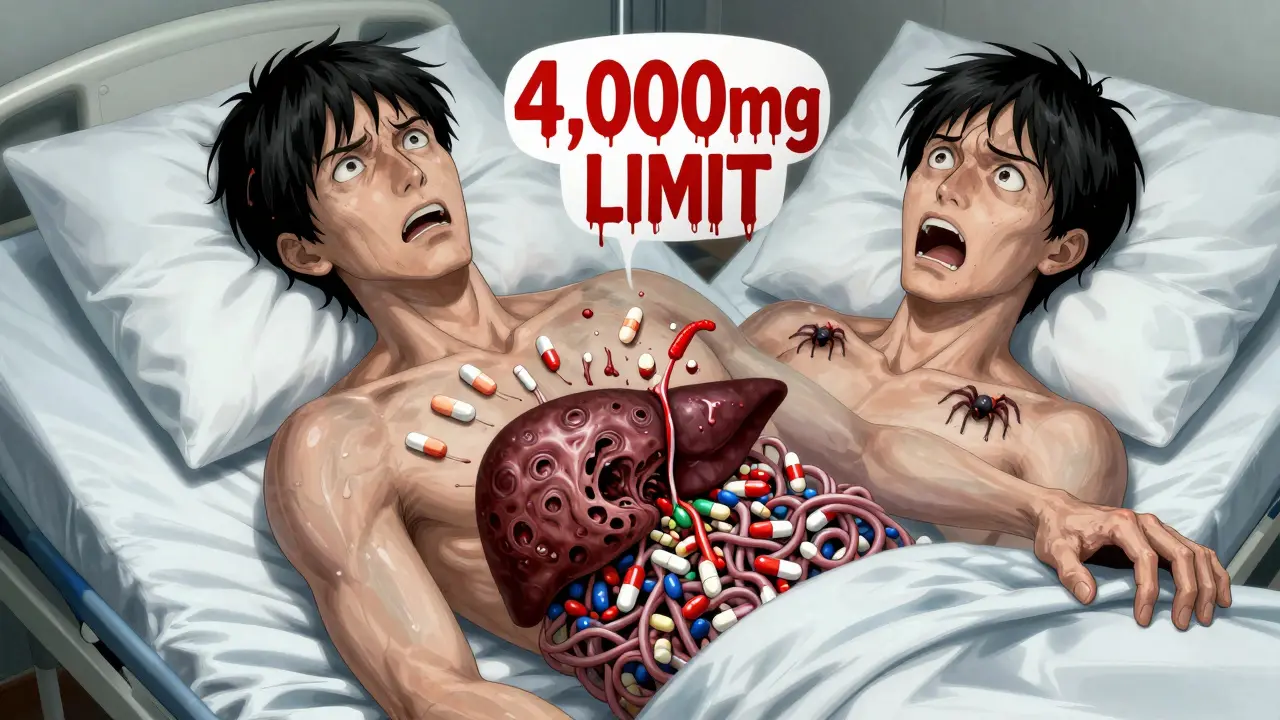
What You’re Not Reading on the Label
Drug Facts labels are supposed to help you. But they’re designed to be confusing. Here’s what you need to decode:- APAP = Acetaminophen (don’t take with Tylenol or other painkillers)
- DM = Dextromethorphan (don’t mix with antidepressants)
- PE = Phenylephrine (ineffective decongestant, raises BP)
- PD or SUD = Pseudoephedrine (better decongestant, but higher heart risk)
- CHLOR or DIPH = Chlorpheniramine or Diphenhydramine (causes drowsiness, dangerous with alcohol or sleep aids)
And here’s the kicker: 41% of people admit they don’t check all the ingredients before buying. They see “cold & flu” and assume it’s safe. But if you’re already taking a prescription for anxiety, high blood pressure, or depression, you’re not just taking a cold pill-you’re mixing chemicals with unpredictable effects.
Real Stories, Real Consequences
A Reddit thread from February 2023 had 87 comments from people who accidentally overdosed on acetaminophen by stacking cold meds and painkillers. One woman took NyQuil for her cough and then took Extra Strength Tylenol for her headache. She woke up vomiting, jaundiced, and in the hospital. Her liver enzymes were through the roof. She didn’t know APAP meant acetaminophen.Another case from Walgreens: a man took Sudafed for his congestion and then grabbed a “sinus relief” tablet that also had pseudoephedrine. He ended up in the ER with a heart rate of 130 and blood pressure of 200/115. He had no history of heart problems. He just thought he needed more relief.
These aren’t rare. The FDA’s adverse event database shows combination cold meds have 23% more reported side effects than single-ingredient versions. And 15% of emergency visits tied to OTC misuse involve people taking these meds with antidepressants or blood pressure drugs.
How to Stay Safe: A Simple 3-Step Rule
You don’t need to be a pharmacist to avoid disaster. Just follow this:- Read every label-not just the brand name. Look for the “Active Ingredients” section. Write them down if you have to.
- Never combine two cold meds unless you’re certain they don’t share any active ingredients. If both have acetaminophen, don’t take them together.
- Ask your pharmacist before buying. Bring your list of prescriptions. Pharmacists are trained to spot these clashes. They see this every day.
And if you’re only dealing with one symptom-say, just a cough-then use a single-ingredient medicine. There’s no benefit to taking four drugs when you only need one. It’s like using a sledgehammer to hang a picture.

What’s Changing in 2025?
The FDA is cracking down. By December 2024, all combination cold and allergy products must have high-contrast ingredient lists and bold warnings about duplicate ingredients. That’s a direct response to how often people overdose. Also, the future of phenylephrine is in question. If the FDA decides it’s ineffective at standard doses, it could be pulled from shelves. That means many popular products might reformulate-or disappear.Meanwhile, manufacturers are testing alternatives. Some are adding caffeine or guaifenesin to replace phenylephrine. But until those changes land, stick to what you know works and what you know is safe.
When to Skip the Medicine Altogether
Not every sniffle needs a pill. If your symptoms are mild-runny nose, slight cough, low-grade fever-try these instead:- Saline nasal spray (no drugs, clears congestion safely)
- Honey for cough (better than dextromethorphan for adults)
- Plenty of fluids and rest
- Humidifier in your bedroom
Medications should be for when you’re too sick to function-not for feeling a little under the weather. Your body can handle a cold better than you think. And the fewer chemicals you take, the less risk you carry.
Final Tip: Use Tech to Your Advantage
Download a free app like Medisafe or use the WebMD Drug Interaction Checker. Scan the barcode on your cold medicine. It’ll tell you instantly if you’re doubling up on acetaminophen or mixing with your blood pressure pill. These tools process over a million checks every day for a reason-they save lives.You don’t need to be an expert to stay safe. Just be careful. Read the label. Ask questions. Don’t assume. Your body will thank you.
Can I take allergy medicine with a cold medicine?
Only if they don’t share any active ingredients. Many allergy meds contain antihistamines like diphenhydramine or chlorpheniramine, and many cold meds do too. Taking both means you’re doubling your dose, which can cause extreme drowsiness, dry mouth, confusion, or even heart rhythm issues. Always check the “Active Ingredients” list on both bottles. If either has the same drug, don’t combine them.
Is phenylephrine safe to take with high blood pressure?
No. Phenylephrine can raise your blood pressure significantly, especially when combined with acetaminophen. Studies show it can increase blood pressure levels by 20-30 mmHg in sensitive individuals. If you have high blood pressure, even if it’s controlled, avoid any cold medicine with phenylephrine. Look for products labeled “for high blood pressure” or choose alternatives like saline sprays or humidifiers.
What happens if I take two cold medicines at once?
You risk overdosing on one or more ingredients. The most common danger is acetaminophen overdose, which can cause liver failure without obvious symptoms at first. You might also accidentally double up on decongestants, leading to rapid heart rate, dizziness, or chest pain. Or you could combine dextromethorphan with an antidepressant, triggering serotonin syndrome. Even if you feel fine at first, damage can build silently. Always check labels and never mix unless a doctor says it’s safe.
Can I take cold medicine if I’m on antidepressants?
Be extremely cautious. Many cold medicines contain dextromethorphan, which can interact dangerously with SSRIs and SNRIs, increasing the risk of serotonin syndrome-a potentially fatal condition. Also, some antihistamines in cold meds can worsen side effects like drowsiness or dry mouth. Always talk to your doctor or pharmacist before taking any OTC cold medicine if you’re on antidepressants. There are safer options available.
How do I know if I’m taking too much acetaminophen?
You might not know until it’s too late. Early signs of overdose include nausea, vomiting, loss of appetite, and sweating. But liver damage can develop over days without clear symptoms. The safe limit is 4,000mg per day. Many cold and allergy meds contain 325-650mg per dose. If you’re taking more than one product-or taking Tylenol separately-you could easily hit 5,000mg or more. Always count every source. If you’re unsure, don’t take it.
If you’re managing allergies or a cold, remember: more medicine isn’t better medicine. The goal isn’t to crush every symptom-it’s to feel better without risking your health. Take only what you need. Read every label. When in doubt, ask a pharmacist. Your body doesn’t need a cocktail. It just needs rest, water, and a little care.
Cara Hritz
December 21, 2025 AT 22:50so i took tylenol and dayquil last week and now my liver is fine but my brain is like why did i do that
Jamison Kissh
December 23, 2025 AT 06:21it’s wild how we treat our bodies like they’re disposable machines. we’ll stack chemicals like legos just to get through a Monday morning. the real tragedy isn’t the overdose-it’s that we’ve normalized ignoring the fine print because convenience feels like a right. we don’t need more warnings. we need a cultural shift from ‘fix it fast’ to ‘heal it slow.’
Tony Du bled
December 24, 2025 AT 08:49been using saline spray and honey for years. no side effects, no confusion, just quiet relief. weird how the simplest stuff works best.
Art Van Gelder
December 24, 2025 AT 19:37let me tell you about the winter of 2019. i took a cold med with phenylephrine because my nose was clogged. i also had a bottle of ibuprofen and a bottle of NyQuil. i didn’t think twice. woke up at 3 a.m. heart pounding like a bass drum, palms sweating, vision blurry. thought i was having a stroke. drove myself to urgent care. turns out my blood pressure was 198/112. they gave me a beta-blocker and made me sit there for four hours while they watched me. i was 32. no history of heart issues. no smoking. no caffeine obsession. just a guy who thought ‘more relief’ meant ‘better.’ now i read every label like it’s a legal contract. and i keep a little notepad in my wallet with all my meds and their ingredients. yeah, it’s annoying. but i’m alive. and i don’t take any risks anymore.
Tarun Sharma
December 25, 2025 AT 08:29Respectfully, this is a well-researched piece. Thank you for the clarity.
Kiranjit Kaur
December 25, 2025 AT 22:43OMG YES! 🙌 I used to stack meds like candy until my mom made me download Medisafe. Now I scan everything. My life changed. Also honey + lemon + steam = magic. 🌿✨
Jim Brown
December 26, 2025 AT 14:31The commodification of wellness has led to a pathological disregard for pharmacological nuance. One is not merely ingesting a compound; one is engaging in a biochemical negotiation with one’s own homeostasis. The onus, therefore, lies not solely upon the consumer, but upon the regulatory architecture that permits the proliferation of polypharmaceutical confections under the banner of convenience.
Sai Keerthan Reddy Proddatoori
December 26, 2025 AT 14:51they want you to take all these pills so the big pharma companies can get rich. the government lets them do it because they’re paid off. read the labels? no. just trust the FDA. yeah right. they’re in on it.
Sam Black
December 27, 2025 AT 11:40the real win here isn’t avoiding meds-it’s learning to listen to your body. if you’re tired, rest. if you’re congested, breathe steam. if you’re achy, drink tea. we’ve forgotten that healing isn’t a product you buy-it’s a rhythm you return to. thanks for the reminder.
Johnnie R. Bailey
December 28, 2025 AT 11:14as a pharmacist for 18 years, i see this every single day. people come in with three different cold meds, a painkiller, and an antihistamine-all with overlapping ingredients. i don’t judge. i just pull out the chart, cross-reference their prescriptions, and say ‘let’s simplify this.’ nine times out of ten, they walk out with one pill and a whole lot of relief. the system’s broken, but the solution is simple: ask. always ask.
Nader Bsyouni
December 30, 2025 AT 05:52you’re overcomplicating this. if you don’t want to overdose then don’t take the damn pills. problem solved. stop acting like everyone’s a child who needs a lecture on APAP and DM
Jeremy Hendriks
December 31, 2025 AT 08:02the irony is that the people who need this information the most are the ones who won’t read it. they’ll scroll past, grab the red bottle with the big font, and say ‘it’s just a cold.’ meanwhile, their liver is quietly screaming. we don’t need more science. we need more shame. shame for being lazy. shame for not caring enough to read a label. shame for thinking your body is a vending machine.