
When your body can’t make enough cortisol and aldosterone, even a simple cold can turn life-threatening. This isn’t hypothetical-it’s the daily reality for people with Addison’s disease, a rare but serious endocrine disorder where the adrenal glands stop working. Unlike other hormonal problems that can be fixed with a pill or two, Addison’s demands constant vigilance, precise dosing, and a deep understanding of how your body responds to stress. It’s not just about taking medication-it’s about surviving when your body’s natural emergency system has been shut down.
What Happens When Your Adrenals Fail
Your adrenal glands sit on top of your kidneys and produce hormones that keep you alive. Cortisol manages stress, blood sugar, and inflammation. Aldosterone balances salt and water in your blood. In Addison’s disease, these glands are destroyed-usually by your own immune system attacking them. By the time symptoms show up, about 90% of adrenal tissue is already gone. That’s why it often takes years to diagnose. People mistake it for the flu, chronic fatigue, or digestive issues. One study found 63% of patients waited over three years before getting the right diagnosis. The telltale signs aren’t subtle. Extreme tiredness, weight loss, low blood pressure, and dark patches of skin-especially on knuckles, elbows, and gums-are classic. These happen because the pituitary gland keeps pumping out ACTH, trying to wake up the adrenals. That same hormone also triggers melanin production, causing the tan-like discoloration. Blood tests confirm it: cortisol under 5 mcg/dL, ACTH over 50 pg/mL, sodium dropping below 135 mmol/L, and potassium rising above 5.0 mmol/L. The gold-standard test? The cosyntropin stimulation test. If your cortisol doesn’t jump above 18 mcg/dL after the injection, your adrenals aren’t responding.Primary vs. Secondary: Why It Matters
Not all adrenal insufficiency is the same. Addison’s disease is called primary because the problem starts in the adrenal glands themselves. Secondary adrenal insufficiency comes from the pituitary not signaling the adrenals to produce hormones. The difference isn’t academic-it changes everything in treatment. Primary (Addison’s) means you lose both cortisol and aldosterone. That’s why you need two medications: hydrocortisone for cortisol and fludrocortisone for salt balance. Secondary cases only need hydrocortisone because the kidneys still make aldosterone on their own. You won’t see the dark skin or the high potassium in secondary cases. And here’s the kicker: people with primary adrenal insufficiency have 3 to 5 times more adrenal crises than those with secondary. Why? Because their bodies have no backup system at all.Steroid Replacement: The Lifeline
There’s no cure. Lifelong steroid replacement is the only option. Most people take hydrocortisone two or three times a day to mimic the body’s natural rhythm-higher in the morning, lower at night. The typical dose is 15 to 25 mg daily, split into doses. Fludrocortisone is usually 50 to 300 mcg once a day. It sounds simple. It’s not. Getting the dose wrong can kill you. Too little? You risk adrenal crisis. Too much? You increase your chance of heart disease, diabetes, and bone loss. A 2021 review in The Lancet found that over-replacement raises cardiovascular death risk by 44%. Under-replacement? That doubles your chance of sudden crisis. That’s why many patients spend months, sometimes years, fine-tuning their dose with their endocrinologist. New options are emerging. In 2023, the FDA approved Chronocort, a modified-release hydrocortisone that releases slowly over the day. In trials, it cut cortisol swings by 37% compared to standard tablets. That means fewer crashes, better sleep, and less daytime fatigue. But it’s expensive, and not everyone has access to it yet.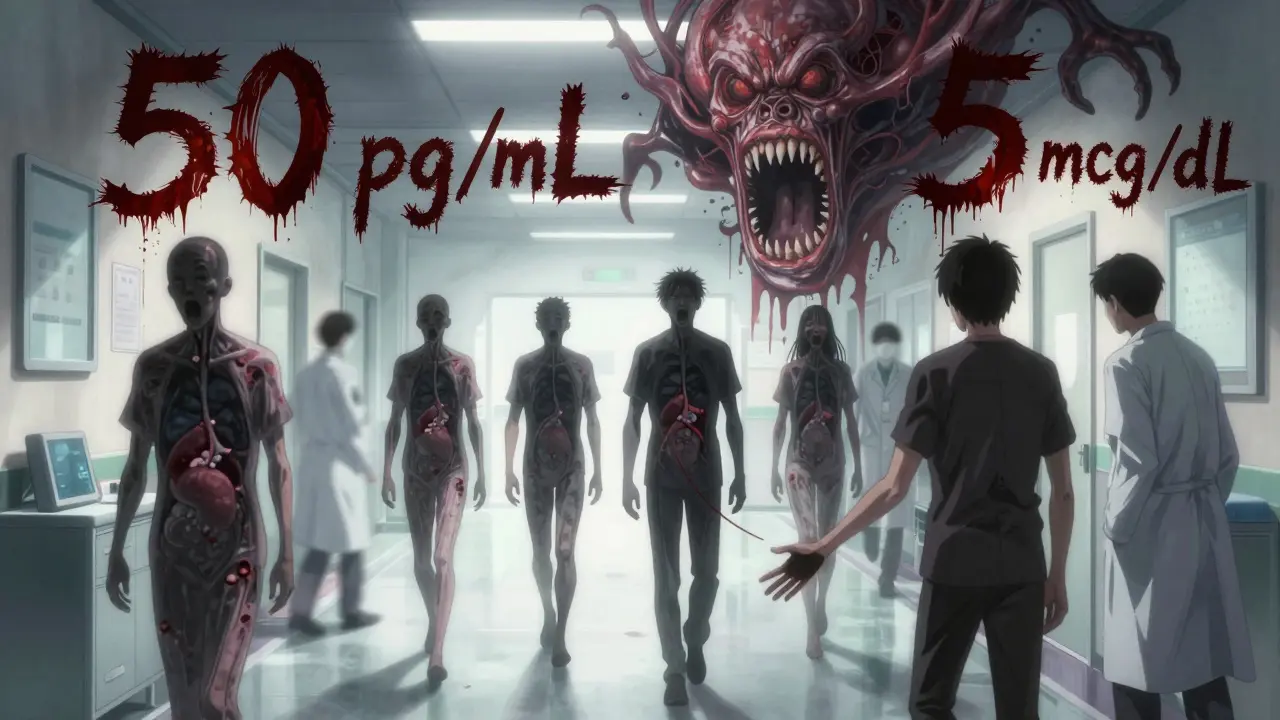
The Crisis You Can’t Afford to Ignore
An adrenal crisis is a medical emergency. It can happen during infection, surgery, trauma, or even extreme stress. Symptoms? Sudden vomiting, confusion, severe pain in the belly or back, low blood pressure, and loss of consciousness. Without immediate treatment, death can come in hours. Every patient must carry an emergency injection kit-100 mg of hydrocortisone for intramuscular or IV use. They must wear a medical alert bracelet. And they must know the sick day rules: double or triple your hydrocortisone dose at the first sign of illness. If you’re vomiting, you can’t swallow pills. That’s when the injection kicks in. Studies show patients who follow these rules have 50% lower death rates during crisis. But here’s the hard truth: even with perfect adherence, 78% of patients report at least one crisis in five years. Why? Because life doesn’t pause. A fever at 3 a.m., a missed dose during travel, a dentist appointment without prep-these are real triggers. One Reddit user wrote: “Finding doctors who understand you need to up your hydrocortisone when you have a cold is nearly impossible.” That’s not an outlier. It’s the norm.Other Autoimmune Conditions You Might Have
Addison’s doesn’t come alone. About half of patients develop another autoimmune disease. The most common? Hashimoto’s thyroiditis (30-40%), type 1 diabetes (10-15%), and vitiligo (8-10%). You might also have pernicious anemia-low B12 due to stomach autoimmunity-seen in 20-30% of cases. That’s why annual screening for thyroid function, blood sugar, and B12 levels is standard care. If you’re diagnosed with Addison’s, your doctor should test you for 21-hydroxylase antibodies. These are present in 95% of autoimmune cases. Confirming the cause helps predict other risks and guides long-term monitoring. It’s not just about survival-it’s about preventing the next autoimmune attack.Cost, Access, and the Hidden Struggle
Hydrocortisone isn’t a luxury drug-it’s essential. Yet in the U.S., without insurance, a month’s supply costs $350 to $500. That’s why 40% of patients skip doses or ration pills. In Australia, it’s cheaper under the PBS, but still a burden for those on fixed incomes. A 2022 survey found 25% of patients cut their dose to make it last. That’s not compliance-it’s desperation. Globally, the picture varies. In North America and Europe, autoimmune Addison’s makes up 80-90% of cases. In Africa and parts of Asia, tuberculosis is still the main cause. That’s why global health efforts still focus on TB control as a way to prevent adrenal failure.
What You Can Do Right Now
If you’ve been diagnosed:- Carry your emergency injection kit everywhere-even to the grocery store.
- Wear a medical alert bracelet. No exceptions.
- Learn the sick day rules. Double your dose at fever, infection, or injury. Triple it if you’re vomiting.
- Get your 21-hydroxylase antibodies tested to confirm autoimmune origin.
- Get screened yearly for thyroid disease, diabetes, and B12 deficiency.
- Find an endocrinologist who specializes in adrenal disorders. General practitioners often don’t know the nuances.
- Don’t wait for a diagnosis if you have unexplained fatigue, dark skin, and low blood pressure.
- Ask for a cortisol and ACTH blood test. Request the cosyntropin stimulation test if initial results are unclear.
- Keep a symptom diary. Note when you feel worse-after stress, meals, or illness.
The Future: What’s Coming
Researchers are working on ways to make life easier. Continuous cortisol monitors-tiny devices that track hormone levels in real time-are in phase 2 trials. One expert predicts they’ll cut crisis rates by 60% within five years. There’s also talk of stem cell therapies to regenerate adrenal tissue, but that’s still years away. For now, the best tool you have is knowledge. The Addison’s Disease Self Help Group found that patients who completed their ‘Sick Day Rules’ training had 85% fewer crises. That’s not magic. That’s preparation.Frequently Asked Questions
Can you outgrow Addison’s disease?
No. Addison’s disease is a permanent condition. The adrenal glands don’t regenerate once destroyed. Lifelong steroid replacement is required. There’s no cure yet, but proper treatment allows most people to live full, active lives.
Can you die from Addison’s disease?
Yes-if you don’t treat it. Adrenal crisis can be fatal within hours without emergency hydrocortisone. Even with treatment, people with Addison’s live 3 to 11 years less on average than the general population, mostly due to heart problems from long-term steroid use or sudden crisis. But with careful management, many live into their 70s and beyond.
Do you need to take steroids forever?
Yes. Unlike thyroid hormone replacement, where some people can eventually stop, adrenal insufficiency requires continuous steroid therapy. Your body can’t make cortisol or aldosterone on its own anymore. Stopping medication-even for a few days-can trigger a life-threatening crisis.
Is Addison’s disease hereditary?
It’s not directly inherited, but your risk is higher if you have a family history of autoimmune diseases like type 1 diabetes, thyroid disease, or celiac disease. Certain genes, like HLA-DR3 and HLA-DR4, increase susceptibility. If you have Addison’s, your children have a slightly elevated risk of developing other autoimmune conditions.
Can you exercise or travel with Addison’s disease?
Absolutely. Many people with Addison’s run marathons, travel internationally, and work demanding jobs. The key is planning. Increase your hydrocortisone dose before intense exercise or long flights. Carry extra medication and your injection kit. Tell a travel companion how to give the emergency shot. With preparation, most limitations disappear.
What should you do if you’re in the hospital?
Never assume staff know about your condition. Bring a written care plan listing your medications, doses, and emergency injection instructions. Ask for an endocrinologist consult. Stress doses (like 100 mg IV hydrocortisone) are often needed during surgery or serious illness. Many patients have been harmed because doctors treated them like they had normal adrenal function.
Jodi Harding
January 17, 2026 AT 01:29Just took my hydrocortisone. Again. It’s 11 a.m. and I already feel like a ghost. This isn’t just ‘taking meds’-it’s playing Russian roulette with your own biology every damn day.
But hey, at least I’m not dead yet.
Stacey Marsengill
January 18, 2026 AT 01:06People don’t get it. You don’t ‘get used to’ being one infection away from dying. I’ve had ER nurses tell me ‘maybe you’re just stressed.’
Yeah. And maybe my adrenal glands are made of glitter.
Zoe Brooks
January 20, 2026 AT 01:00I used to think adrenal insufficiency was just ‘low energy.’ Then my bestie went into crisis after a cold and spent 11 days in ICU.
Now I carry her emergency pen in my purse. Just in case.
Also-yes, the skin darkening is real. I saw it on her knuckles before she even got diagnosed. No one believed her. Not even her doctor.
Stop dismissing fatigue. It could be your body screaming for cortisol.
And if you’re reading this and you have Addison’s-you’re not weak. You’re a fucking warrior with a clock ticking inside your veins.
Dayanara Villafuerte
January 21, 2026 AT 13:49Just got my Chronocort prescription approved 😭
It’s $800/month but I’m not dying anymore at 3 a.m. from cortisol crashes.
Also, side note: if your doctor says ‘just take more hydrocortisone’ and doesn’t know what a modified-release is… fire them.
Also also: I’m wearing my medical alert bracelet to the club tonight. Let’s see who tries to argue with me when I’m dancing and my BP drops.
💋
Jay Clarke
January 22, 2026 AT 05:46Oh wow, another ‘poor me’ post about steroids.
Let me guess-you also think gluten is poisoning your kidneys?
Look, the government gives you free meds for a reason. If you’re still having crises, maybe you’re just bad at life.
My cousin’s aunt’s neighbor had Addison’s and she ran a marathon. You’re just lazy.
Stop making everything about you.
Ryan Otto
January 23, 2026 AT 05:17The real story here? Addison’s isn’t an autoimmune disorder-it’s a bioweapon side effect. The 21-hydroxylase antibody spike? Coincidence? Or did the CDC start tinkering with adrenal pathways during the 2010 flu vaccine rollout?
And why is Chronocort only approved in the US? Because they’re testing it on us first. The WHO won’t touch it. Why? Because they know.
Also, your ‘emergency injection’? Probably laced with lithium. Don’t trust the syringe.
Pat Dean
January 25, 2026 AT 03:48Why do we even let people with chronic illnesses write long posts? You’re not special. You’re just broken. Everyone gets tired. Everyone gets sick.
You think your cortisol is the only thing that matters?
Go get a real job. Stop whining about your ‘crisis’ like it’s a TED Talk.
Robert Cassidy
January 25, 2026 AT 11:31My cousin’s ex-boyfriend’s sister was diagnosed with Addison’s after she ‘got too emotional’ and started crying at a Target.
Turns out, she was on a low-sodium diet and didn’t realize aldosterone controls salt retention.
So now she’s on fludrocortisone and still crying. At Walmart.
Look, if you’re going to have a disease, at least make it look cool.
Adrenal failure isn’t a personality trait. It’s a failure to adapt.
Also, I read somewhere that cortisol is just your body’s way of saying ‘you’re not trying hard enough.’
Tyler Myers
January 27, 2026 AT 06:05Did you know the FDA approved Chronocort because Big Pharma needed a new $800/month product?
Hydrocortisone has been around since 1950. It’s cheap. It’s safe.
They’re just trying to make you dependent on the ‘new and improved’ version.
And don’t get me started on the ‘medical alert bracelet’ scam.
They want you to wear it so they can track you. Like a dog.
Also, your ‘autoimmune’ diagnosis? Probably just mold in your basement.
Eric Gebeke
January 27, 2026 AT 10:17You people are the reason healthcare is broken.
You cry about a pill. You need an injection. You wear a bracelet.
Meanwhile, my grandpa worked three jobs with a broken leg and never complained.
You’re not sick-you’re entitled.
And if you think your ‘adrenal crisis’ is worse than war, poverty, or cancer-you’re delusional.
Take your meds. Shut up. Live.
Or don’t. I don’t care.
But stop posting like you’re the only one who suffers.